


In the hyper-competitive world of retail, there is a cruel but true saying: a strategy is only valuable if it is executed perfectly.
For Trade Marketing Managers and Sales Directors, the challenge is constant. You spend months designing the perfect planogram, negotiating visibility agreements, and creating innovative point-of-purchase advertising. Yet a POPAI study reveals that the average compliance rate for in-store campaigns often fluctuates between 40% and 60%.
This is known as the "Execution- -Gap." Until now, the only way to verify planogram compliance was to conduct multiple field visits. This method was costly, time-consuming, and energy-intensive.
But in the digital age, is it still necessary to travel thousands of miles to check a gondola end cap? This article explores how technology now makes it possible to ensure flawless point-of-sale execution without leaving headquarters, radically transforming sales force communication.
1. The blind spot of Trade Marketing: the cost of non-compliance
Before addressing the solution, it is crucial to quantify the problem. Why is perfect execution so critical?
According to aggregated market data (including IHL Group), stockouts and poor shelf execution cost retailers and brands billions of dollars each year. For an area manager or trade director, this translates into:
- Loss of revenue: a poorly placed or missing product will not sell.
- Wasteful POS investments: expensive theatrical kits that remain in storage or are poorly assembled.
- Damaged brand image: a messy display on the shelf sends a negative signal to the end consumer.
The problem does not stem from a lack of willingness on the part of field teams, but rather from a lack of suitable tools for "visualizing" and "validating" guidelines.
2. Le problème de la communication Siège <-> Terrain
The limitations of PDFs and PowerPoint presentations
Historically, sales force communication has relied on PDF-format "Merchandising Books." These documents, sometimes 50 pages long, are emailed to area managers.
There are many points of contention:
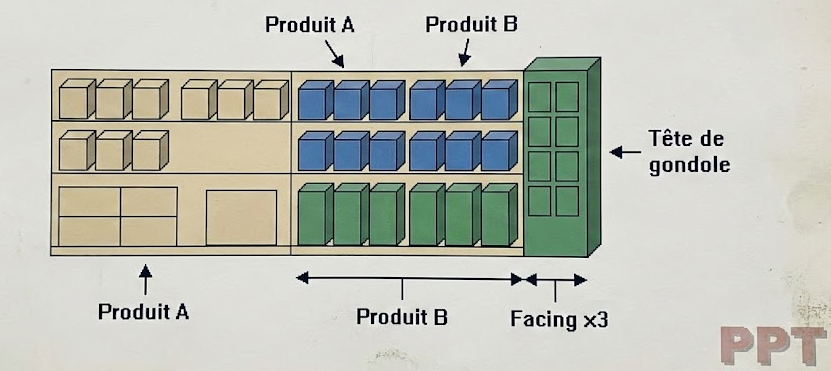
- Subjective interpretation: a 2D diagram on a PDF can be interpreted in ten different ways when viewed on the shelf.
- Administrative burden: reporting often requires taking photos, annotating them manually, and sending them back by email.
- Time lag: by the time headquarters receives the photos, analyzes the discrepancies, and sends back the corrections, the promotional period is sometimes already over.
This is where we identify a major pain point: How can we instantly align the headquarters' vision with actions on the ground?
3. The solution: visualize to perform better
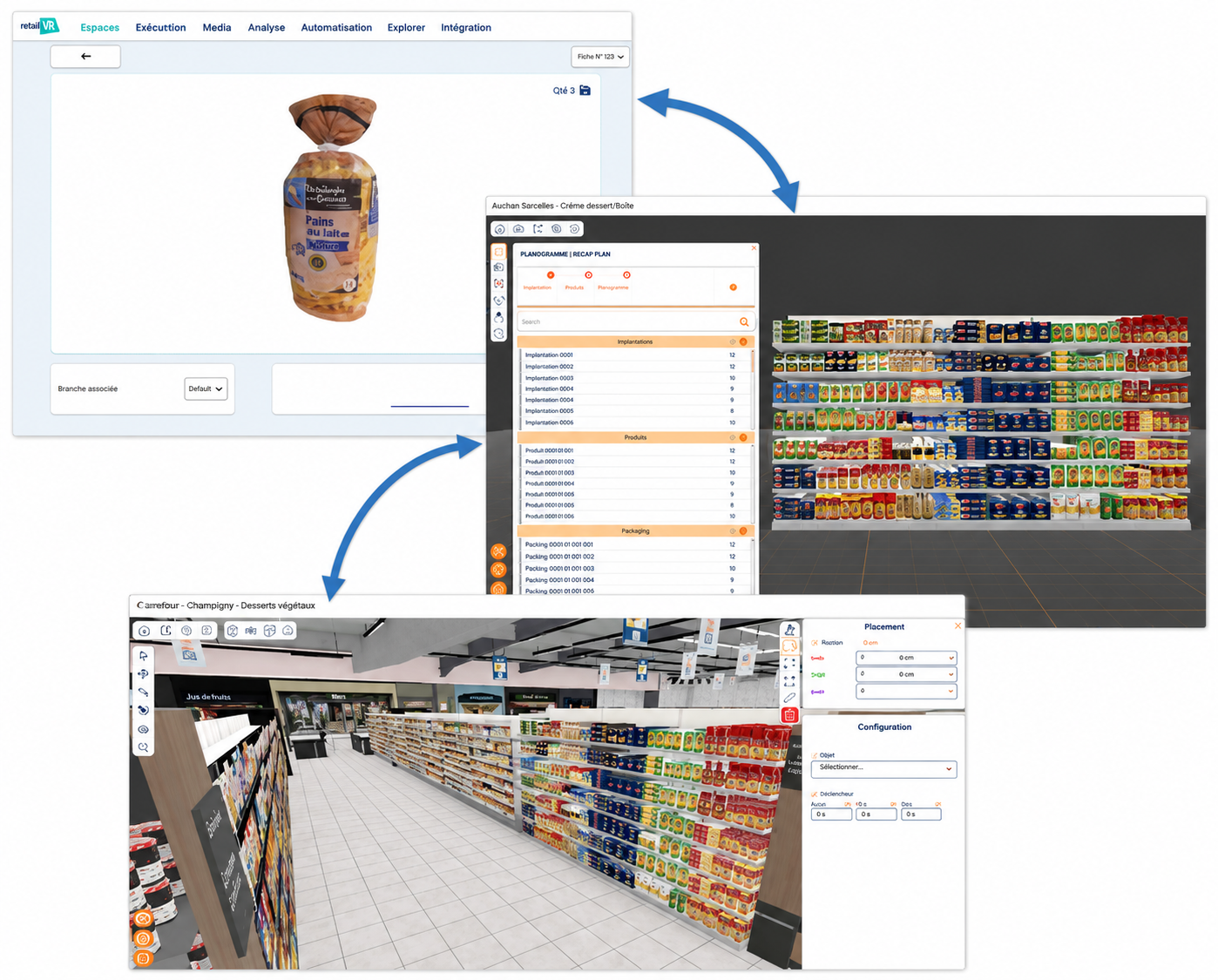
The answer lies in adopting merchandising and 3D simulation solutions, such as those offered by Retail VR. The idea is not to replace humans, but to augment their capabilities through virtualization.
From abstract to concrete: 3D as a universal language
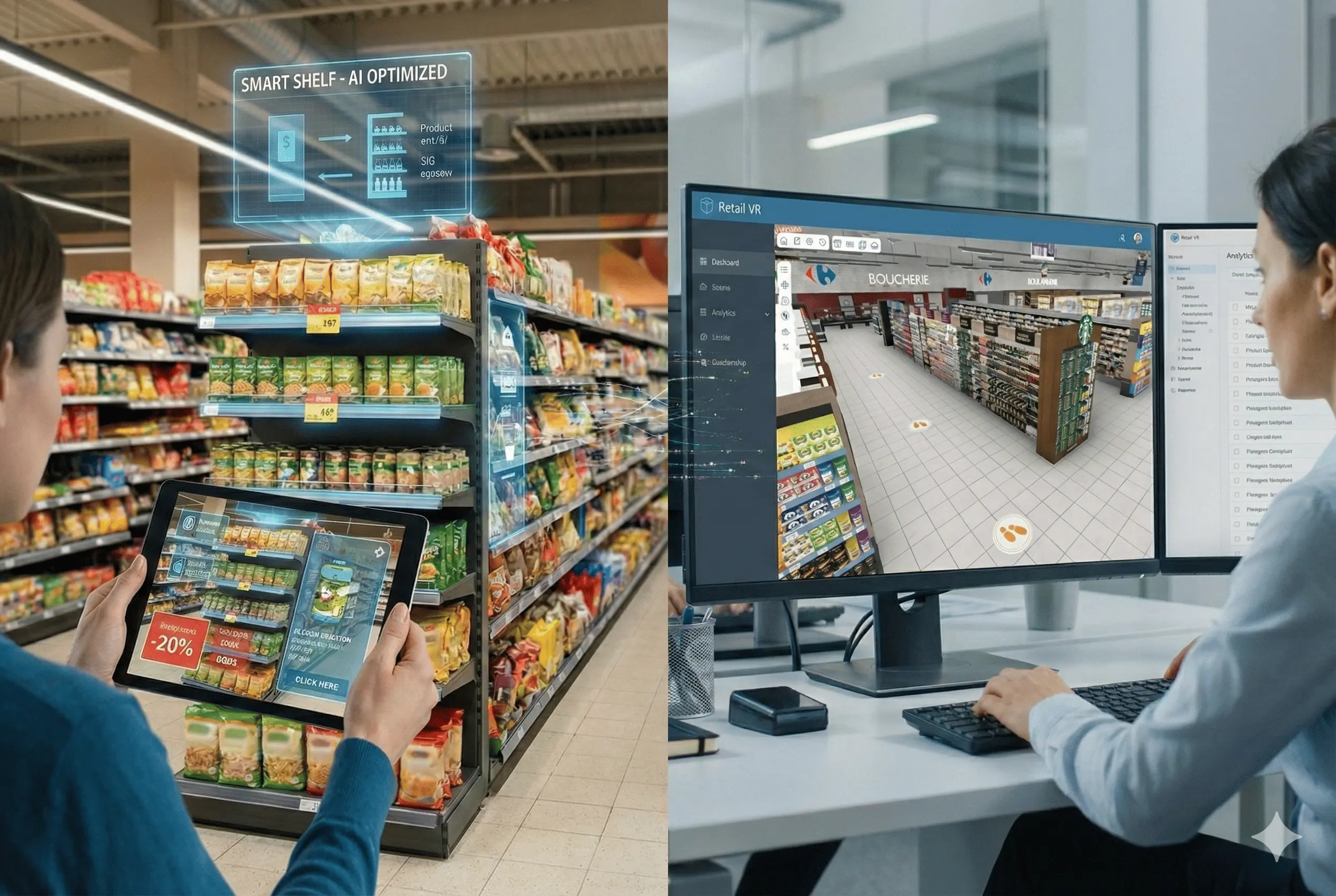
Instead of sending a static PDF, headquarters can now share an immersive 3D environment or augmented reality.
How does it work? The Trade Marketing Manager designs the layout in a virtual showroom. They test the layout, the position of the POS displays, and the facing. Once approved, this 3D model is instantly shared with the sales force via a mobile app.
The area manager, tablet in hand, no longer compares his department to an abstract diagram, but superimposes the 3D directive onto reality (via Augmented Reality).
Remote validation
The technology also allows information to be reported in real time. The field captures the implementation, and AI or image recognition tools can pre-validate compliance. Headquarters then has a "live" dashboard of national execution, without the need to send a regional auditor.
4. Case study and KPIs: impact on sales (+13%)
The main argument for switching to a virtualization solution is not just time savings, but business performance.
Data from Retail VR deployments shows a direct impact. By improving execution quality and ensuring that key products are positioned exactly where they should be (at eye level, in the center of attention), brands are seeing a significant increase in sell-out.
Key figure: +13% sales
Thanks to improved planogram compliance and optimized implementation validated virtually before deployment, our customers are seeing an average 13% increase in sales in the categories concerned.
Why the increase?
- Rapid implementation: campaigns start on time (D-0) in 95% of stores, compared to 70% previously.
- Adherence to the plan: shopper psychology, incorporated into the planogram at headquarters, is respected in stores.
- Product availability: improved visibility allows for better anticipation of shelf stock capacity and prevents visual shortages.
%20(2).png)
5. The CSR argument: less travel, less carbon
Beyond financial performance, ensuring flawless execution without traveling touches on the heart of modern CSR (Corporate Social Responsibility) strategies.
Reducing purely "police" inspection visits helps to reduce the sales force's carbon footprint. Travel is reserved for high value-added visits (negotiations, relationship building), while planogram compliance checks are digitized.
In addition, the virtualization of merchandising tests (creation of virtual POS displays prior to production) reduces cardboard and plastic waste associated with prototypes that often end up in the trash.
Conclusion: toward augmented trade marketing
The dream of ubiquity is now within reach for Trade Marketing Directors. Ensuring flawless execution without having to travel is not science fiction; it is a necessary technological transition.
By replacing static processes with visual and collaborative workflows, you're not just "checking" your teams' work: you're empowering them to succeed. You're turning the constraint of reporting into a lever for performance.
If your goal is to secure your product launches, harmonize your national presence, and achieve that additional 13% growth, it's time to leave PDFs behind andenter the era of Retail VR.
Answers to frequently asked questions from decision-makers
How can you check shelf compliance remotely?
There is no longer any need to send physical auditors. Use a collaborative platform that allows field teams to scan or photograph the shelf. The solution compares these images to the "Digital Twin" (the ideal planogram) created by headquarters. Discrepancies are reported instantly for immediate correction.
How can communication with the sales force be improved?
Stop sending emails down the chain of command. Opt for a single platform where guidelines are visual (3D/video) and interactive. Communication must be two-way: field staff must be able to report specific constraints in each store (obstructive pillars, smaller shelf space) so that headquarters can adapt the planogram in just a few clicks.
What are the advantages of retail staging for merchandising?
- Agility: test 10 configurations in 1 hour virtually vs. 1 day in a lab store.
- Economy: drastic reduction in physical POS prototyping costs.
- Collaboration: the Marketing, Sales, and Category Management teams work on the same visual file.


.webp)
.webp)
.webp)

