


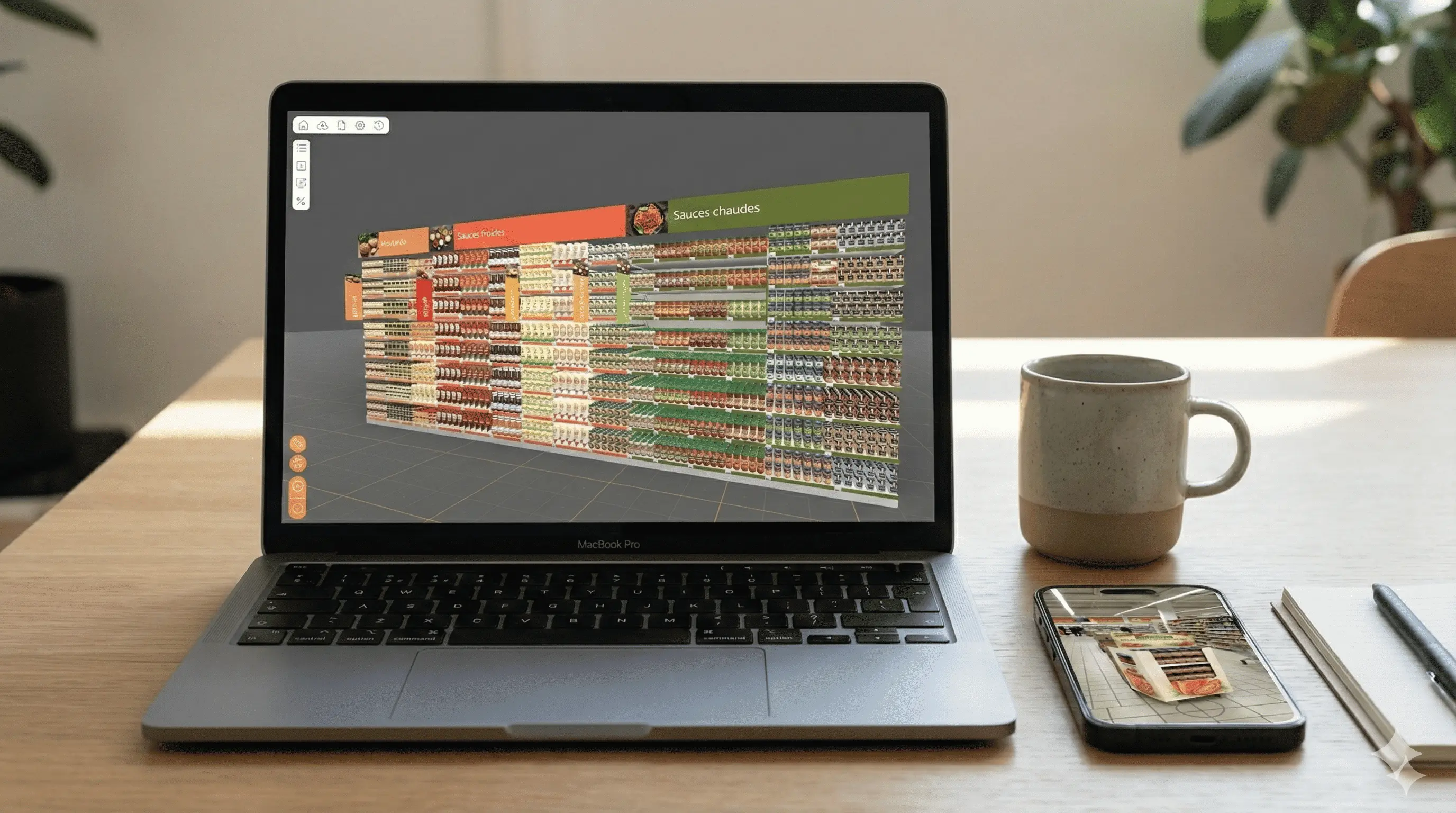
In the ultra-competitive world of mass retail, the gap between the strategy devised at headquarters and the reality of execution in stores remains a major challenge for brands and manufacturers. How can time-to-market be reduced? How can we ensure that the launch of a new product range does not result in disappointing sales?
The answer lies in digitizing the merchandising and trade marketing process. In a recent webinar, Tiphaine Dutilleul (Key Account Manager) and Erwan Krotoff (Co-founder) of Retail VR explained how AI, 3D, and virtual reality can be used to drive a comprehensive "Perfect Store" strategy.
This article breaks down the key steps to transforming your processes, from packaging design to sales force activation, based on their proven methodology.
1. Virtualization driving innovation: validating concepts before launch
Every product launch begins with a design and validation phase. Historically, this stage has been cumbersome, involving the creation of physical prototypes, the organization of focus groups in laboratories, logistical delays, and more. The Retail VR platform is revolutionizing this paradigm with instant 3D modeling.
From 2D to 3D thanks to Artificial Intelligence
The main obstacle to the adoption of 3D technology has long been its technical complexity. Today, that barrier has been removed. As Erwan Krotoff explains, Retail VR technology makes it possible to "automatically model 3D assets from 2D images." In concrete terms, for a new range of tomato sauces, all you have to do is upload flat images of the packaging and the algorithm will generate digital twins of the products (jar, can, label).
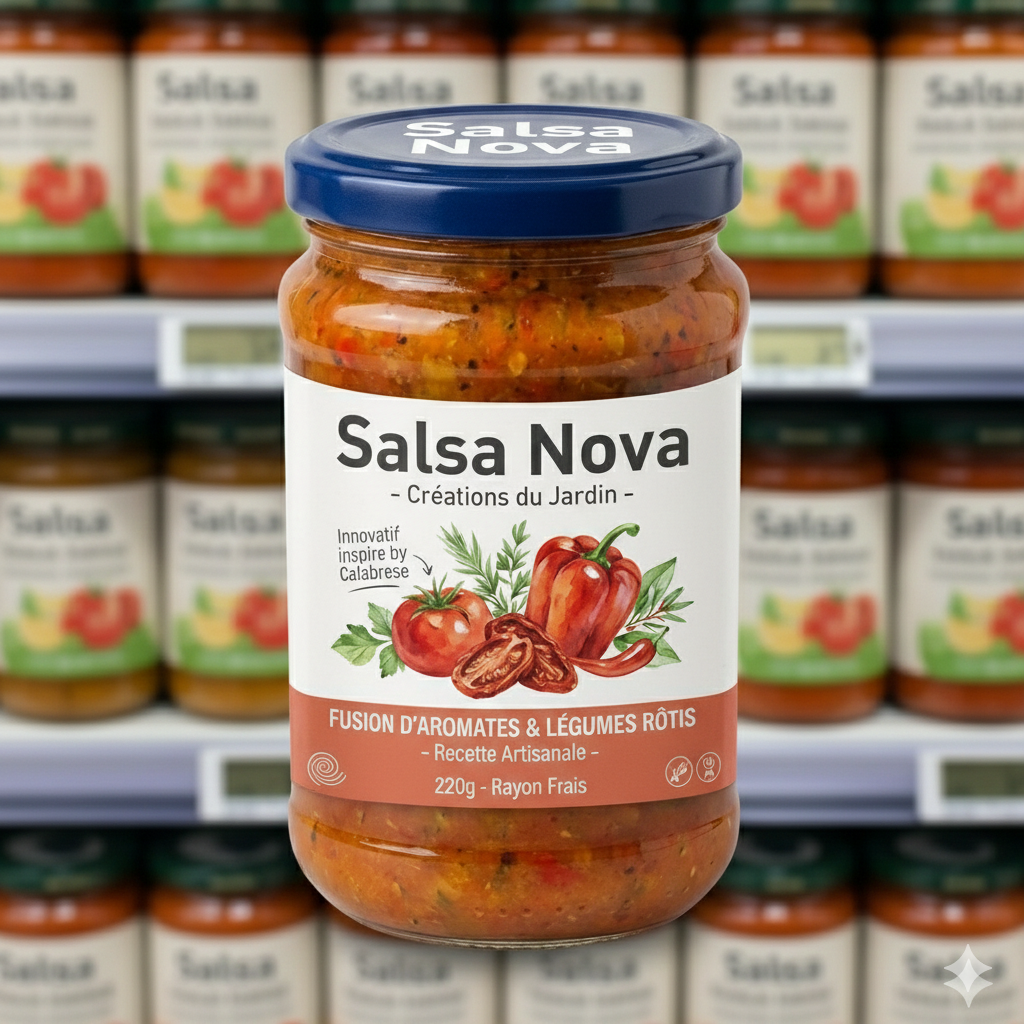
Note to marketing teams: You no longer need to be a technical expert. The platform acts as an intuitive merchandising software editor, but one that is "native 3D."
Virtual shopper studies: speed and reliability
Once products have been modeled, why wait weeks to test them? The "Perfect Store" approach allows these new products (the famous "pack shots") to be integrated directly into a realistic virtual store environment.
This offers three major advantages for your market research:
- Immediate A/B testing: you can test three different packaging proposals (creative avenues) and submit them to an online consumer panel.
- Immersive context: consumers do not judge the product against a white background, but in context, in the middle of the shelf, surrounded by competing products.
- Reduced costs and lead times: no need to rent a physical store or laboratory. Quantitative (Qanti) and qualitative studies are conducted remotely, eliminating geographical and logistical biases.
This agility allows marketing teams to "challenge the existing strategy" from the very beginning of the project, ensuring that the new packaging promotes visibility and sales even before a single unit is produced.
2. Building the "Perfect Store": data, collaboration, and 3D merchandising
Once the product has been approved, the reactor core is activated: how can it be integrated into the shelf space? This is the Category Management stage. Here, the objective is to move from a theoretical planogram to a realistic and negotiable store vision.
3D Store Builder: the collaborative design tool
Retail VR positions itself as a collaborative platform. Whether you are a brand (e.g., Nestlé, Pierre Fabre), a distributor (Intermarché, Carrefour), or an agency, all stakeholders can work on the same project.
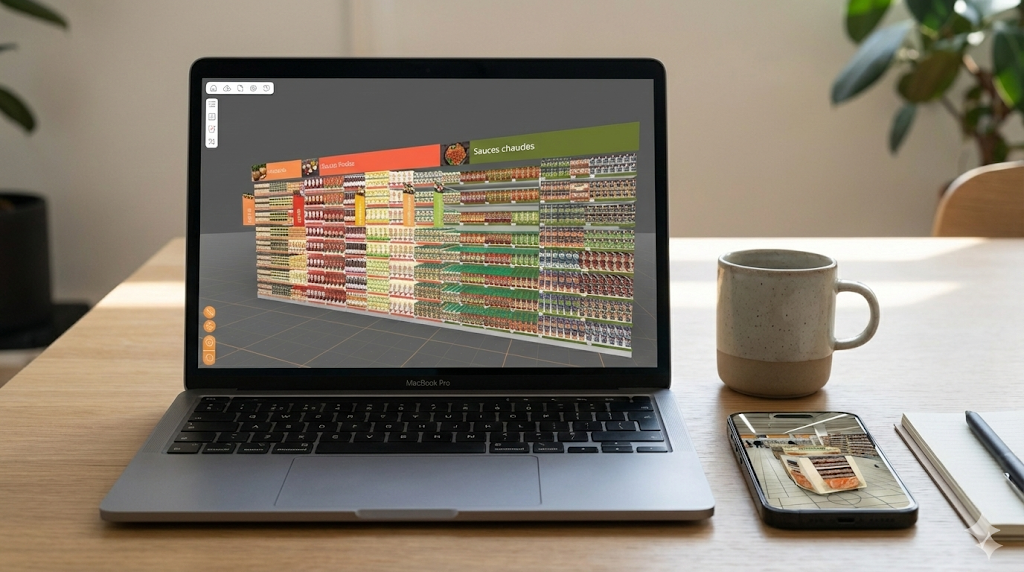
The 3D Store Builder allows you to simulate the entire layout:
- Importing planograms: retrieving existing plans and immediately modeling the environment.
- Data management: the platform is not just a visual shell. It allows you to import sales data, inventory, and days of inventory (VMH), which can be viewed directly via graphs in the virtual shelf.
- Theatricalization: add POS (Point of Sale) advertising, signage, shelf stoppers, or specific furniture (boxes, islands) with a simple drag and drop.
Optimize the shopper experience and profitability
The challenge is to strike a balance between customer experience and sales performance. Thanks to integrated data analysis, Category Managers can instantly view shelf space, product range, and projected sales figures directly on the 3D plan.
If you are working with an agency to create specific furniture (e.g., an event gondola head for sauces), you can import the agency's 3D file, dress it with your textures, and place it in the virtual store to validate its visual impact and space requirements before manufacturing.
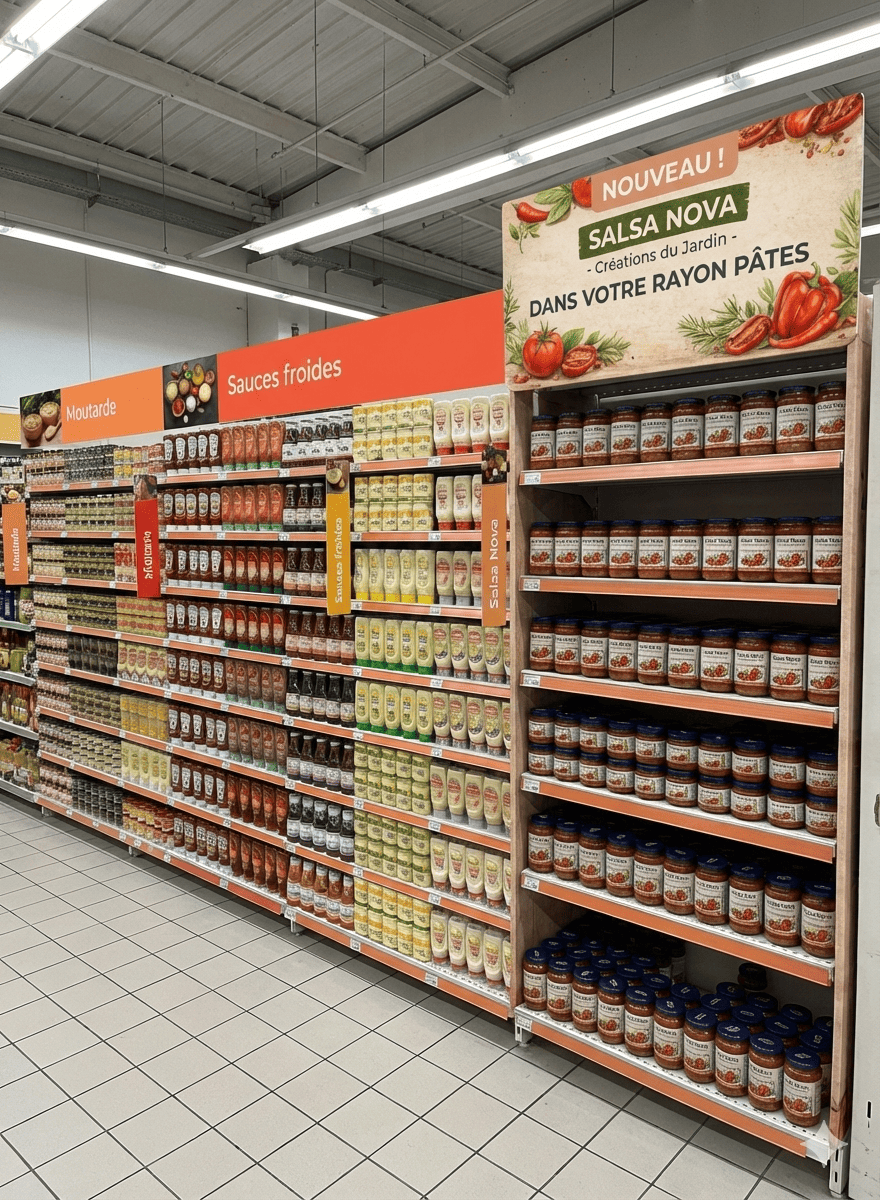
It's a genuine ROI (Return on Investment) approach: you avoid producing unsuitable POS advertising that would end up in the trash due to lack of space or store agreement.
3. Perfect execution: equipping the sales force to persuade in-store
This is often where the problem lies: the "loss in translation" between headquarters and the field. How can you ensure that the department manager will accept your layout plan or promotional campaign? The answer: experience and visual proof.
Replace PDF with immersion
No more 50-page paper catalogs or static PowerPoint presentations that no one reads. The platform allows you to generate shareable URL links (virtual showroom). Sales representatives in the field can use their tablet or smartphone to take department managers on a virtual tour of the concept.
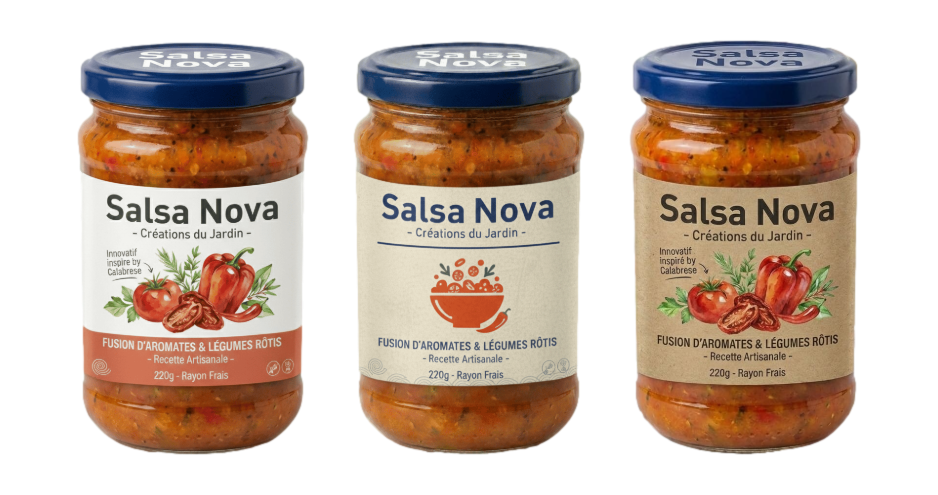
"The idea is to showcase these three innovations on store shelves, place them at the center of a shelf, and see how people react." — Tiphaine Dutilleul.
This approach allows you to script the sales pitch. Instead of saying "we're going to do a great deal," the salesperson shows the end result: the arch at the entrance, the boxes on the floor, the shelf signage. It's a powerful sales tool for securing agreements.
Augmented Reality (AR) as a closing lever
The ultimate selling point is Augmented Reality. Thanks to the mobile app connected to the platform:
- The sales representative scans the empty location in the store.
- It virtually displays the box or POS furniture on a scale of 1:1.
- He shows the department manager that "it fits" and that the visual impact is strong.
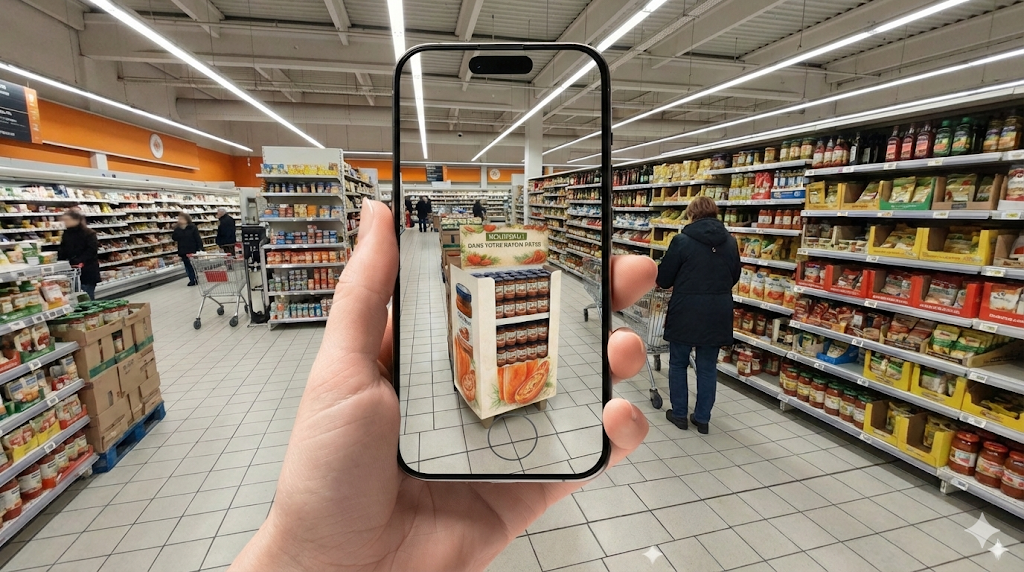
As Erwan Krotoff points out, this makes it possible to "negotiate in-store locations" with immediate visual proof. No more doubts about space requirements or aesthetics.
The feedback loop
Finally, a "Perfect Store" strategy is never set in stone. The platform allows information to be fed back from the field to headquarters. If a planogram is impossible to implement or if a POS display is unsuitable, the sales representative can take a photo, annotate it, and send it back to the trade marketing teams via the tool. This data connection ensures continuous improvement of merchandising recommendations.
Conclusion: toward unified and agile retail
The "Perfect Store" vision presented by Retail VR is not limited to "pretty 3D." It is a lever for operational performance that aligns the entire value chain: marketing, category management, and sales force.
By adopting a single platform (SaaS):
- You save time on asset production and concept validation.
- You save on physical prototypes and travel.
- You increase sales through strategy-aligned and more effectively negotiated in-store execution.
For retailers based in France and abroad, agility is now the order of the day. The integration of AI and 3D is no longer a futuristic option, but a standard for remaining competitive in the face of rapidly changing consumer behavior.
Want to digitize your merchandising strategy? The next step is to audit your current processes: how much time do you lose between approving a package and getting it on the shelf? The answer might just convince you to switch to 3D.
.jpeg)


.webp)
.webp)
.webp)

