


Introduction
In a highly competitive agri-food sector, how can a traditional and "cold" product range such as milk be modernized? This is the challenge taken up by Candia (Sodiaal Group), France's leading dairy cooperative. By partnering with Retail VR, the brand has undergone a major digital transformation, moving from paper planograms to an immersive virtual showroom.
A look back at the "Tempo" project, a textbook example of the use of virtual reality (VR) and 3D for merchandising purposes.
The challenge: digitizing merchandising to "re-enchant the shelf"
Candia, a powerhouse of 10,000 farmers with a strong attachment to "Made in France," faced a practical problem: the milk aisle lacks appeal, and the segmentation of the offering (organic, fair trade, lactose-free) is sometimes unclear to consumers. To address this, they developed a new merchandising approach that they wanted to present in an innovative way.
Alexandra Quinsac, National Merchandising Manager at Candia, explains the limitations of traditional methods:
"We used to present our strategies in PDF brochures or PowerPoint presentations. It was static. We needed a technological solution to bring back the emotion and allow retail customers to immediately envision tomorrow's store."
The challenge was twofold:
- The shopper experience: clarifying the offering and guiding the customer journey.
- Commercial efficiency: replacing costly physical models with agile 3D simulations.
The Retail VR solution: creating an interactive virtual store
To roll out its new "Tempo" category approach, Candia chose the Retail VR platform. The goal was not only to use 3D technology, but to create a genuine sales support tool.
From planogram to digital twin
Retail VR technology has made it possible to model an entire store "shell." Unlike a simple 3D image, this is an interactive environment where users can move freely, from the parking lot to the store shelves.
Key features of the project:
- Immersive visualization: use of virtual reality headsets for total immersion ("wow effect") or PC/tablet navigation for quick appointments.
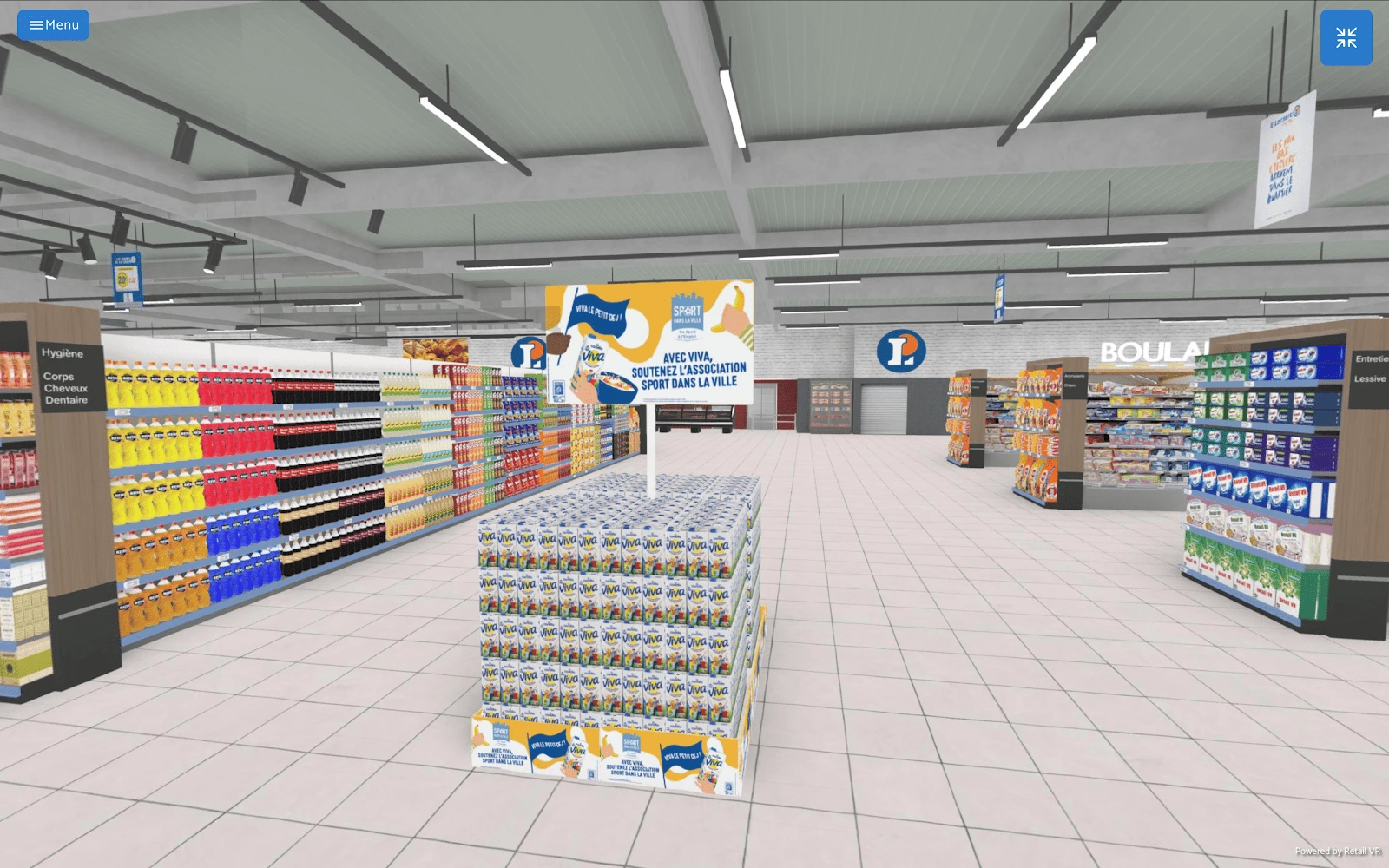
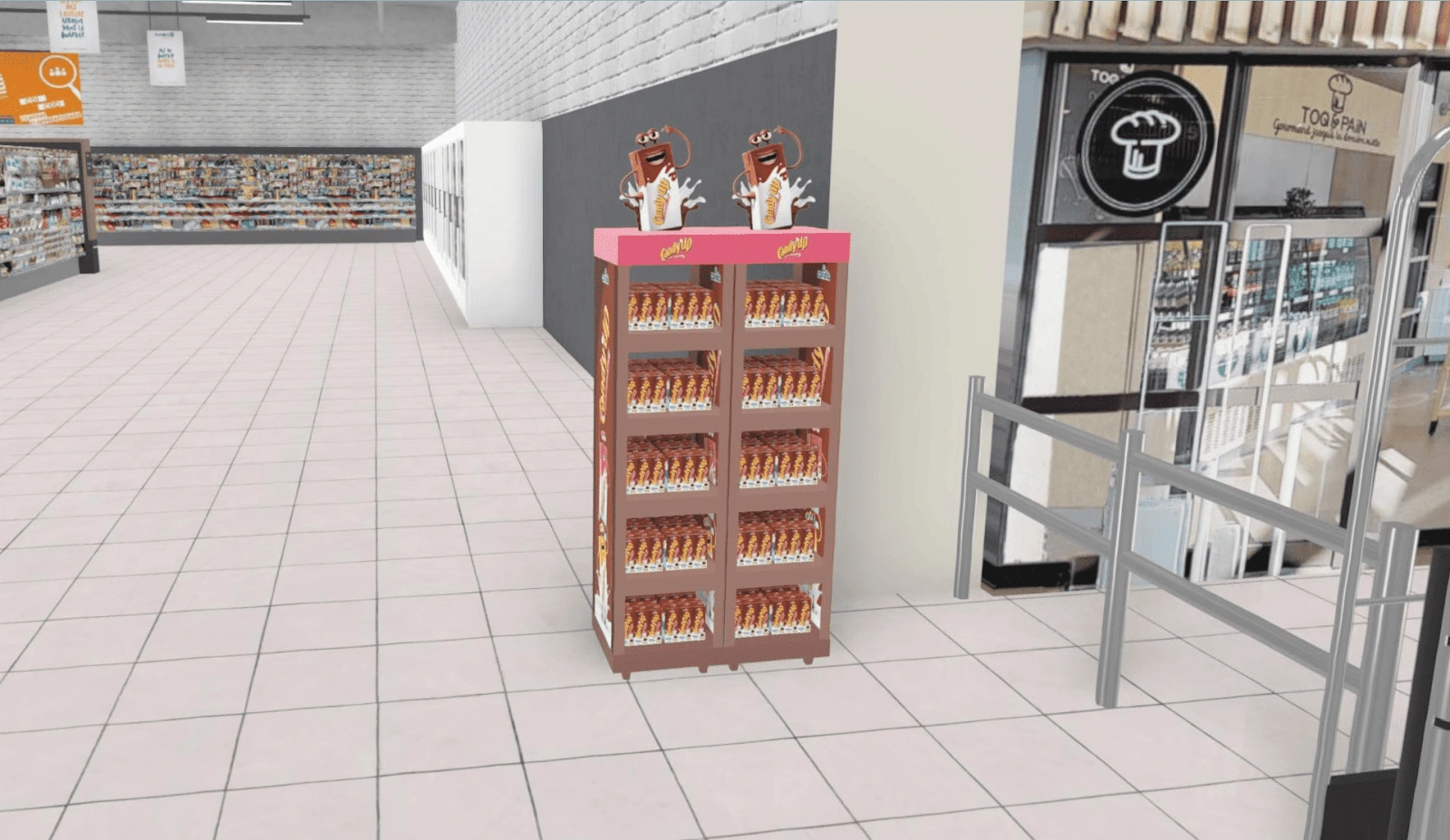
- Point-of-sale dramatization: dynamic integration of POS advertising, frontons, shelf stoppers, and product innovations.
- Shopper journey: simulation of flows and touchpoints (store entrance, promotional islands, gondola ends, cross-merchandising).
The 3 major benefits of Virtual Reality for Candia
The integration of virtual reality into Candia's retail strategy has generated tangible results, going beyond the simple framework of technological innovation.
1. Concept storytelling
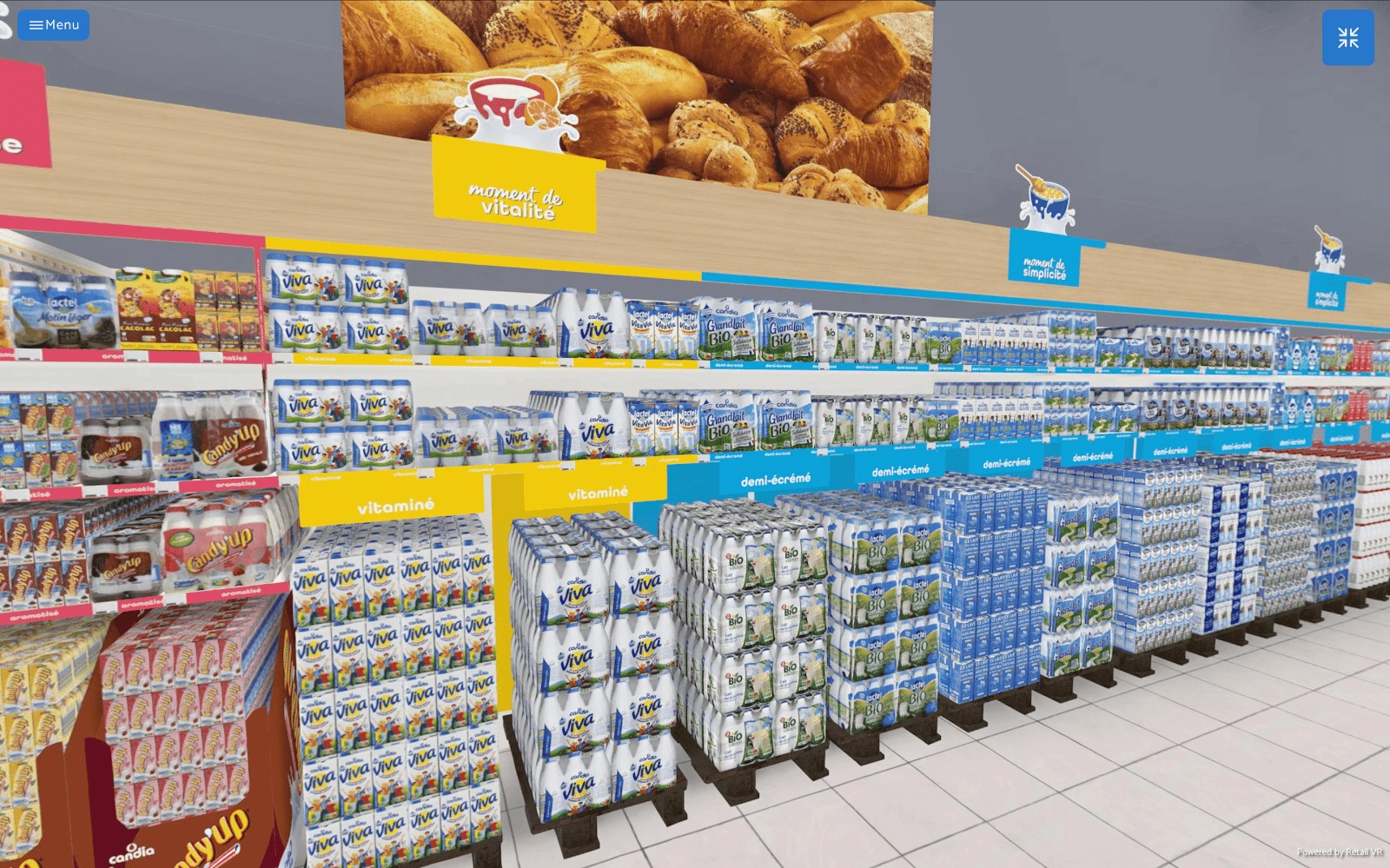
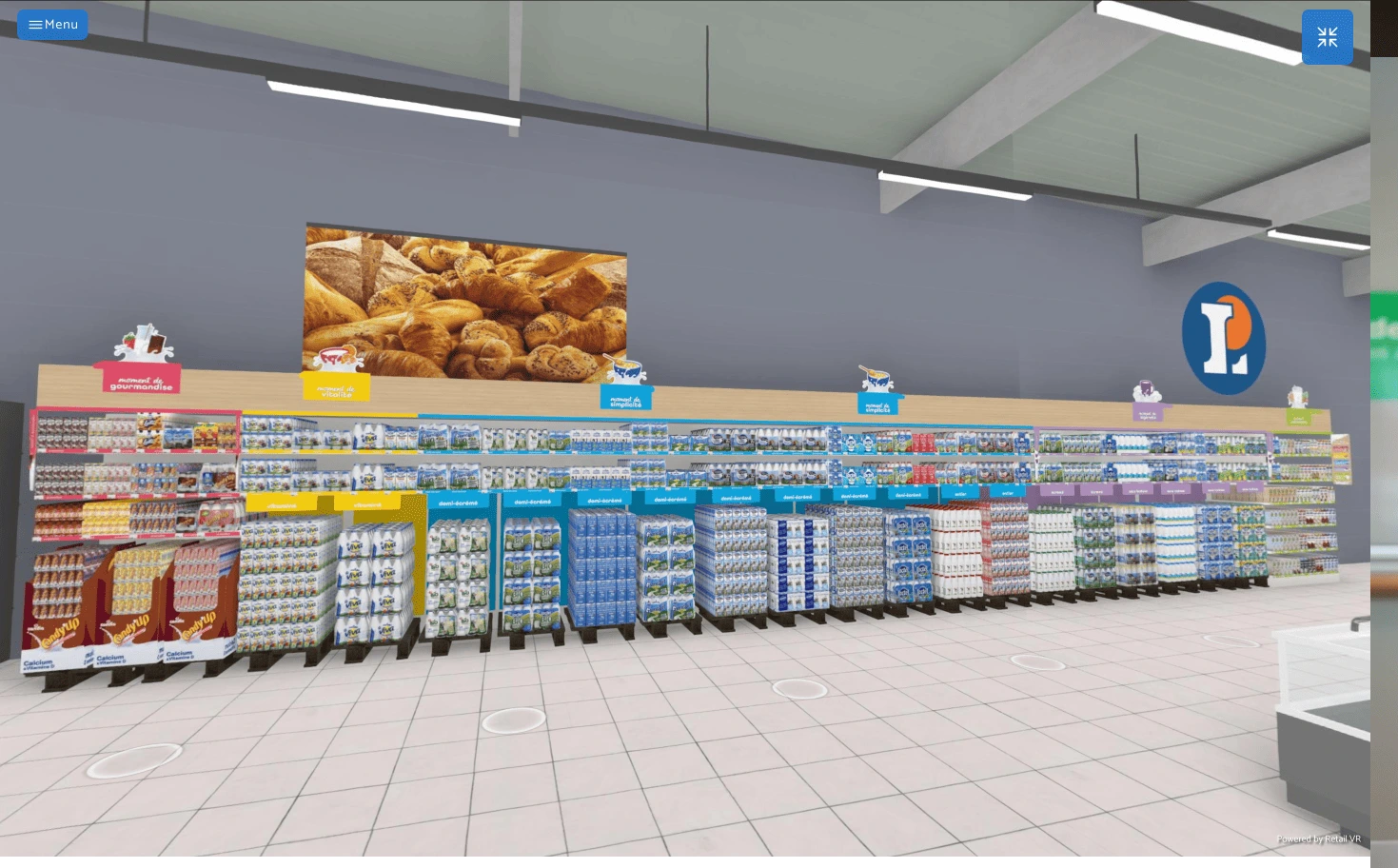
The tool goes beyond a simple technical presentation to tell a story about the "Tempo" category approach. By dramatizing the point of sale and dynamically integrating POS advertising, Candia can immerse customers in the "aisle of tomorrow." This clarifies the offering and re-enchants the shopper journey.
2. Explain the choices and biases involved in tagging
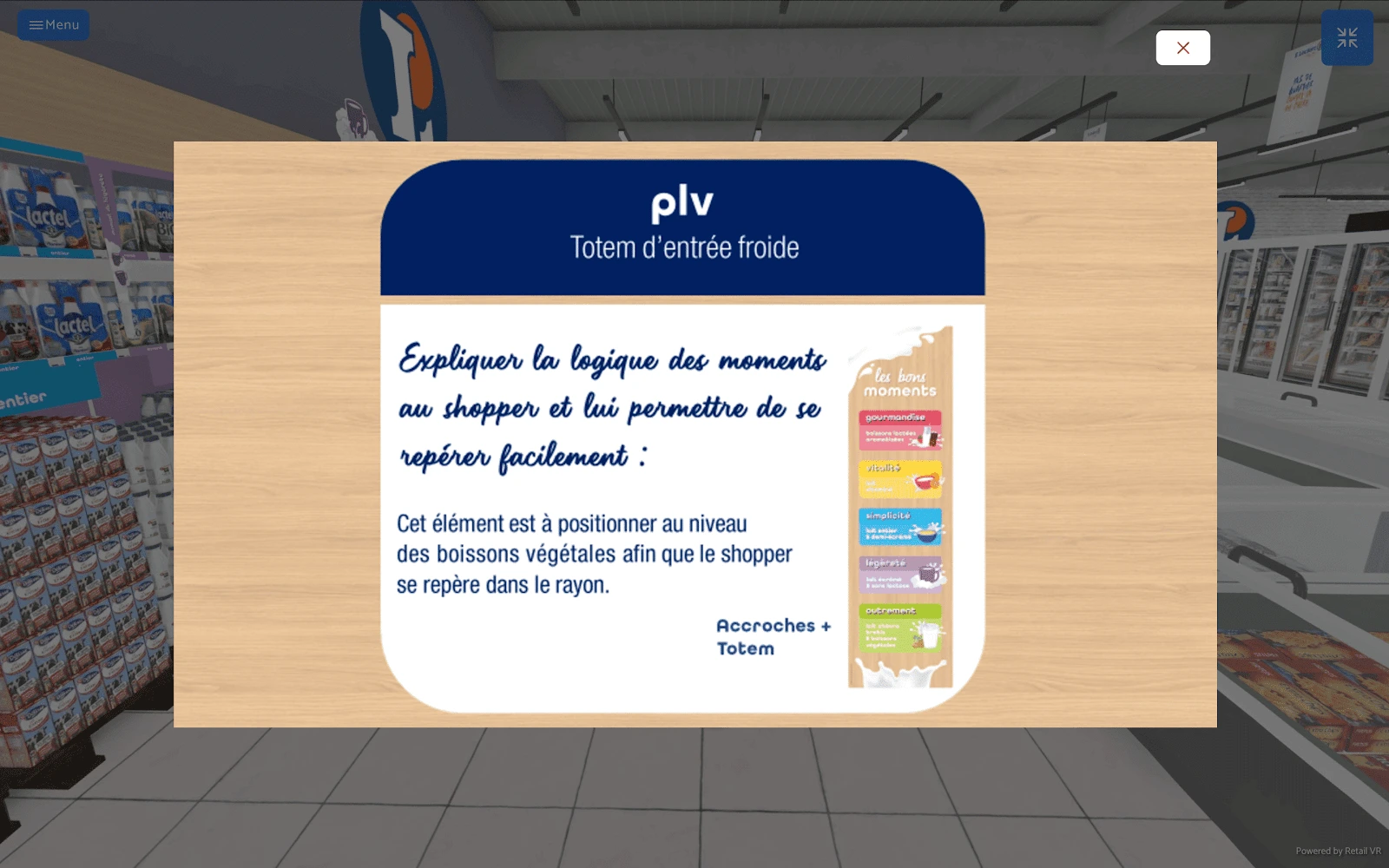
The virtual showroom acts as a unique medium that guarantees a consistent sales pitch. It allows you to present the approach and its key benefits, while visually incorporating the key arguments:
- Segmentation: It helps explain the logic behind consumption moments so that shoppers can easily find their way around.
- Eco-design: The showroom highlights the CSR strategy by demonstrating the reduction in environmental impact (elimination of physical models and disposable prototypes). It also allows the sustainability of signage to be validated in order to avoid overproduction.
3. Innovative presentation to stand out during client meetings
To stand out from the crowd, Candia replaces static presentations (PDF, PowerPoint) with an immersive experience that evokes emotion. The use of this modern technology, whether via VR headsets for a "wow effect" or on tablets, positions Candia as an innovative brand. This proves to retailers that the brand is modern and invested in the long term.
Conclusion: 3D, the future of retail
This partnership between Candia and Retail VR demonstrates that 3D technology is now mature enough to meet the industrial requirements of the FMCG (fast-moving consumer goods) sector.
By making merchandising more visual, more collaborative, and more responsible, Candia confirms its status as an innovative brand.
"We have a big ambition: to show that we are modern. This tool allows us to reuse our 3D assets to test future innovations or cross-merchandising furniture. It's a long-term investment," concludes the merchandising manager.
Would you like to digitize your merchandising processes?
Like Candia, increase your impact and agility with our virtual reality solutions.

.png)
.webp)
.webp)
.webp)

