


.png)
In the competitive world of mass retail, keeping stores appealing is an ongoing challenge. At the Tech for Retail trade show , Loïc Le Du ( Concept Manager at Intermarché) and Josselin Monnot ( Key Account Manager at Retail VR) shared the results of their collaboration.
This presentation highlighted how virtualization and the adoption of next-generation merchandising software enable the group to accelerate the rollout and maintenance of its flagship concept: “Fab Mag.”
The Background: A Well-Developed Concept and a Network of Independent Contractors
Launched in 2019, Intermarché’s “Fab Mag” concept is based on a customer journey that focuses heavily on fresh produce and traditional departments (butcher shop, fish market), relegating non-food items to the periphery.
The success has been massive: more than 1,050 retail locations have been transformed over the past five years. However, the store concept is showing its age (worn signage, damage from shopping carts), and restocking is crucial to maintaining the brand image.
What sets Intermarché apart is its model of independent members who are free to make their own investment decisions. The challenge for headquarters is twofold:
- Convince members of the need to keep the concept up to date.
- Simplify the process of purchasing and installing signage without having to rely on expensive outside contractors.
The Solution: A Merchandising Platform Focused on Technological Maturity
To effectively engage its stores, Intermarché has chosen to evolve its processes through three major technological phases:
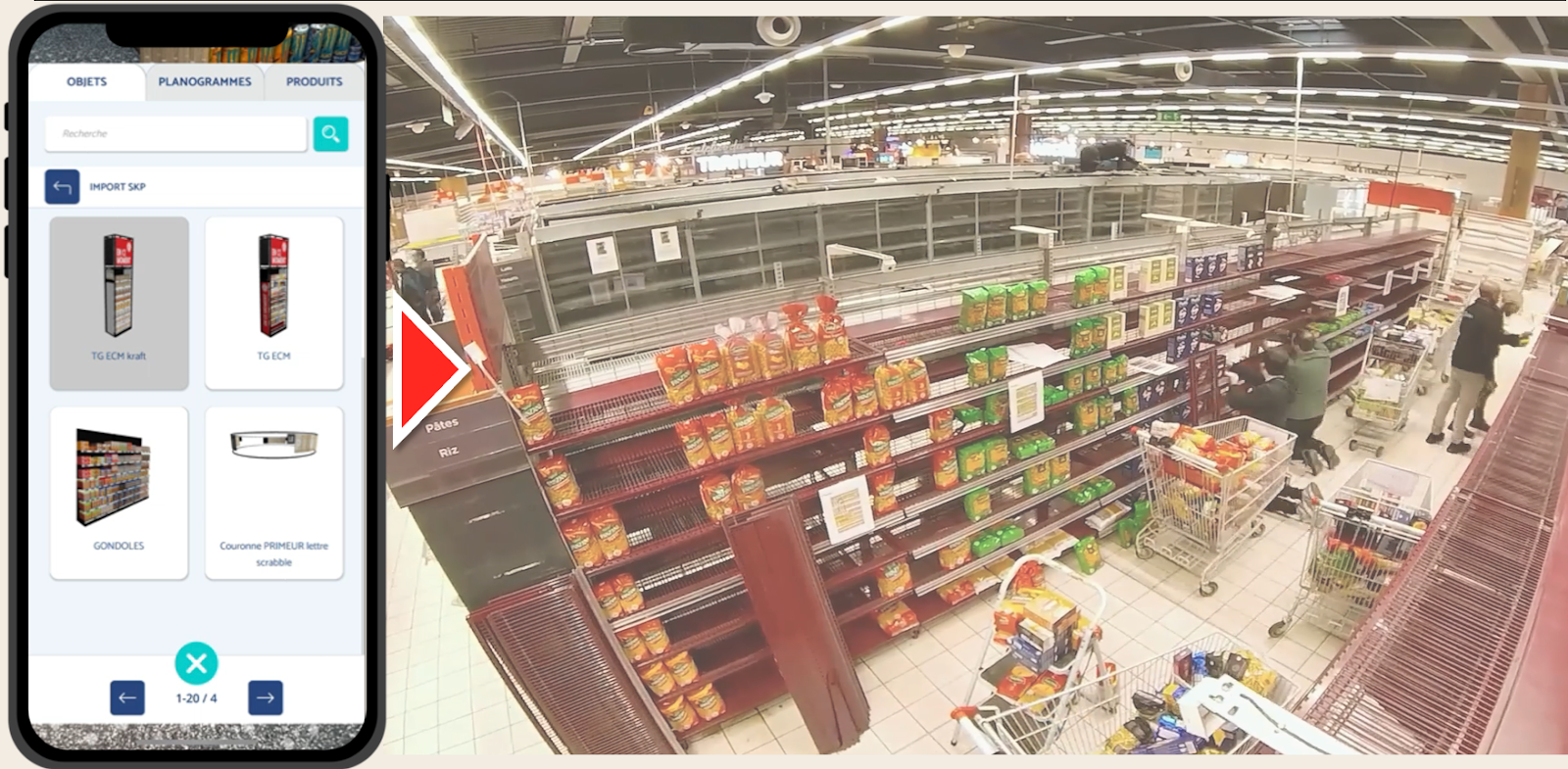
- Real-World Capture and Virtual Integration: Digitizing an existing retail location to integrate interactive modules.
- "Virtual Full" (Immersive Store Design): Comprehensive modeling of generic supermarkets to test layouts in real time and eliminate the costs of physical prototyping.
- Augmented Reality: Visual projection of signage elements directly into the physical retail location via a smartphone to verify the layout.
This initiative led to the creation of a Virtual Showroom for signage that is accessible on both PCs and mobile devices, designed as a truly intuitive ordering platform.
The Virtual Showroom: an intuitive ordering platform
The result of this initiative is a virtual signage showroom accessible on PCs and smartphones. Officially launched in early 2025 following a ramp-up phase in 2024, this tool aims to replace traditional vendor management with a clear and immersive interface that replicates an ideal Intermarché store.
Functionality and User Experience (UX)
The interface was designed to provide a completely seamless and frictionless shopping experience:
- Immersive navigation: Members can “teleport” directly to different sections (Fruits & Vegetables, Groceries, Non-Food) via a side menu or by clicking on waypoints on the floor.
- Simplified Interaction: Visual markers (red dots) indicate all available signage elements (kakemonos, header signs, shelf stoppers). A single click opens a carousel of options.
- Integrated information and ordering: Each item has a detailed description (dimensions, prices, delivery times). Users add items to their cart and place their order directly within the virtual environment. The process is completed without a credit card, through an automated internal billing system.
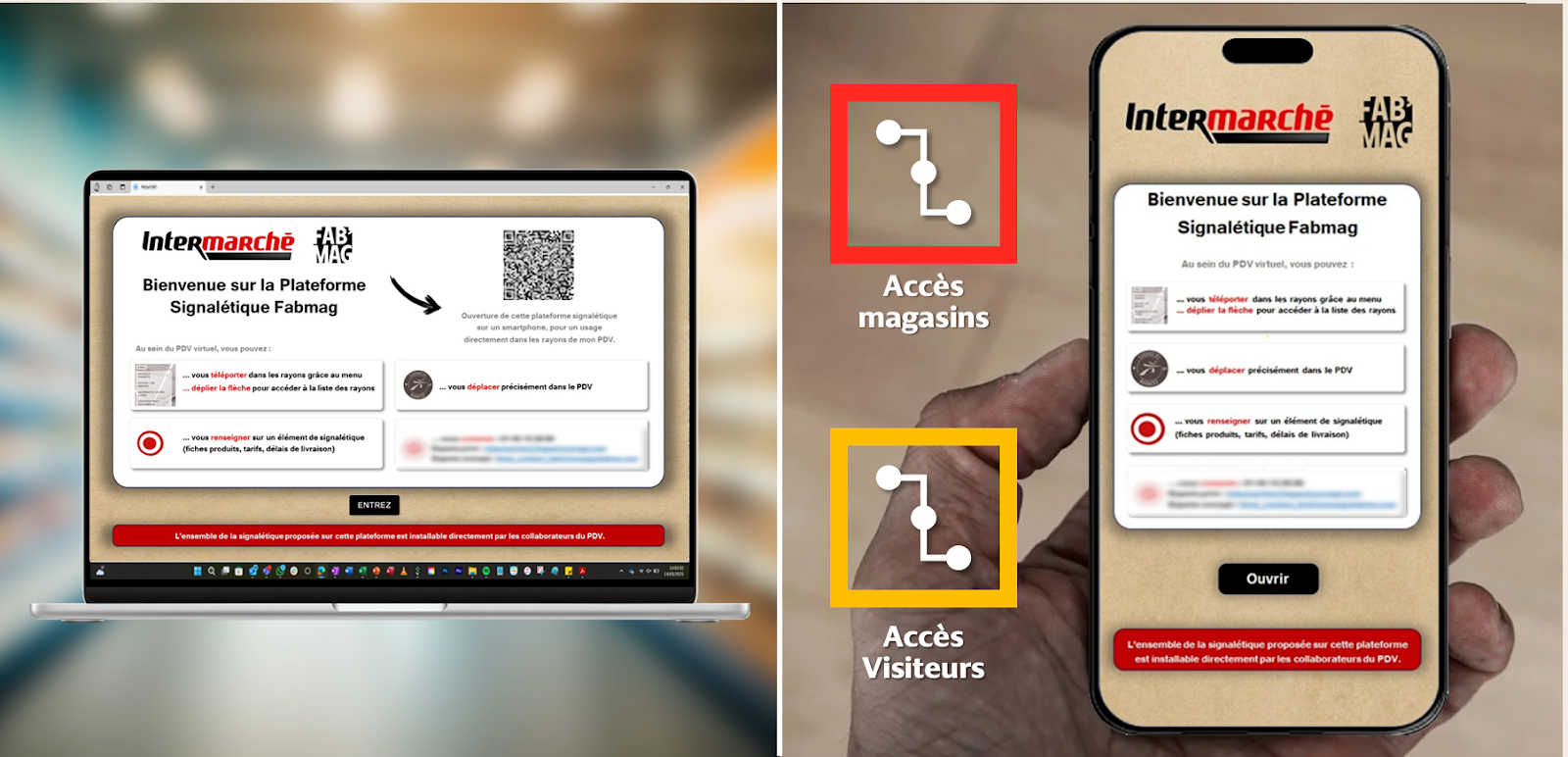
A streamlined user experience (UX) for two use cases
The virtual showroom replicates an ideal Intermarché store where members can browse freely (Fruits & Vegetables, Groceries, etc.). Interactive points of interest allow users to access detailed product information (dimensions, prices, delivery times) and add items to their cart. Billing is handled internally and is automated.
- Store Mode (Buyer): Allows store managers to order restocks completely on their own.
- Visitor Mode (Demo): A communication tool for headquarters to present the concept and train teams without using static PDF files.
Key Performance Indicators (KPIs)
The adoption of this merchandising platform within the Intermarché network demonstrates the tool’s operational performance:
Strategic Benefits for the Brand
The integration of this store merchandising software has had a profound impact on the group:
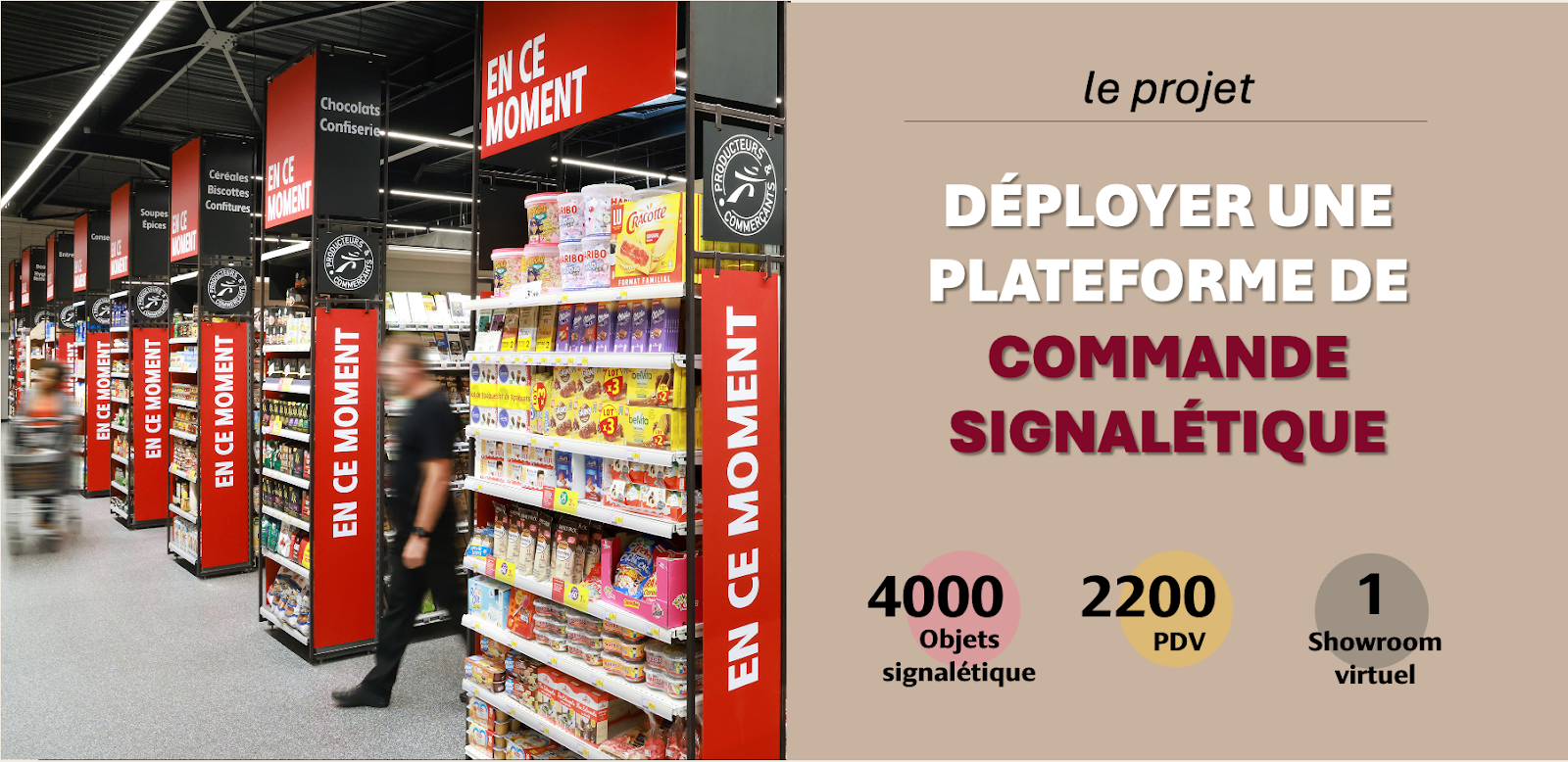
- Streamlining the product offering: The product catalog has been optimized, transforming from a complex volume into a streamlined catalog of 4,000 signage items, thereby simplifying logistics.
- Operational autonomy: Members install the components they receive themselves, which eliminates the need for outside assistance and speeds up updates on the shelves.
- Internal persuasiveness: The immersive and accurate visualization reassures decision-makers before they make an investment. This accelerates the transition from strategic concept to purchase.

The Future: Artificial Intelligence and Autonomous Modeling
Looking ahead, future developments will focus on two major innovations:
- AI Applied to Category Management: Automatic generation of planograms to reduce time-consuming tasks and compliance analysis using image recognition (comparison of actual vs. recommended layouts).
- Autonomous modeling: Enabling every member to map out the layout of their own retail location using a web-based tool, where they can drag and drop the concept’s elements with complete autonomy.
This textbook example demonstrates that a retail merchandising software is not merely a visual tool, but serves as an immediate performance driver to streamline the relationship between corporate strategy and on-the-ground realities.
Make your merchandising decisions 10 times faster!
No more expensive physical prototypes. With the Retail VR platform, turn your simple photos into interactive planograms, validate your concepts in just a few hours, and boost your in-store sales by 13%.
Ready to modernize the rollout of your in-store concept? Request your free Retail VR demo

.webp)
.webp)
.webp)

