


In an unstable economic climate and a rapidly changing retail landscape, shopper behavior in France is now evolving faster than traditional planning cycles. To remain competitive, retailers and brands must go beyond conventional approaches. The strategic challenge? Adopting agile merchandising based on data, predictive simulations, and 3D shopper experimentation.
The rapid evolution of shopper behavior in France
French consumers are now adopting more thoughtful, pragmatic, and fundamentally omnichannel purchasing behaviors. While physical stores remain the central point of contact—particularly for FMCG and food products—the mechanics of shopping are changing profoundly: visits are becoming less frequent, consumers are becoming more selective, and digital technology is playing an increasingly important role in the preparation phase.
The three major trends among new shoppers:
- Diversification of purchasing tasks: The paths are no longer linear.
- Rationalization of consumption: A direct response to the pressure of the cost of living and inflation.
- Omnichannel as the norm: The hybridization of e-commerce and physical stores is now a reality.
This complexity makes analyzing historical data alone and half-yearly adjustments insufficient for predicting future consumer actions.
Why traditional category management is no longer sufficient
A key phenomenon is disrupting the market: the "half-life of strategies. " This is the time it takes for a strategy to lose half of its relevance because shopper behavior has already changed. In a market where these changes are accelerating, traditional approaches—based on old point-of-sale (POS) data or isolated studies—are often obsolete as soon as they are published.
The consequences for Merchandising and Trade Marketing departments:
- Annual or half-yearly plans are no longer in sync with the actual pace of the market.
- Categories that performed well yesterday may fall behind tomorrow.
- Decisions regarding restocking or modifying merchandising plans are too slow to implement.
3D simulation and predictive intelligence: the new drivers of performance
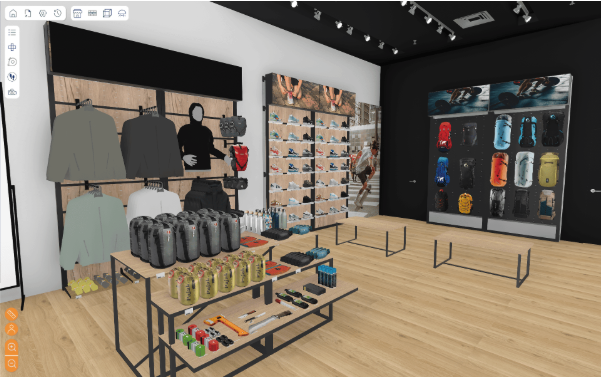
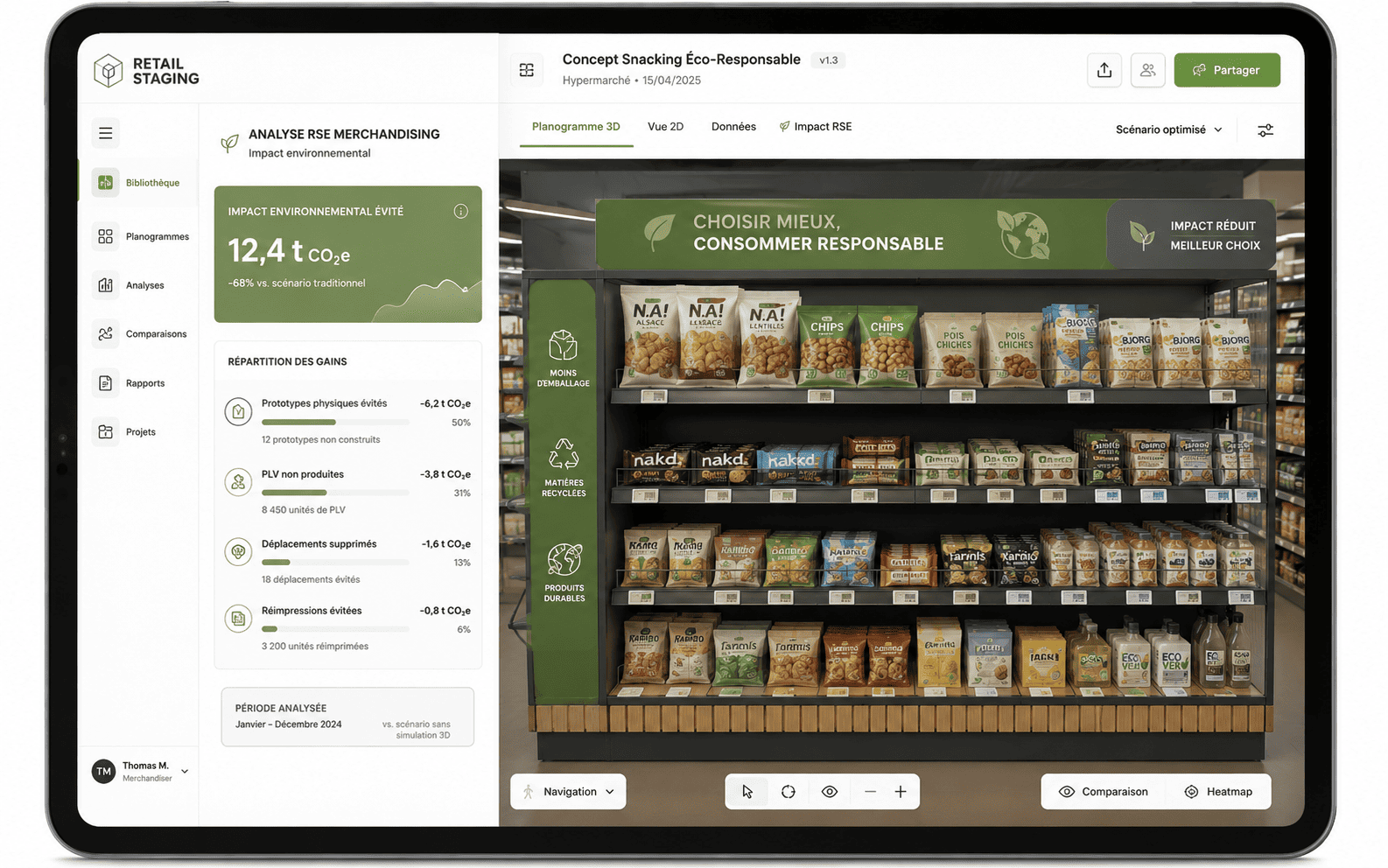
Immersive technologies now offer the ability to simulate, test, and predict behaviors even before deployment in stores.
At Retail VR, we combine three pillars within our collaboration platform to ensure reliable decision-making:
- Realistic 3D simulations of categories and shopping journeys.
- Virtual shopper tests in an immersive environment.
- Enriched behavioral data to optimize assortments, layouts, and promotions.
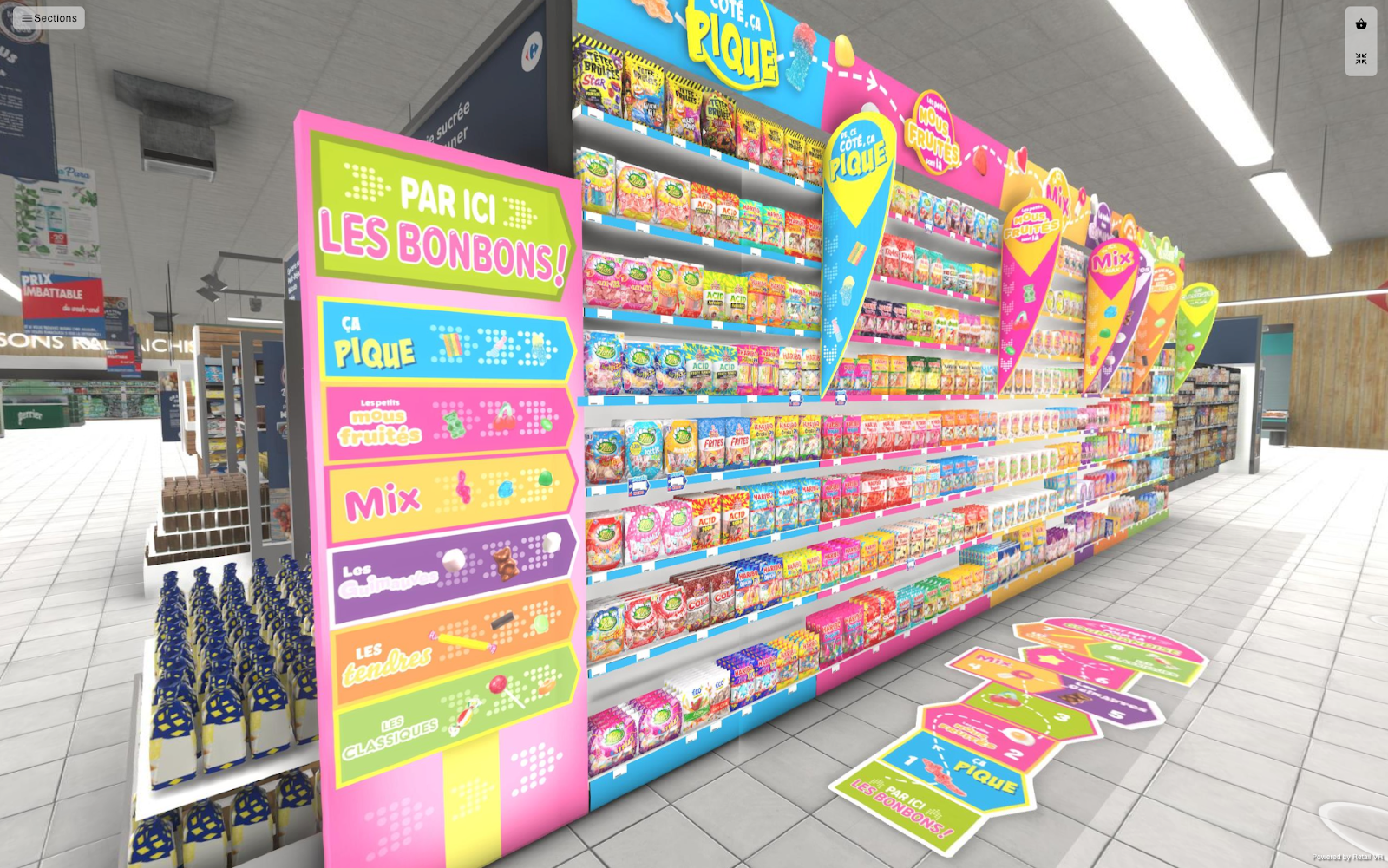
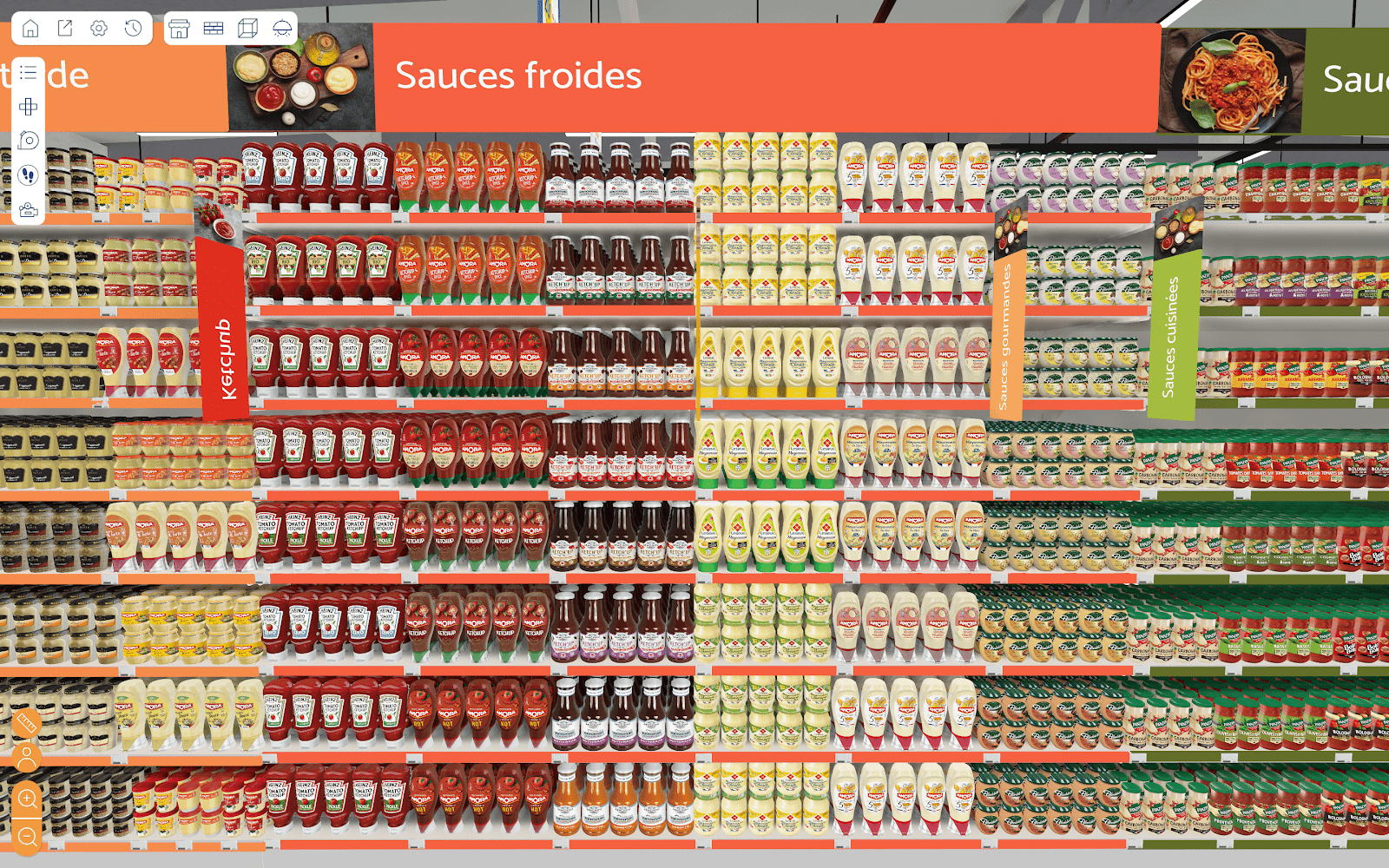
The competitive advantage: This approach allows you to anticipate the impact of changes before making any physical investments, notably by enabling you to virtually generate your products to stock your shelves exactly as they would appear in reality. This lets you identify the most effective configurations based on customer profiles (personas) and drastically reduce the costs and risks associated with in-store testing.
The power of partnerships: technology + research institutes
Retail VR's immersive technology reaches its full potential when combined with rigorous methodology. We work with recognized experts in consumer behavior to ensure the reliability and usability of the results.
Our key partners for robust shopper insights:
- Action + Shopper Research: Specialists in motivations, barriers, and triggers for purchasing at the point of sale.
- Scenes from Life: Independent institute specializing in marketing research, concept testing, packaging, and action-oriented merchandising studies.
- Kantar France: Global leader in data, providing macro and micro insights into French consumer behavior.
- Ipsos Shopper & Retail: International benchmark for detailed analysis of shopper expectations and journeys.
- Enov: Agile research institute specializing in innovation and customer experience, combining qualitative and quantitative approaches.
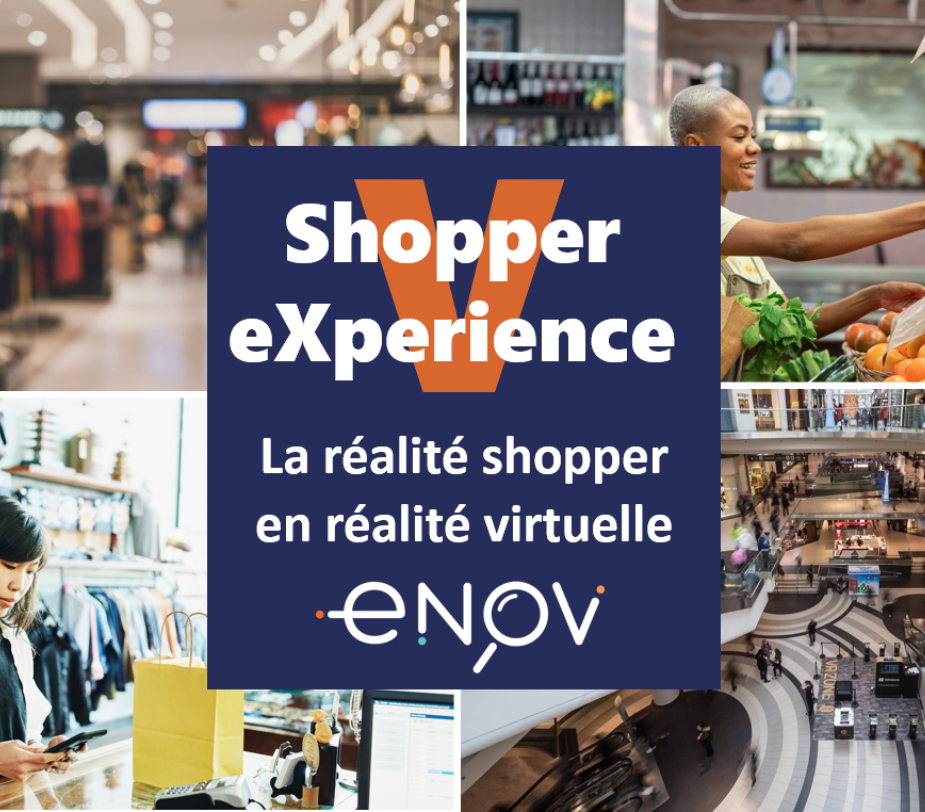
Use case: The "Virtual Shopper eXperience" (Retail VR × Enov)
During a recent webinar hosted by shopper experts, Retail VR and Enov demonstrated how immersive environments are reinventing marketing research.
The key lesson lies in the use of 3D reconstruction accessible without a headset (on a computer or mobile device) via the Virtual Shopper eXperience.
Reported profits:
- Realistic immersion: Immerse respondents in a virtual store from their homes.
- Removal of logistical barriers: Elimination of the geographical constraints of traditional field studies.
- Actionable data: Collection of behavioral data for accurate quantitative and qualitative testing.
This method accelerates the insight cycle and offers greater representativeness of "natural" behaviors in front of the shelf.
Measuring impact beyond historical data
Unlike retrospective methods, an enriched virtual approach allows dynamic variables to be integrated:
- Detection of emerging behaviors.
- Measuring halo and omnichannel effects.
- Analysis of the impact of new concepts and promotions in near real time.
Retail VR enables teams to make quick, reliable, and ROI-driven decisions.
3 steps to optimize your merchandising strategy
To stop being affected by market fluctuations, activate these levers now:
- Move to continuous optimization: Abandon major annual "resets" in favor of agile and frequent adjustments.
- Segment by shopping missions: Tailor your merchandising responses to shoppers' actual intentions.
- Combine 3D Technology and Research: Secure your decisions by testing virtually before physically deploying.
Conclusion
In a constantly changing retail environment, simply observing trends is no longer enough: they must be tested, measured, and anticipated. By combining the immersive experience of Retail VR with the methodological expertise of its partners, brands and retailers finally have an agile approach to align their merchandising strategies with the reality of French shoppers.

.webp)
.webp)
.webp)

