


Merchandising education faces a major challenge: how can it engage students who have grown up in the digital age while preparing them for the realities of the business world? During our latest webinar, we had the pleasure of speaking with Johnny Eisenhauer, a business administration professor with over 20 years of experience and an academic digital expert.
Johnny Eisenhauer, a teacher at Rosa Park High School in Thionville—a city bordering Luxembourg and Belgium—teaches students in the MEEF Master’s program and at a vocational high school. Given the significant challenges surrounding employability in this dynamic region, he chose to adopt the Education Editionsolution into his curriculum. Read his testimonial.

The reality: a disconnect between the workplace and the classroom
Before the advent of virtual reality and 3D technology, teaching merchandising faced several physical and logistical challenges. Johnny Eisenhauer had made a simple observation about his previous methods:
- Students used advanced digital tools during their internships to boost productivity.
- Back in the classroom, they had to make do with traditional paper formats or 2D diagrams.
- The high school did have a physical training facility (a simulated store), but this equipment had logistical limitations.
- The teacher could only have four to six students working on the physics experiments at a time, leaving the rest of the class to do more traditional activities.
So we needed to find a tool that could engage the entire class at the same time.
The Retail VR Solution: Technology in the Service of Education
To modernize its curriculum, the high school chose the Retail VR merchandising software platform. The teacher’s main goal was clear: to prepare students for their future careers by using the same digital solutions found in the workplace.
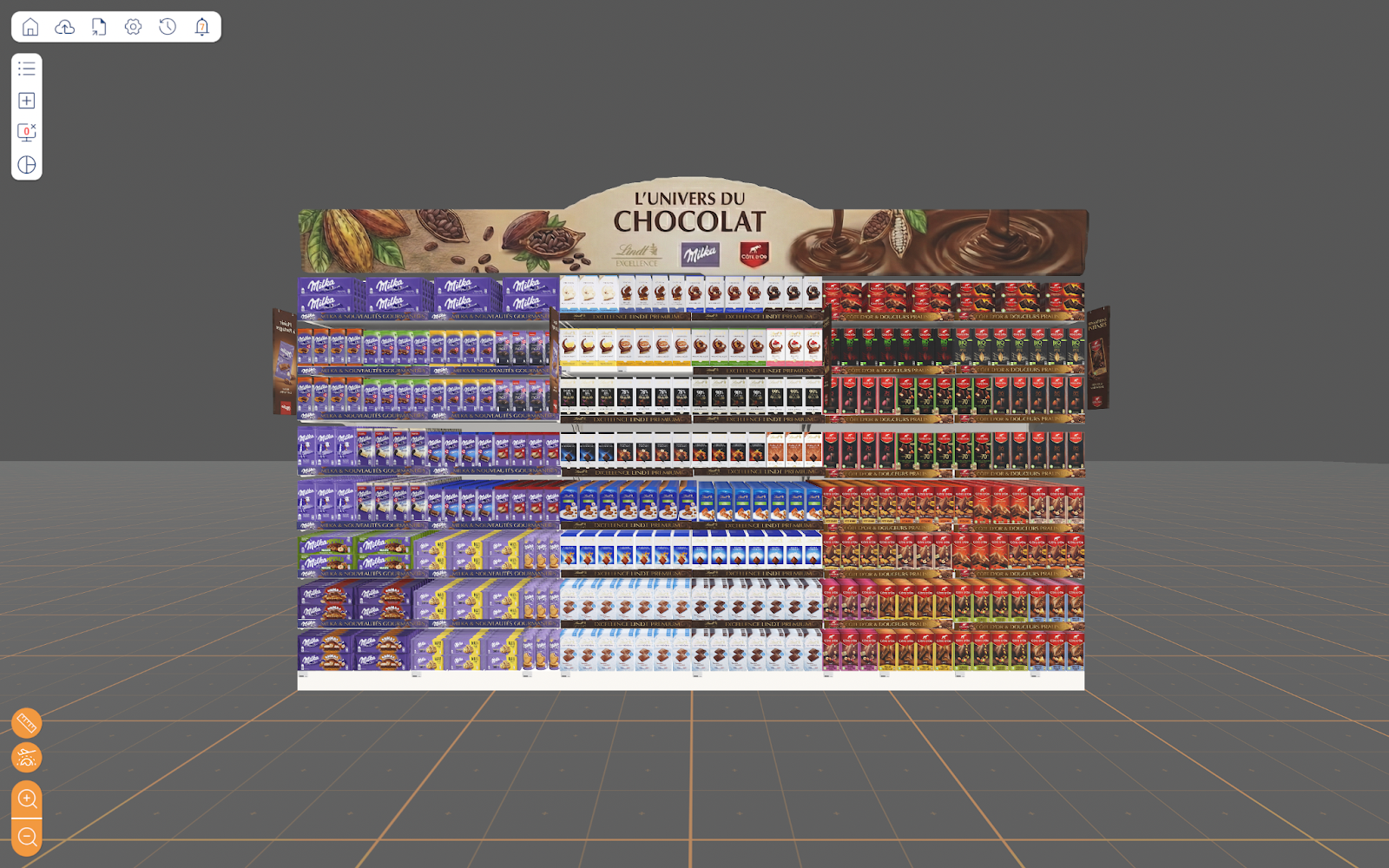
The tool allows you to intuitively recreate sales environments:
- The software is very easy to use thanks to its drag-and-drop feature.
- Students can create product databases by converting 2D photos into 3D objects.
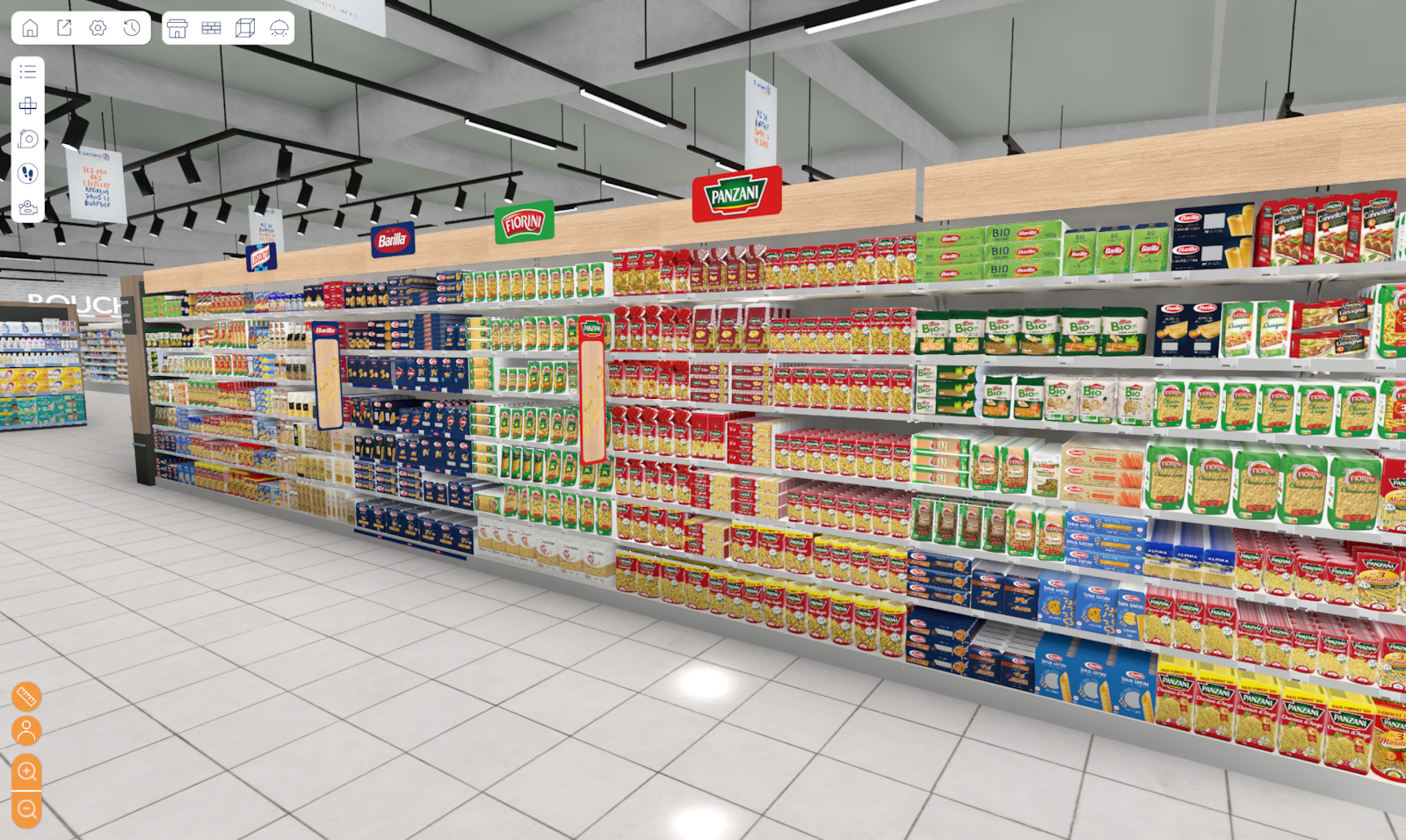
- They simulate store layouts and customer journeys in an immersive way.
- The exercises are based on a database of 3,500 to 4,000 real-world retail products (food, apparel, etc.).
"3D visualization brings their ideas about a layout to life. They get immediate feedback on their work."
The concrete educational impacts observed
After a year and a half of use, the results regarding student engagement and learning have been very positive.
- Managing Heterogeneity: 3D visualization overcomes barriers related to spatial representation, which helps students who struggle with traditional 2D diagrams.
- Room for error: Students work by trial and error; they position a product, observe the result, and make immediate adjustments if it doesn't work.
- Greater independence: While a small group works with the physical materials in the lab, the rest of the class works independently on the digital app in the same room.
- Saves the teacher time: The teacher is much less involved in the technical aspects; they act solely as a "resource person" to resolve issues, clarify instructions, or explain concepts.
Artificial Intelligence and Education: Threat or Opportunity?
During the webinar, we also discussed the growing role of Artificial Intelligence (AI) in education. Far from viewing it as a threat, Mr. Eisenhauer takes a pragmatic approach.
Since AI is used in business to boost productivity, it would be illogical to ignore it in vocational education. Today’s students grow up using these tools every day. The true role of the teacher is to educate students in the critical use of AI, to avoid the intellectual laziness of “copy-pasting” and to warn them about the potential pitfalls of algorithms.
Tips for teachers who want to get started
For colleagues who are still hesitant to incorporate virtual reality or 3D merchandising software into their teaching plans, Johnny Eisenhauer offers the following recommendations:
- Don't worry: You don't need to be a computer scientist or know how to code to use Retail VR.
- Trust your students: Don’t always be hovering over them. Letting them find solutions on their own—especially by using the available video tutorials—helps them develop effective learning strategies.
- Agree to explore together: The teacher doesn’t need to know everything right away. Adopting a collaborative research approach with the student is an excellent way to develop transferable skills.
The use of 3D technology and professional immersive tools is no longer just an option for the future of education; it is essential for building a strong bridge between schools and the retail industry.
Interested in incorporating this technology into your educational program? Let’s talk about it!
.png)
.webp)
.webp)
.webp)

