


Key takeaways:
- The concept: Data-Driven Category Management uses Artificial Intelligence (AI) and big data analytics to transition from intuitive assortment management to real-time predictive modeling.
- The impact in numbers: According to a McKinsey study, integrating AI into assortment planning can reduce the number of SKUs by 36% while increasing sales and gross margins by 1 to 2%.
- The method: AI analyzes sales data, behavioral trends, and logistical constraints to hyper-localize the offering.
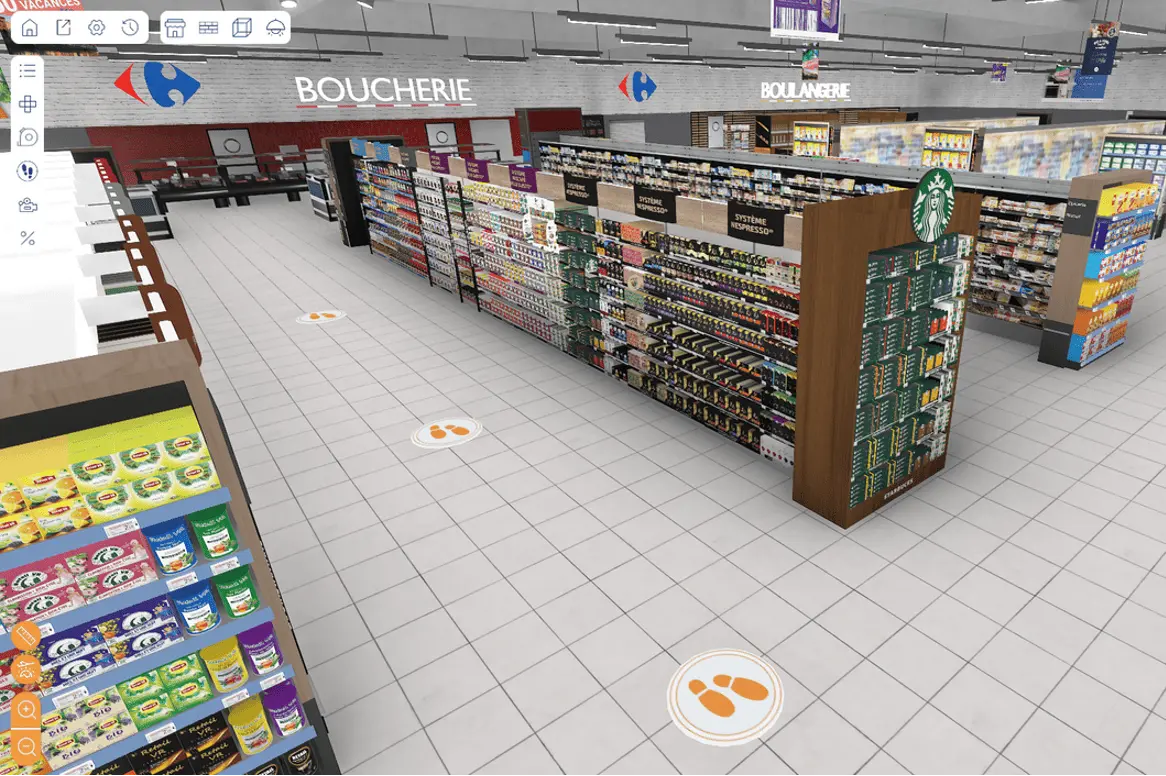
- Virtual testing: Combined with virtual reality and smart planograms, AI makes it possible to simulate and validate product assortments at the point of sale before any physical rollout.
The retail industry faces an ongoing challenge: offering the right product, in the right place, at the right time. With the fragmentation of the shopping journey and the volatility of consumer behavior, traditional methods of stocking shelves are no longer sufficient.
Today, the rise of data-driven category management is redefining the rules of merchandising. By leveraging artificial intelligence (AI), retailers and manufacturers can now predict demand with surgical precision and optimize the perfect in-store product mix. But how exactly is this technology transforming the day-to-day work of category managers?
What is Data-Driven Category Management?
Historically, assortment planning relied on historical sales data and the intuition of buyers. Data-driven category management, on the other hand, refers to an approach in which every decision regarding shelf space is guided by data and advanced analytics.
Artificial Intelligence, using machine learning and predictive analytics models, processes millions of variables in real time:
- Sales history and stock shortages.
- Seasonality, weather, and local events.
- Product substitutability (what a customer buys if their preferred product is unavailable).
- Emerging trends on social media.
The goal is no longer simply to stock the shelves, but to curate a highly relevant selection of products that enhances visibility and optimizes the customer journey.
How Does Artificial Intelligence Optimize In-Store Product Assortment? : 3 Key Factors
1. Hyper-localization of the product assortment (Demand Sensing)
There is no longer such a thing as a "standard store." AI makes it possible to move away from a "one-size-fits-all" approach toward hyper-localization. Algorithms identify demand patterns specific to each store’s catchment area. As a result, an urban store will not offer the same product selection as a suburban hypermarket, ensuring an optimal level of service for every consumer profile.
2. Streamlining inventory and reducing excess stock
An overcrowded shelf causes confusion for shoppers (the "paradox of choice") and costs the business money. AI precisely identifies "incremental sales" (the SKUs that actually generate new revenue) as opposed to SKUs that merely cannibalize sales of other products in the line. By streamlining SKUs, the Category Manager frees up shelf space for high-margin innovations. They can then easily create virtual versions of these new products to test their visual impact on the shelf.
3. Digital Twins and Virtual Layout Simulation
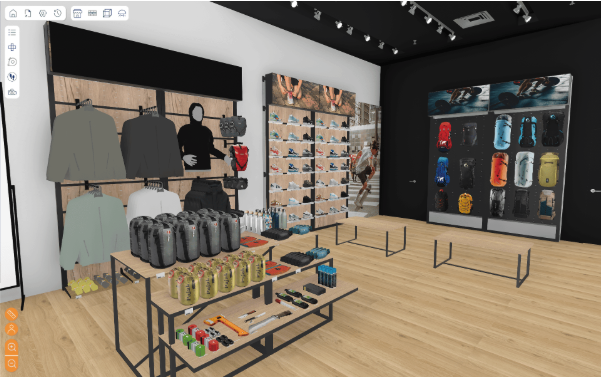
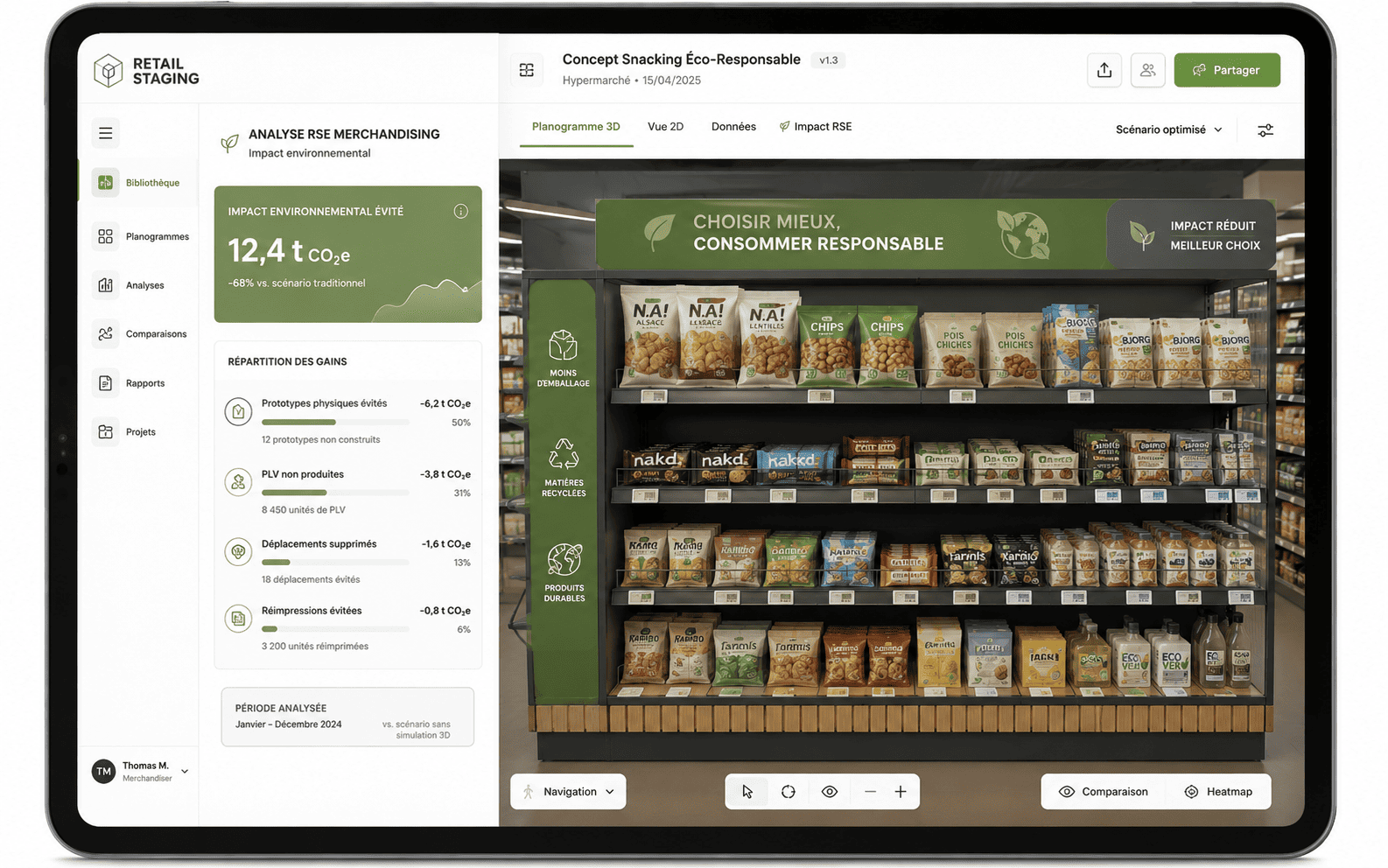
Knowing which product is ideal is one thing; knowing how to place it on the shelf is another. This is where AI meets spatial imaging. Thanks to virtual reality solutions applied to retail, it’s possible to create a predictive merchandising plan . Manufacturers can thus ensure flawless trade marketing execution without having to physically visit stores, by automatically generating the optimal layout based on theoretical performance calculated by AI.
The Numbers Speak for Themselves: What ROI Can You Expect from AI in Merchandising?
The promise of AI is not merely theoretical; it translates into massive financial and operational gains, which have been extensively documented by specialized research firms:
- Reduced inventory and increased sales: According to an in-depth study by McKinsey & Company on AI in assortment planning, retailers that use AI-based solutions are able to reduce their number of SKUs by 36% while generating a 1% to 2% increase in sales.
- Widespread Adoption: A Gartner analysis indicates that by 2030, the majority of large organizations will have adopted AI-powered forecasting, because in modern retail, "the speed of signal analysis exceeds the speed of restocking. "
- A rapidly growing market: The market for assortment and space optimization(ASO) solutions was valued at approximately $2.1 billion in 2024 and is projected to reach $5.1 billion by 2033 (Source: IBM/Infosys via Couture.ai).
How can you begin the transition to a data-driven strategy?
How can companies begin the transition to a data-driven strategy? For manufacturers (FMCG) and retailers, integrating AI into their category strategy must be done in a structured manner:
- Auditing and Unifying Data: The adage "garbage in, garbage out" has never been more true. As highlighted in the Institut du Commerce’s report on new uses of data (2026 edition), advanced data analytics is the cornerstone of the future. High-performance AI requires breaking down silos with clean, unified databases updated in real time (point-of-sale data, panelist data, supply chain logs).
- Equip yourself with predictive collaboration tools: Move beyond static Excel spreadsheets and opt for SaaS software like our collaborative platform that can generate dynamic recommendations.
- Virtual Reality Testing (A/B Shopper Testing): Before rolling out a new AI-suggested product assortment nationwide, validate consumer acceptance through shopper studies conducted in virtual stores (Digital Twins). This allows you to validate the concept at a lower cost while offering an immersive and realistic experience.
Conclusion
Artificial Intelligence will not replace the expertise of the Category Manager, but it does equip them with analytical "superpowers." Data-driven category management is the key to navigating the complexity of omnichannel retailing, meeting shoppers’ increasingly sophisticated expectations, and maximizing the profitability of every square inch of shelf space.
The next step? Making this data visual and tangible. By combining the predictive power of AI with interactive virtual reality simulation environments, consumer goods brands are now able to convince retailers of the effectiveness of their new product assortments.
Ready to turn your categorical data into flawless in-store execution? Discover how Retail VR’s immersive simulation solutions help you bring your AI recommendations to life and validate your product assortments before they’re physically deployed.

.webp)
.webp)
.webp)

