


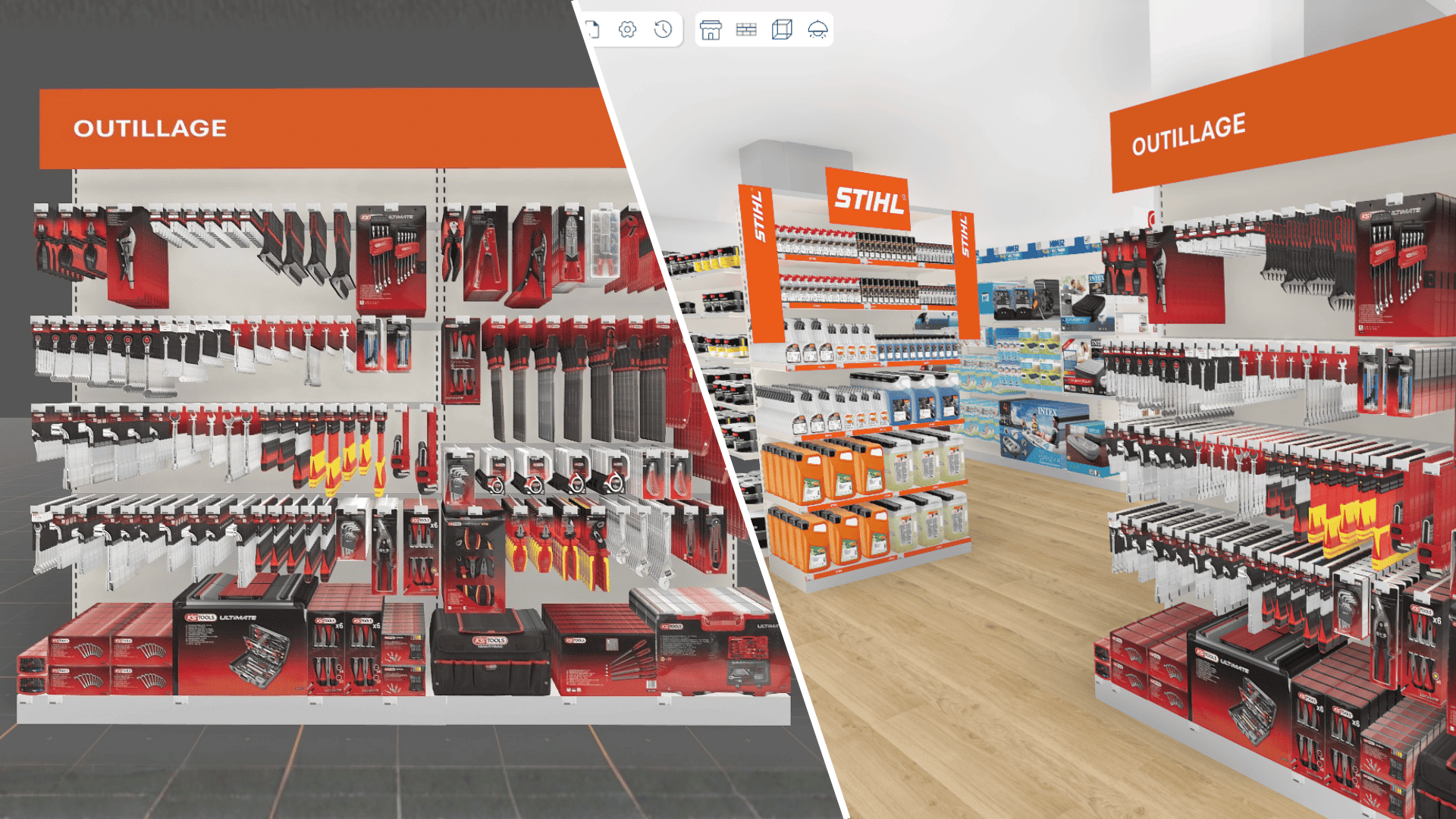
The DIY Market in 2026: Pressure on Margins, the Battle for Merchandising
With €21.8 billion in revenue in 2025, the home improvement superstore market remains above pre-COVID levels despite three consecutive years of decline. In 2026, competition will center on in-store differentiation: the neighborhood-focused Weldom format is growing by 8%, bringing Adeo’s market share to 51%, while other retailers are seeking to regain ground by focusing on the customer experience and the efficiency of their store aisles.
Sources: FMB / Inoha — 2025 Home Improvement Market Study · Républik Retail — Top Winners in the Home Improvement Sector for 2025
The Unique Aspects of Merchandising in Home Improvement Stores
Extreme seasonality and mixed formats
No retail sector is more dependent on seasonality than home improvement. Gardening and patio products from March to August, painting and renovation in the spring and fall, and electrical/air conditioning in the summer and winter (up to 40% of the sales floor changes its layout every quarter). At the same time, a 15,000-square-meter Leroy Merlin hypermarket is nothing like an 800-square-meter neighborhood Weldom store. Planograms must be adapted to both.
The automatic generation of variants by format on the Retail VR platform reduces this work from several days to just a few hours. The dimensions of the fixtures are configurable, and the planogram is automatically recalculated.
Sources: Garden, Plumbing, Bathroom, and Kitchen Departments — GSB 2025 — Batinfo · GSB 2025 Bathrooms — SDBpro
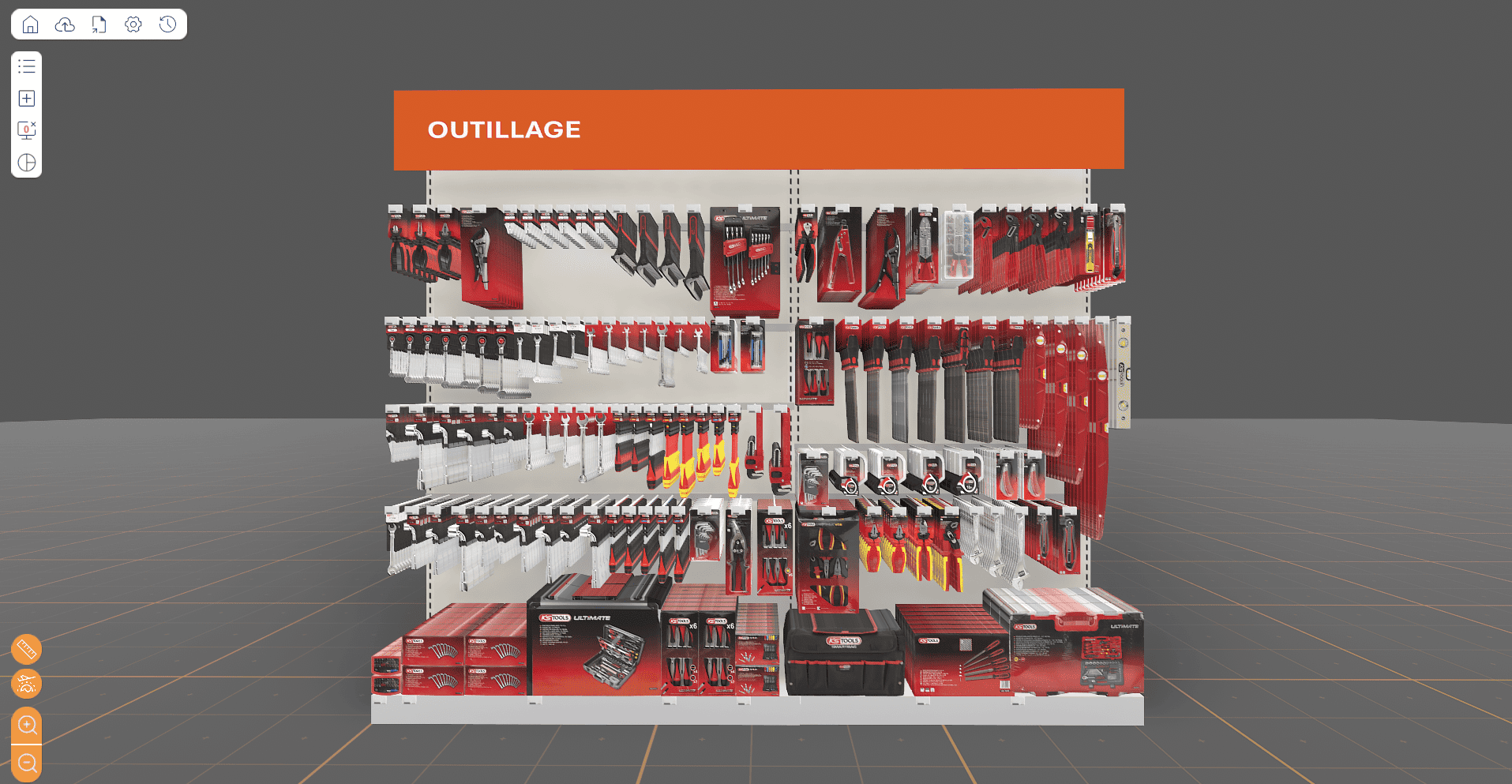
How 3D Is Transforming Merchandising in Home Improvement Stores
1. Seasonal planning in 2 weeks instead of 2 months
With the Retail VR, a central team creates a 3D simulation of a typical seasonal display, regional managers adapt it to their store format, and area managers receive the guide in augmented reality on a tablet. Network rollout time is reduced from 8 weeks to 2 weeks.
2. Brand pitches to home improvement store buyers
For a tool or paint manufacturer, the meeting with the home improvement retailer’s buyer is crucial. The 3D presentation in mixed reality — with the simulated aisle displayed in the exact dimensions of the target retailer’s fixtures — creates an immediate sense of engagement. By 2026, this will be the standard expected by buyers at the most forward-thinking retailers, such as Leroy Merlin.
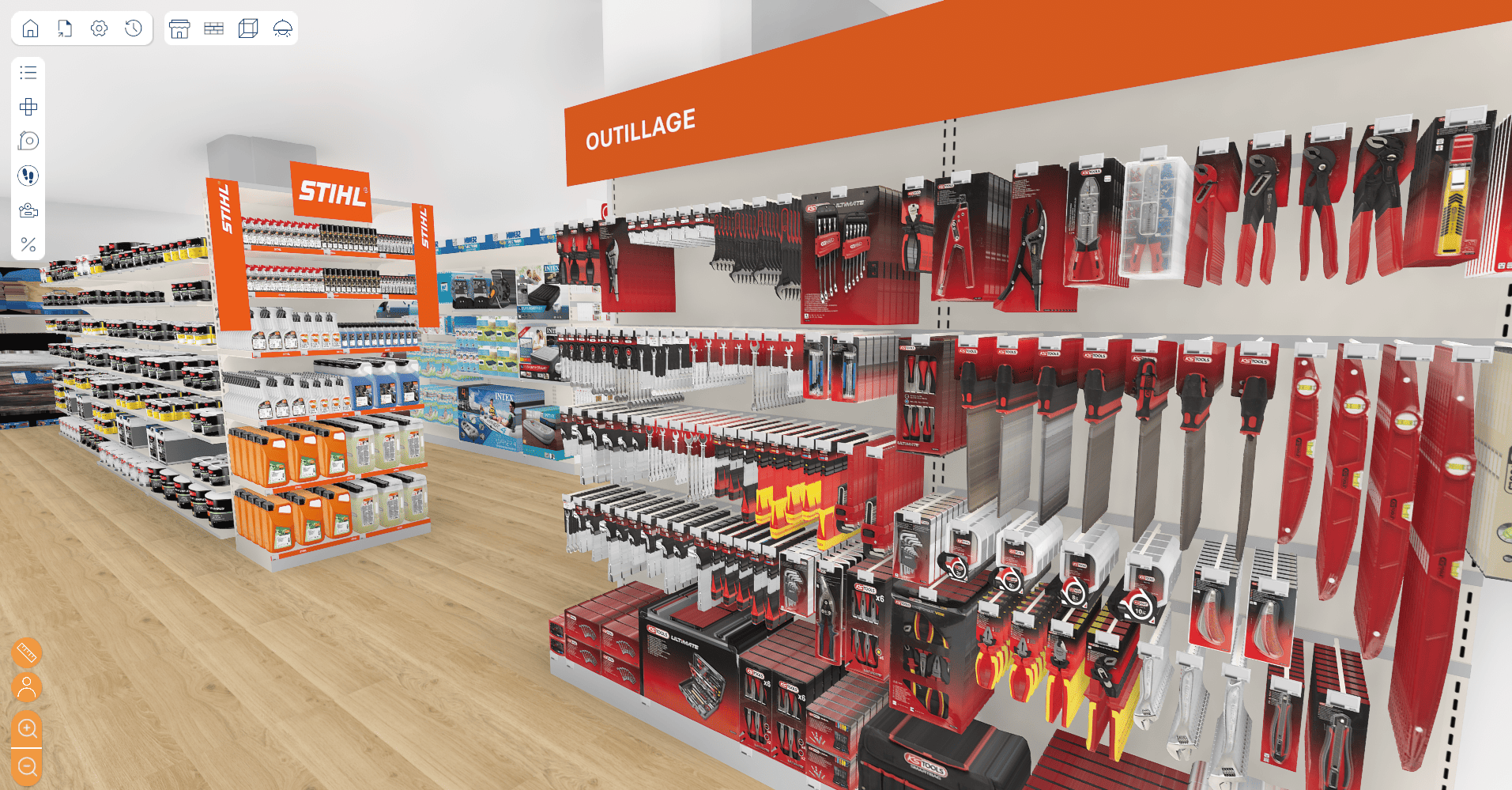
3. Optimizing Cross-Merchandising
Home improvement is the quintessential sector for cross-merchandising: screws and drills, paint and rollers, tiles with grout and adhesive. 3D simulation allows you to test different product placement configurations and measure their impact on the average shopping cart value through virtual shopper studies before any rollout.
4. Compliance Audit of Large Networks
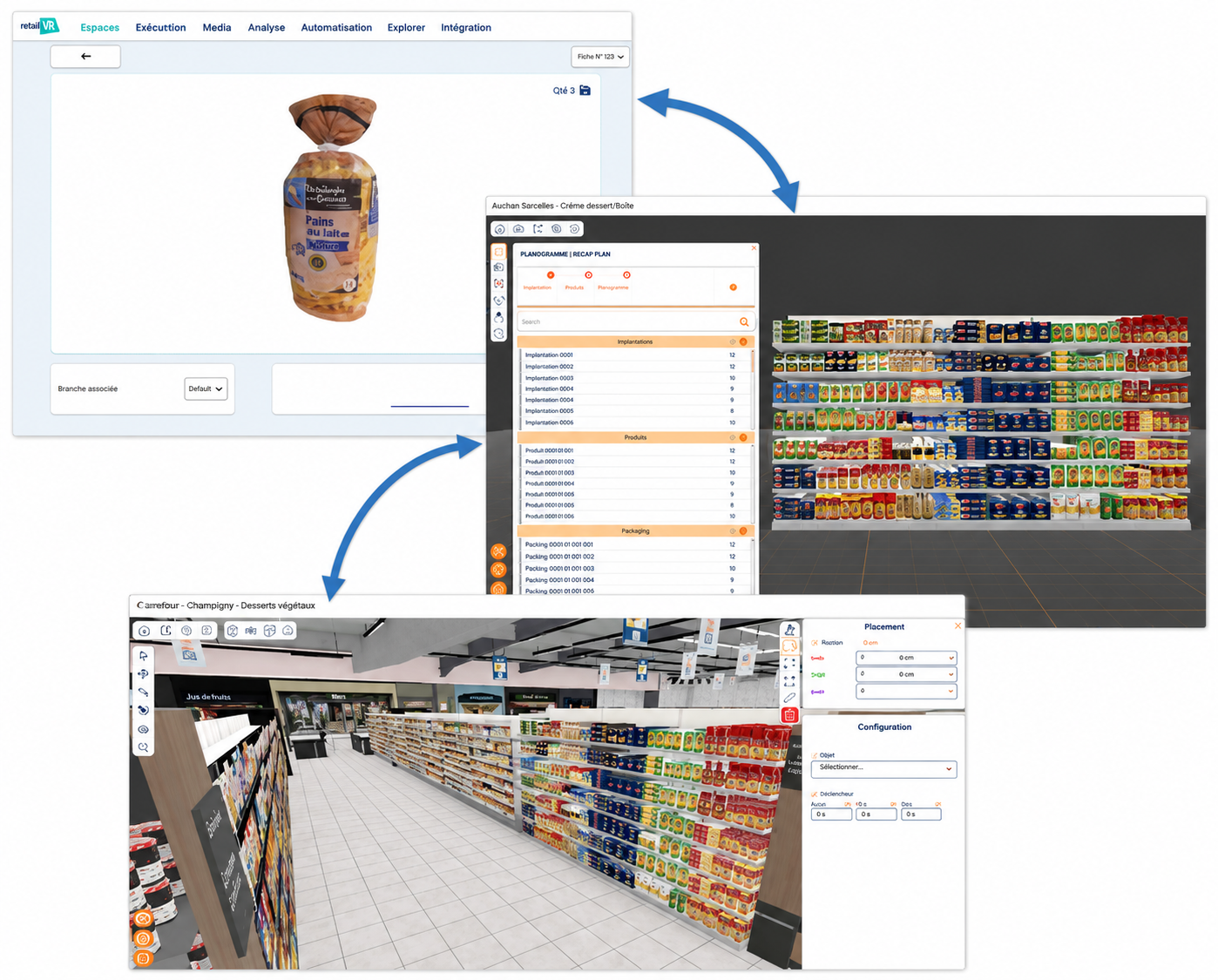
In a network of 300 to 500 stores, the Retail VR’s AI image recognition enables each area manager to take a photo of the shelf and instantly receive a compliance report. No more time-consuming manual audits.
The 6 Priority Departments for 3D Optimization in Home Improvement Stores
Sources: FMB / Inoha — GSB 2025 Report · GSB 2025 Bathrooms: 1.43 billion euros
Conclusion
In a home improvement market under pressure, merchandising is one of the few ways to stand out without additional product investment. Retailers that accelerate their seasonal planning using 3D technology (led by Leroy Merlin, with +1.4% growth in 2025—bucking the market trend) are building a sustainable operational advantage. To find out how Retail VR supports home improvement retailers, contact our teams.
Want to learn more? Request a demo →


.webp)
.webp)
.webp)

