


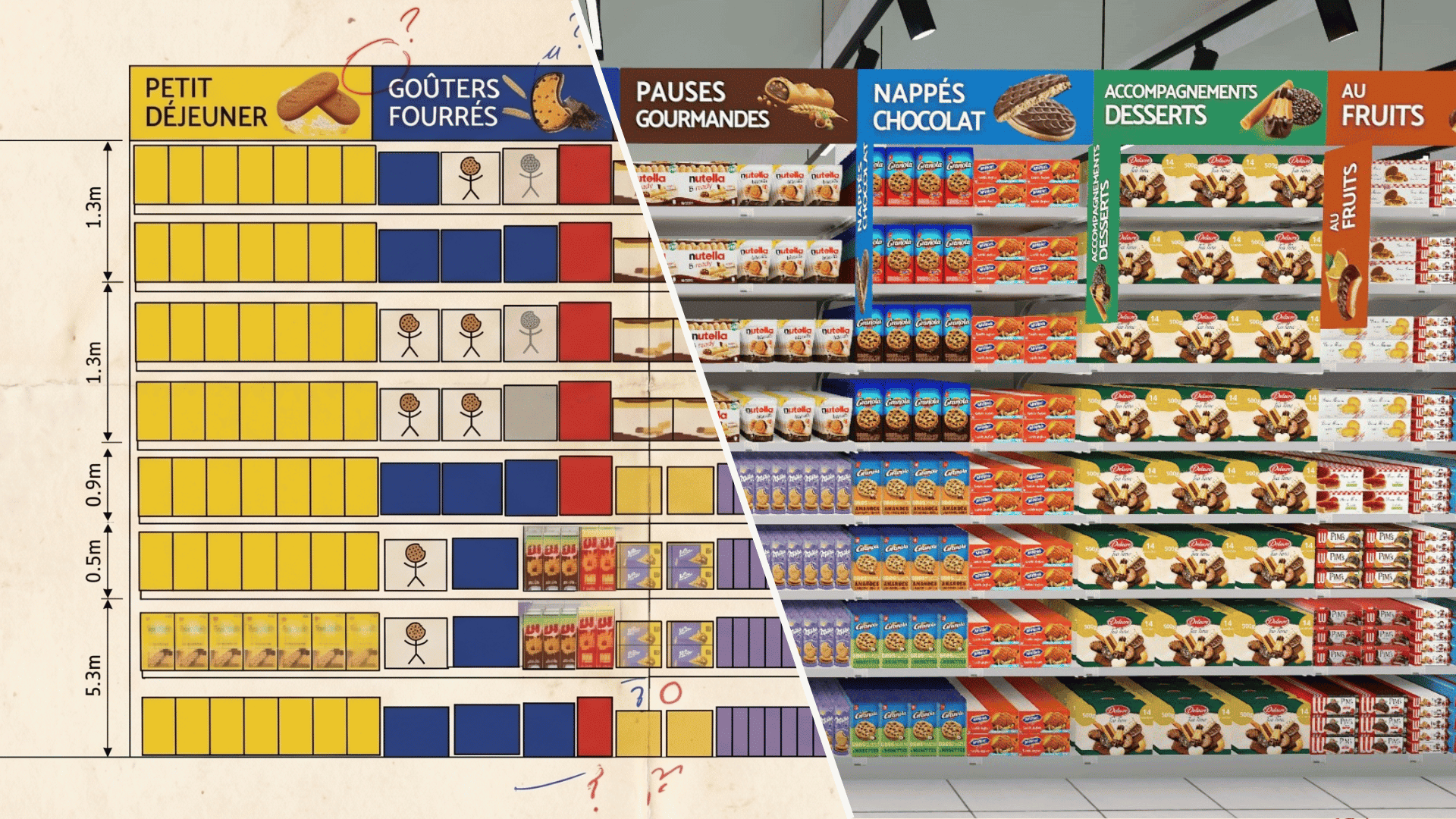
Key takeaways:
- The reality: Sales meetings often stall because of unsuitable materials. If your merchandising strategy doesn't spark interest during a meeting, there's little chance it will be implemented in-store.
- The problem: A traditional slide show limits the presentation. It explains the data but doesn't bring the concept to life.
- The solution: Replace the slideshow with an immersive, interactive, and well-reasoned virtual experience. Don’t just explain your strategy—show it off using a dedicated.
- ROI by the Numbers: The use of immersion results in a measured 37% increase in engagement rates, thereby accelerating decision-making.
You’ve spent weeks fine-tuning your merchandising recommendations, cross-referencing shopper data, and optimizing your planograms. On paper, the strategy is unbeatable. And yet, when you present it to your retail client or internal management, the magic doesn’t happen. Your audience’s attention wanders, their questions reveal that they haven’t grasped the visual impact of your idea, and the project is put on hold.
Why is there this disconnect? Because there’s often a huge gap between what’s presented and what your audience understands. What if your presentation doesn’t do your vision justice? The reality on the ground is harsh: even the best ideas in the world are worthless if they aren’t understood.
The Pitfall of the Traditional Slideshow
This so-called "gap" in understanding rarely stems from the strategy itself, but almost always from its format and the way it is presented.
Historically, trade marketing and category managementhave relied on standard presentation software (PowerPoint). However, a traditional slide show limits the scope of the presentation.
Why is it stuck?
- A problem with spatial visualization: The human brain has difficulty transforming a flat 2D image (a photo or a graphic) into a life-size spatial representation of a hypermarket.
- Lack of interaction: A series of slides is great for explaining theoretical data or market shares, but it does absolutely nothing to bring the concept to life.
- Lack of context: A beautiful, cut-out end-cap display on a white background in a slide doesn't show how it fits in amid the "visual noise" of competitors.
A direct consequence of this lack of immersion: your best ideas get stuck on paper!
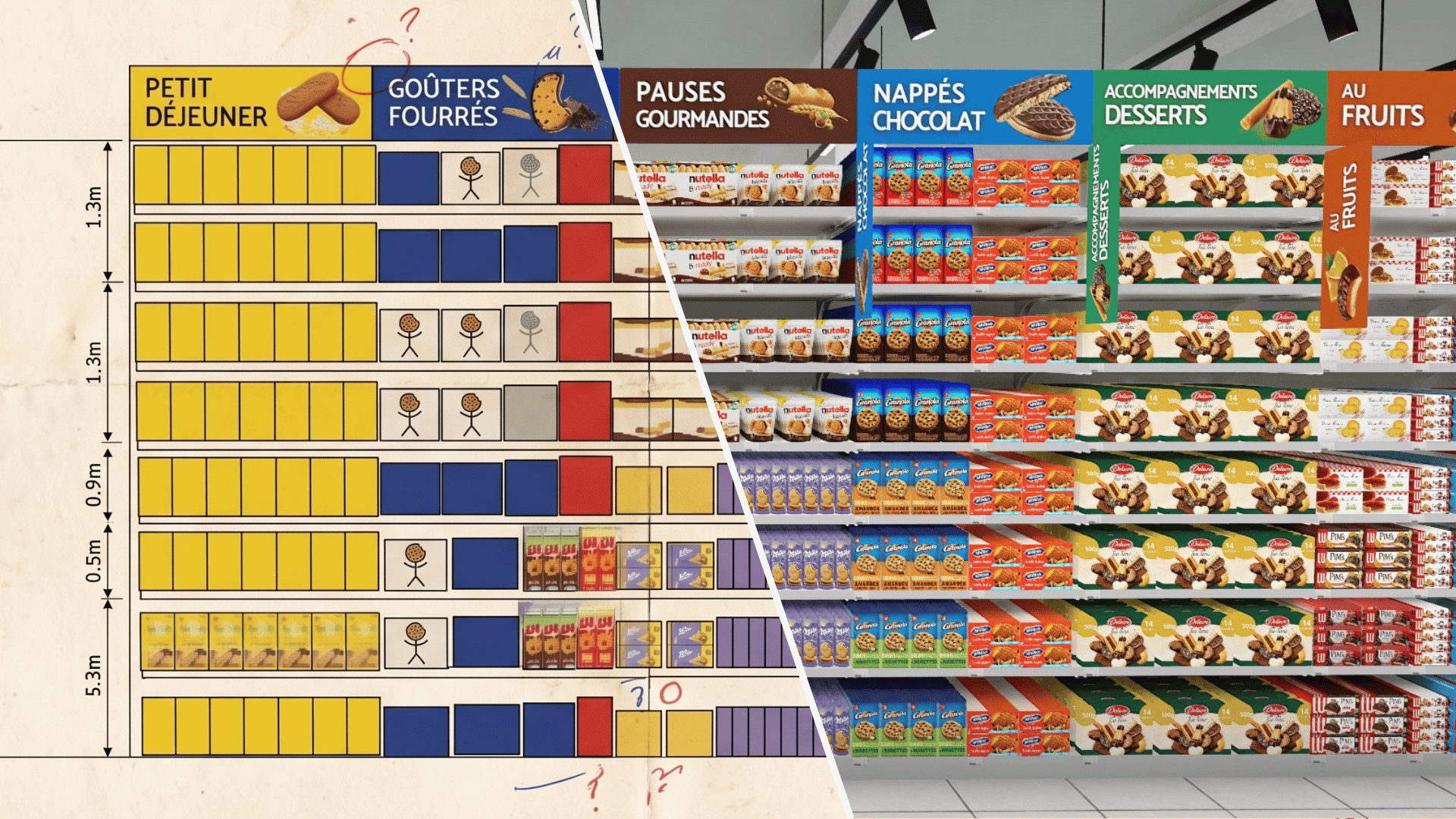
Don't just explain your strategy—show it!
To capture the attention of overworked decision-makers (buyers, department managers, store managers), we need to shift our mindset. It’s time to move from “storytelling” (telling a story) to “storyliving” (creating an experience).
Today, what sets our top-performing users apart is their ability to move away from static presentations. Create an engaging experience by replacing your slides with an immersive, interactive, and well-reasoned virtual experience. The goal is clear: don’t just explain your strategy—show it.
In practical terms, how does this work during an appointment?
Instead of moving on to “Slide 14,” the sales representative opens a Digital Twin on their computer or tablet. The buyer is instantly transported to the center aisle of a virtual store. They can navigate around, approach the shelf, see the impact of the new in-store display, and even compare the old and new merchandising planwith a single click.
Bringing this experience to life creates an immediate connection, helping you convey your message and win people over in a matter of seconds—rather than losing your audience after 30 endless slides.
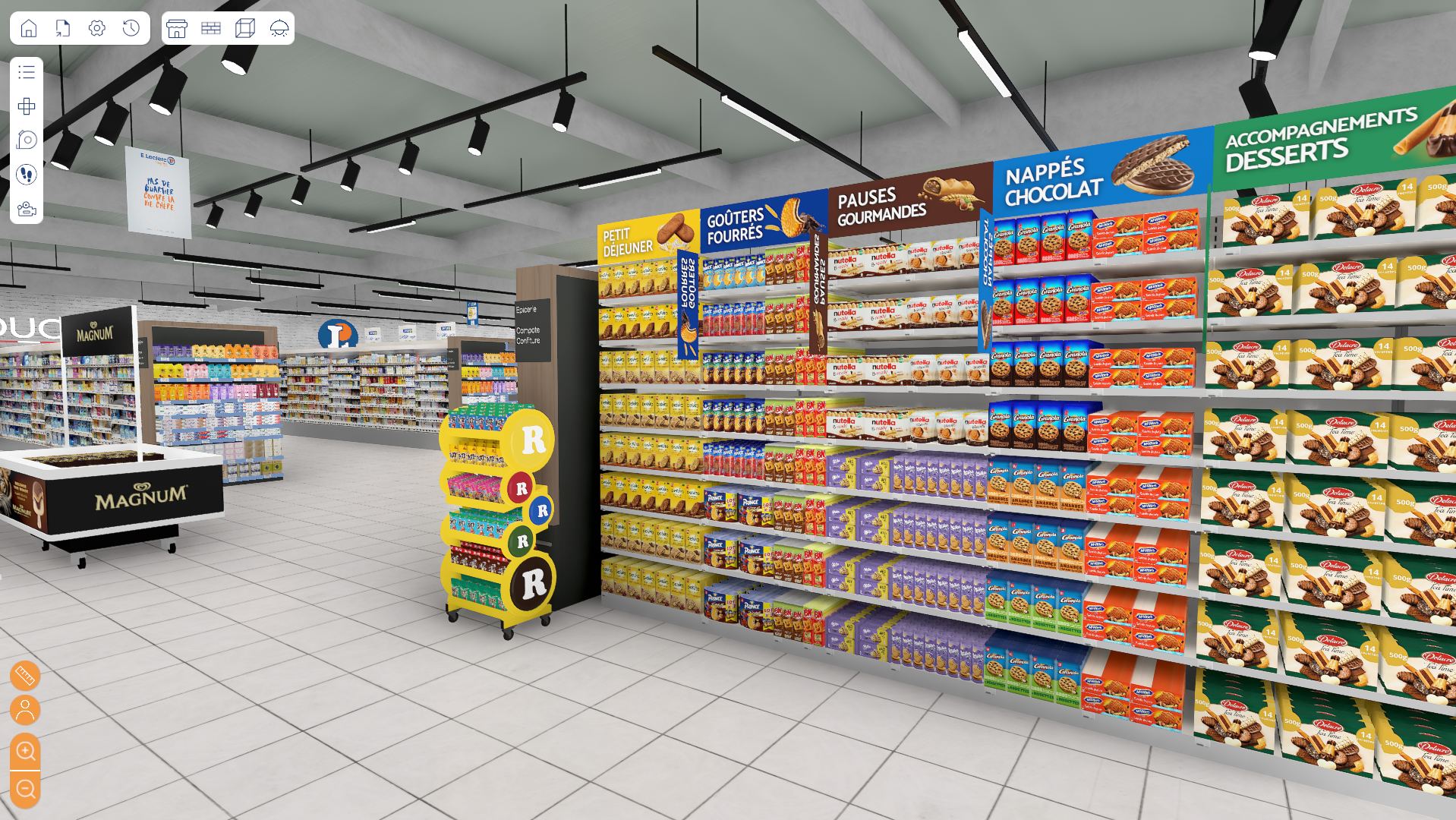
The Numbers Speak for Themselves: Why Is Immersion a Game-Changer?
Switching to virtual presentations isn't just a matter of "modernity" or a technological gimmick; it's a measurable driver of business performance. In practice, we've seen a 37% increase in engagement rates .
This exceptional surge in engagement and conversion can be attributed to three immediate benefits for your customers:
- Better Visualization: No more guesswork. The buyer can see exactly the floor space required, the height of the furniture, and how clearly the products will be displayed—just as the end consumer will see them. That’s why it’s strategically important to be able to create 3D models of your products and integrate them accurately.
- Immediate visualization: By placing the fixture or planogram in an ultra-realistic retail environment (with aisles, competitors, and in-store lighting), the customer no longer needs to use their imagination. The mental load is reduced to zero.
- Buy-in from decision-makers: The fear of making a mistake is the number one barrier to purchasing in B2B. By providing an irrefutable visual demonstration, interactive modeling dispels operational doubts and builds confidence in decision-making.
Conclusion: Perfect execution starts with the initial meeting
The bottom line for consumer brands is clear: it's about turning merchandising into your competitive advantage.
Thanks to virtual modeling and immersive environments, the B2B sales process becomes seamless and frictionless. The three pillars of success fall into place: your vision is clear, decision-makers give their approval, and the strategy is rolled out.
By stopping to explain and starting to show, you restore your merchandising concepts to the full visual impact they deserve.
Ready to bring your store shelves to life?
Discover how the Retail VR platform can transform your sales pitches into unforgettable experiences. Contact us for a personalized demo and put your old slide shows away for good!
.jpeg)


.webp)
.webp)
.webp)

