


Definition
A merchandising kit is the set of materials that enables a field team to implement a brand’s point-of-sale strategy: recommended planograms, shelf guides by retailer/format, priority rules (minimum facings, key zones), available point-of-sale materials, and sales pitches. Traditionally produced in PDF or PowerPoint format, it suffers from two major drawbacks: it is difficult to update and difficult for non-experts to interpret.
Sources: Merchandising Plan: Method, Steps, and Tools — go-sidely · Supermarket Merchandising Layout — RMA
What the Switch to 3D Changes
The 5 Components of an Effective 3D Merchandising Portfolio
1. The 3D Product Library
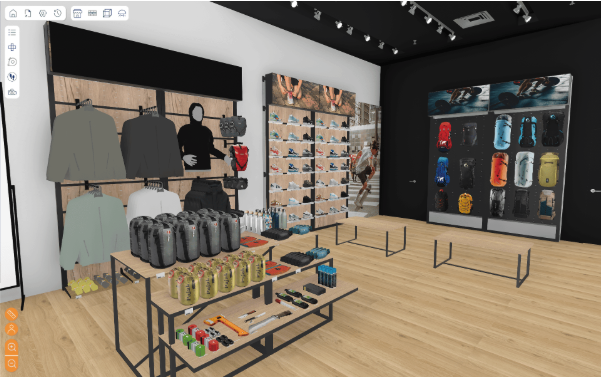
The first building block: the 3D library of all products in the line. Each product is modeled with its exact dimensions, packaging, and front, back, and side views. Using Retail VR’s patented automatic modeling technology based on photos, this library can be built in just a few hours at most. It can then be reused for all planograms, all retailers, and all seasons.

2. Recommended Planograms by Retailer and Store Format
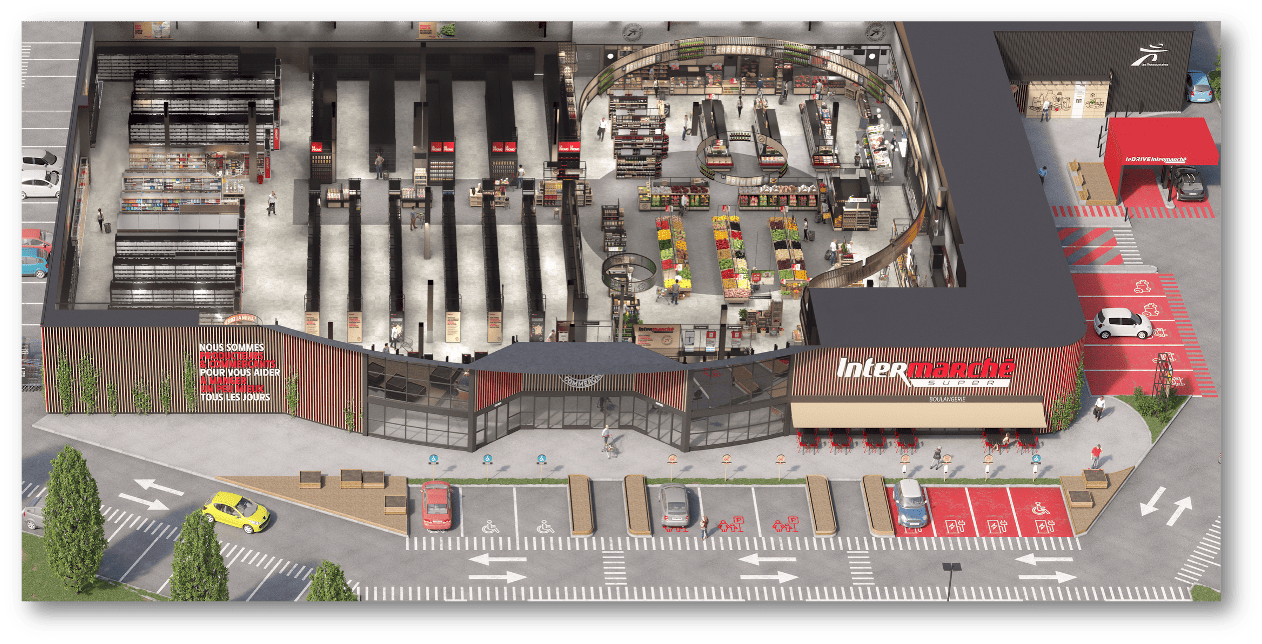
For a manufacturer whose products are carried by Leclerc, Carrefour, Intermarché, and Auchan (3 to 4 store formats per chain), the 3D Retail VR planogram software allows them to quickly create these variations from a standard planogram by simply adjusting the dimensions of the fixtures. What used to take a week in 2D now takes just a few hours in 3D, thanks to pre-built templates tailored to each retailer.
3. Location Guidelines and Priorities
- Minimum facings per SKU
- Shelf height based on the product's value (eye level = gold, knee level = bronze)
- Priority Area (aisle entrance, end cap)
- Adjacency Rules (Which Products Should Be Next to Yours)
- Mandatory vs. Recommended Signage
4. The 3D Point-of-Sale Kit
Each point-of-sale (POS) element (shelf stopper, banner, display, glorifier, totem) must be modeled in 3D and integrated into the simulations in the portfolio. This visually validates the impact before physical production and prevents incorrectly sized POS displays that end up in the trash.
5. Data-Driven Sales Arguments
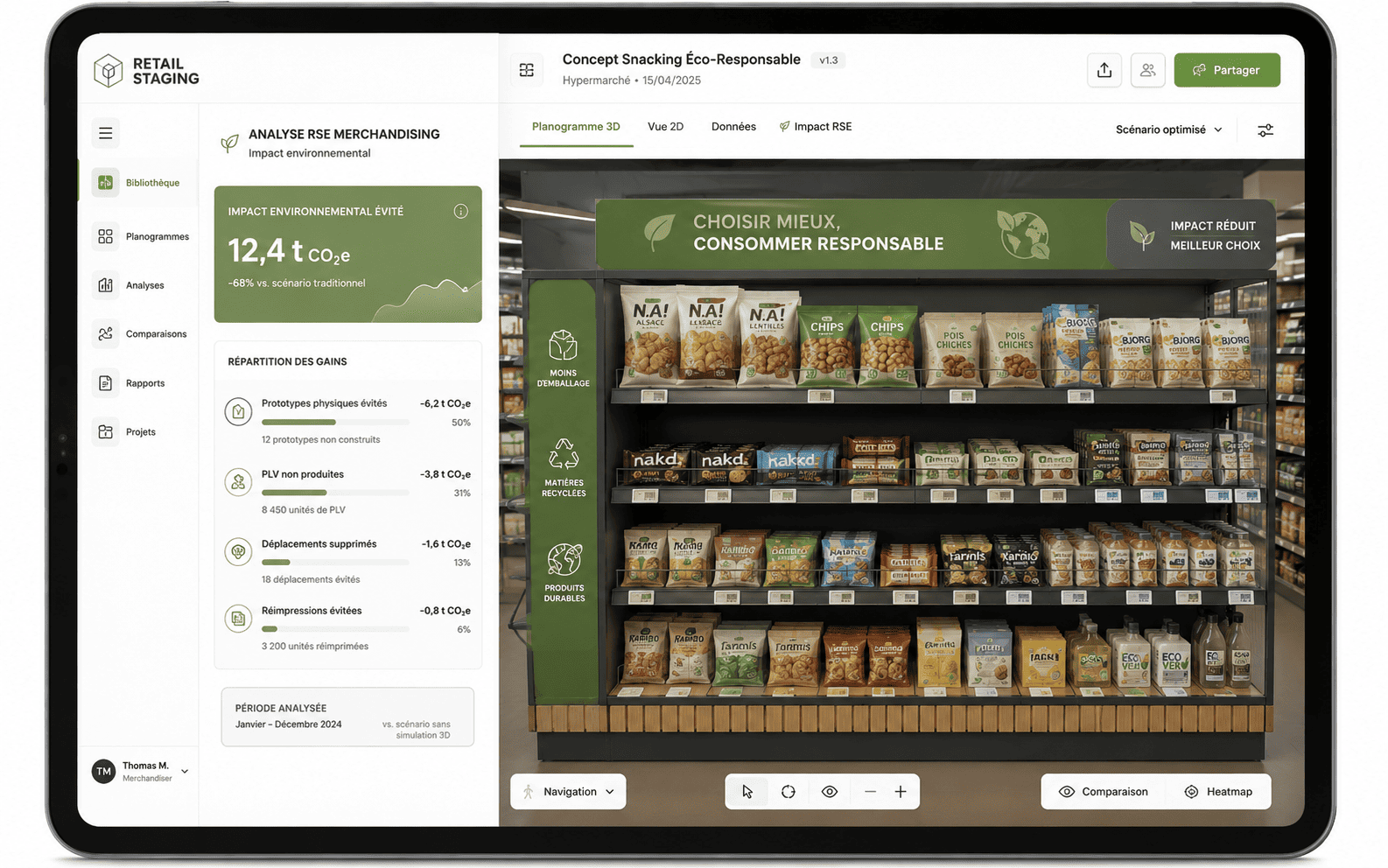
The 3D merchandising book is also a persuasive tool. Incorporate performance data: sales by store format, the correlation between facings and turnover, and the impact of a target audience on sell-out. This data comes from the Retail VR’s data merchandising platform, transforms the book into a compelling sales proposal.
Sources: Merchandising Plan: A Strategy to Boost Sales — Rovercash · B2B Merchandising Planogram — B2B-insiders
Distribute and maintain your 3D merchandising portfolio
The cloud platform: a portfolio that's always up to date
The key advantage of a cloud-based 3D showroom: real-time updates for all users. When a new product is launched or the retailer changes its furniture layout, the change is reflected instantly. The Retail VR collaborative platform ensures that every area manager is always working with the most recent recommendations.
Field and CRM Integration
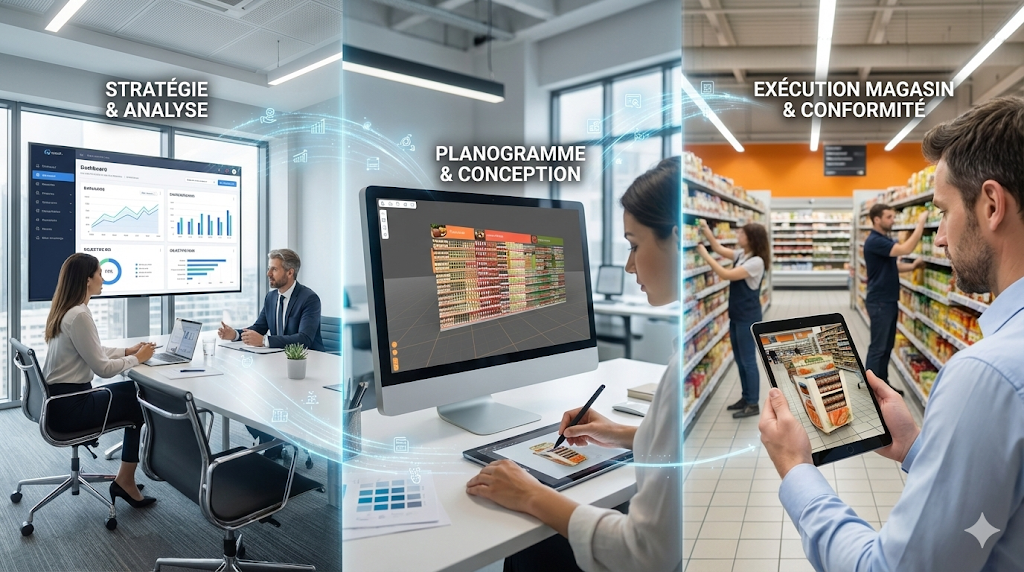
3D Retail VR planograms are accessible via tablet and compatible with daily field visits. The compliance report generated after each visit can be uploaded directly to the manufacturer’s CRM. This is the virtuous cycle described in the article "From Strategy to Shelf" on the Retail VR blog.
Conclusion
A 3D merchandising guide directly improves the quality of on-the-floor execution, shortens approval cycles, and strengthens department managers’ buy-in during meetings. By 2026, this will be a standard that the most advanced trade marketing teams have already adopted. To create your 3D merchandising guide with Retail VR, contact our teams.
Want to learn more? Discover the solution →

.webp)
.webp)
.webp)

