


Key takeaways:
- The environmental reality: The point-of-sale advertising (POS) sector generates nearly 100,000 tons of waste per year in France. The testing and physical prototyping phase is one of the most polluting and costly (up to €15,000 per prototype).
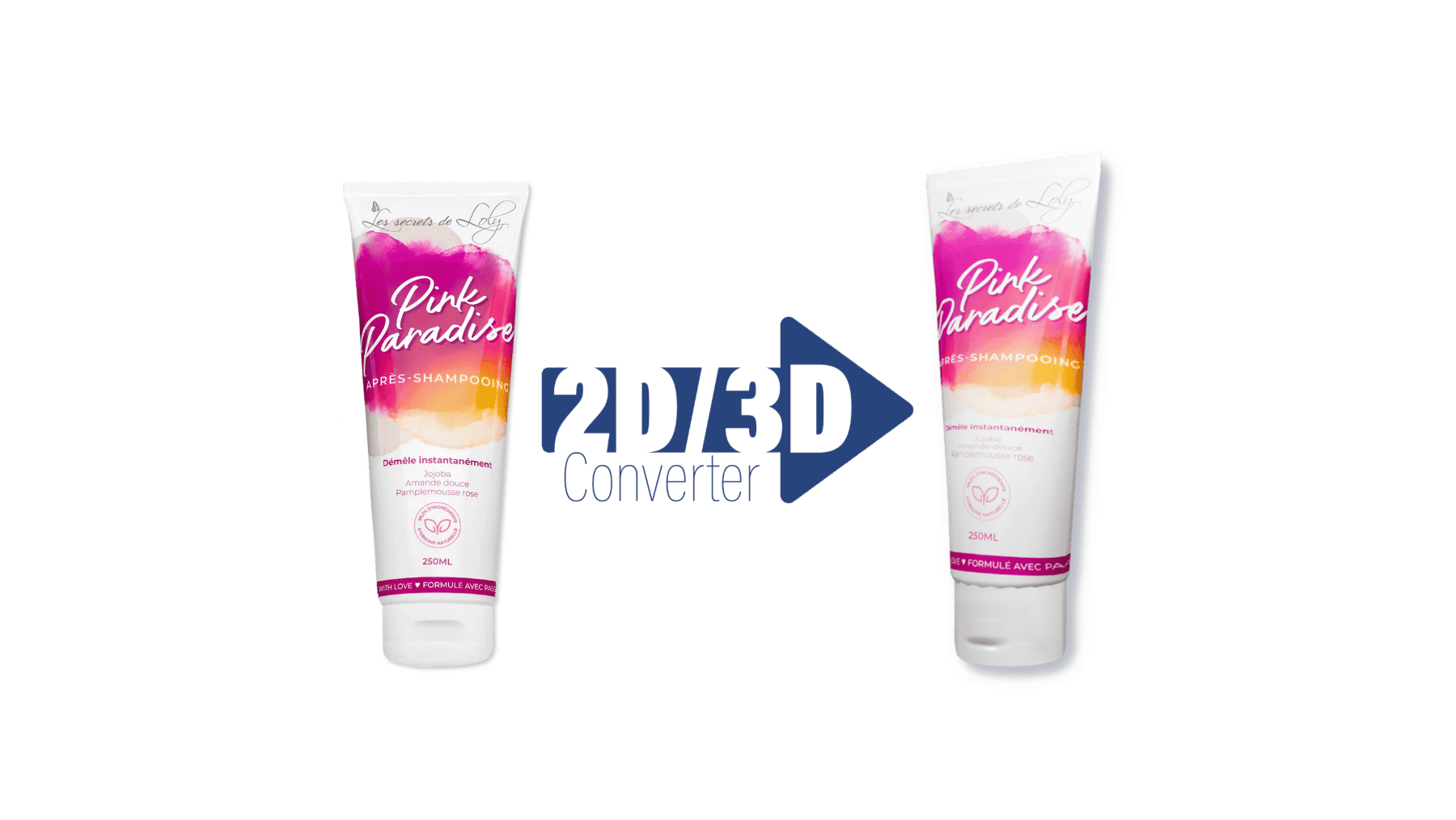
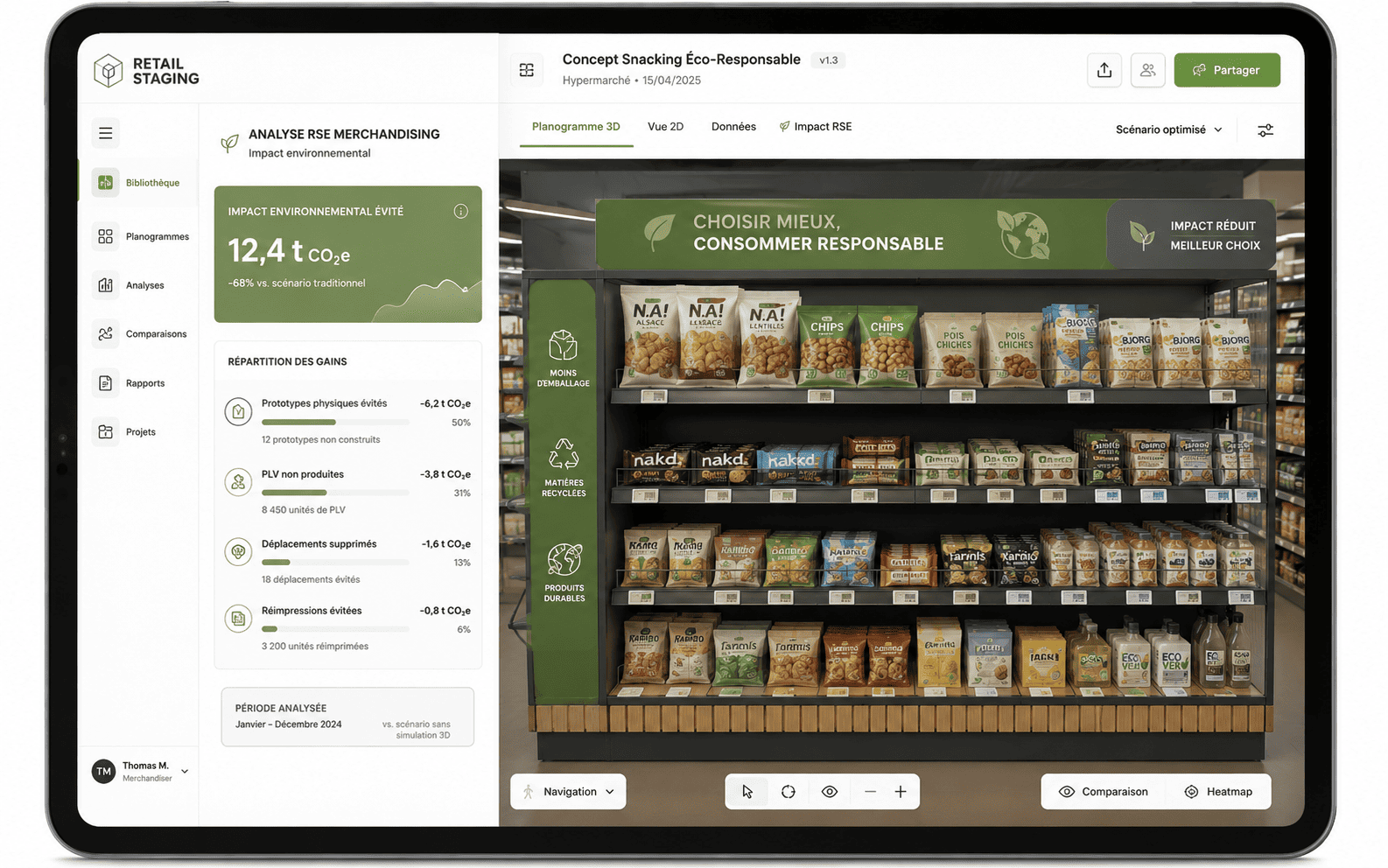
- The technological solution: 3D prototyping and immersive merchandising make it possible to create digital twins of trade marketing materials, providing full-scale validation without generating any physical waste. You can now generate 3D models of your products directly online to simulate your displays.
- Quantified ROI: Switching to virtual prototyping reduces mock-up costs by 70% and cuts the design time for in-store activation projects in half.
- Real-world evidence: Major players such as Groupe SEB, Intermarché, and Candia are already using Retail VR’s solutions to virtually test their in-store displays and point-of-sale materials, safeguard their investments, and highlight their CSR commitments to retailers.
Trade marketing is the driving force behind in-store promotions. Display setups, end-cap displays, and cross-merchandising: these strategies are essential for capturing shoppers’ attention. However, this sales strategy is now facing a major environmental and financial challenge: the waste generated by cardboard, plastic, or metal point-of-sale prototypes.
As retailers demand concrete proof from brands of their CSR (Corporate Social Responsibility) commitments, the traditional development model—which relies on sending multiple physical prototypes—has become obsolete. The solution for combining commercial performance with environmental responsibility? 3D prototyping and virtual environments.
The Hidden Cost of Traditional Point-of-Sale Advertising
Historically, creating a display unit or a complex point-of-sale display has required several rounds of iteration. Even before final production, the manufacturer must order physical prototypes (first as mock-ups, then printed versions) to ensure stability, shelf space requirements, and visual impact.
Popai (now Shop! France), a leading organization in point-of-sale marketing, regularly draws attention to this issue: point-of-sale displays generate approximately 100,000 tons of waste annually.
In addition to the carbon footprint associated with manufacturing these short-lived displays and transporting them by truck for approval at the central purchasing office, the financial cost is significant. Developing a physical point-of-sale display project costs an average of between €5,000 and €15,000, for materials that will almost always end up in the trash once the category review is complete.
3D Prototyping: The "Virtual First" Approach to Sustainable Trade Marketing
Eco-design goes beyond simply choosing recycled materials for the final product; it encompasses the entire decision-making process. It represents a profound paradigm shift, supported by leading institutions such as the Institut du Commerce (IDC), which actively promotes these new practices and is now committed to training the next generation of trade marketing professionals in responsible category management.
As part of this global transformation, the "Virtual First" approach—leveraging 3D simulation technologies—enables us to:
- Eliminate waste at the source: The prototype exists only as data (Digital Twin).
- Unlimited customization: You can change the color, size, or position of an ILV in just a few clicks, without having to restart the print job.
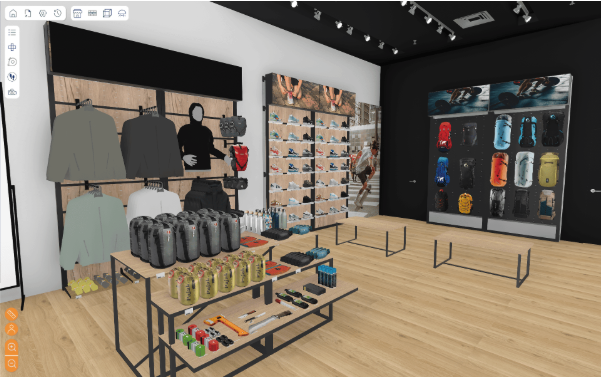
- Test in the actual setting: Instead of looking at a standalone mock-up in an office, 3D technology allows you to virtually place the in-store display on an actual supermarket shelf to assess its effectiveness against the competition.
They've gone zero waste: Retail VR's customer use cases
The theory is appealing, but in practice, the industry is already widely adopting these solutions to combine CSR and ROI. Here’s how three retail companies have transformed their processes:
1. Groupe SEB: Testing the impact of in-store displays without risk or waste
How can you tell if a point-of-sale (POS) display or promotional material will be effective before producing thousands of copies? In collaboration with the Enov Institute, Groupe SEB has replaced complex and costly physical tests with virtual reality. In this case study focused on POS and in-store display testing, Groupe SEB explains how immersive shopper research allows for the placement of multiple display variations within a digital shelf. Consumer reactions are analyzed objectively, safeguarding the investment and eliminating the carbon footprint associated with full-scale testing.

2. Intermarché: From weeks of back-and-forth to just a few minutes
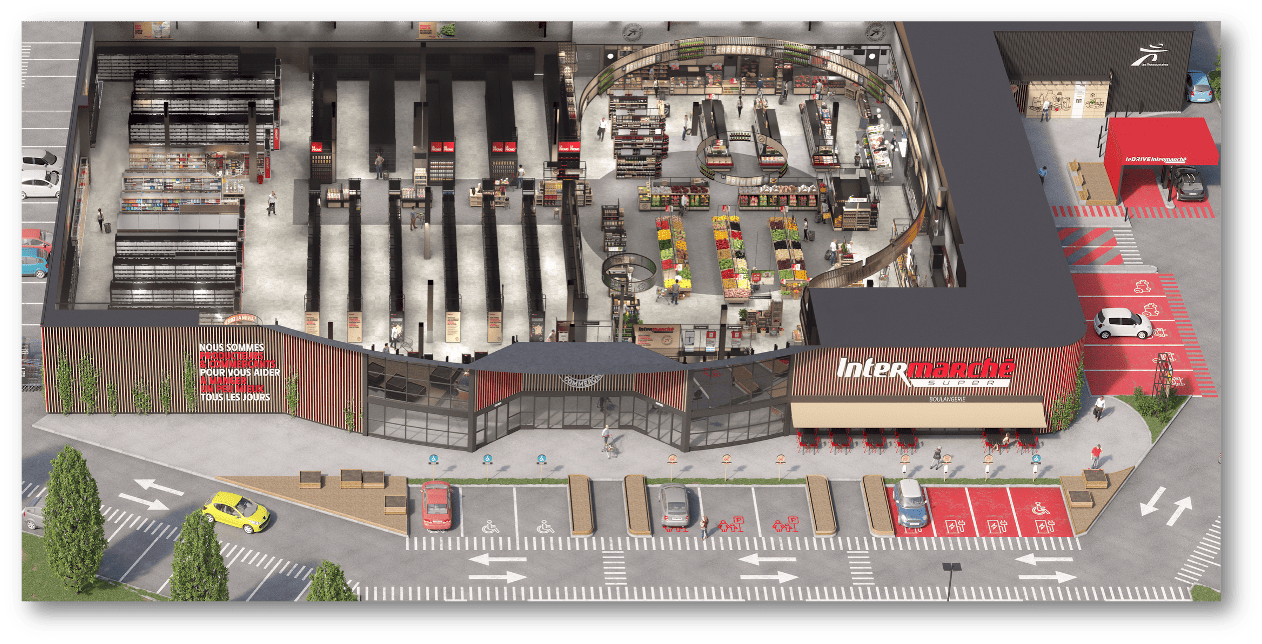
For a retailer, approving the display design for a piece of furniture intended for 1,000 retail locations used to be a grueling process that resulted in hundreds of mockups being thrown straight into the trash after being rejected. Today, as Intermarché highlights in its case study, validation is carried out via our collaborative Retail Staging platform. The visual is modeled in 3D and integrated into a virtual showroom. The concept is approved in just a few minutes without any physical prototypes. The process thus aligns with a strict sustainability approach while drastically accelerating time-to-market.
3. Candia: Virtual Reality as a CSR Selling Point for Retailers
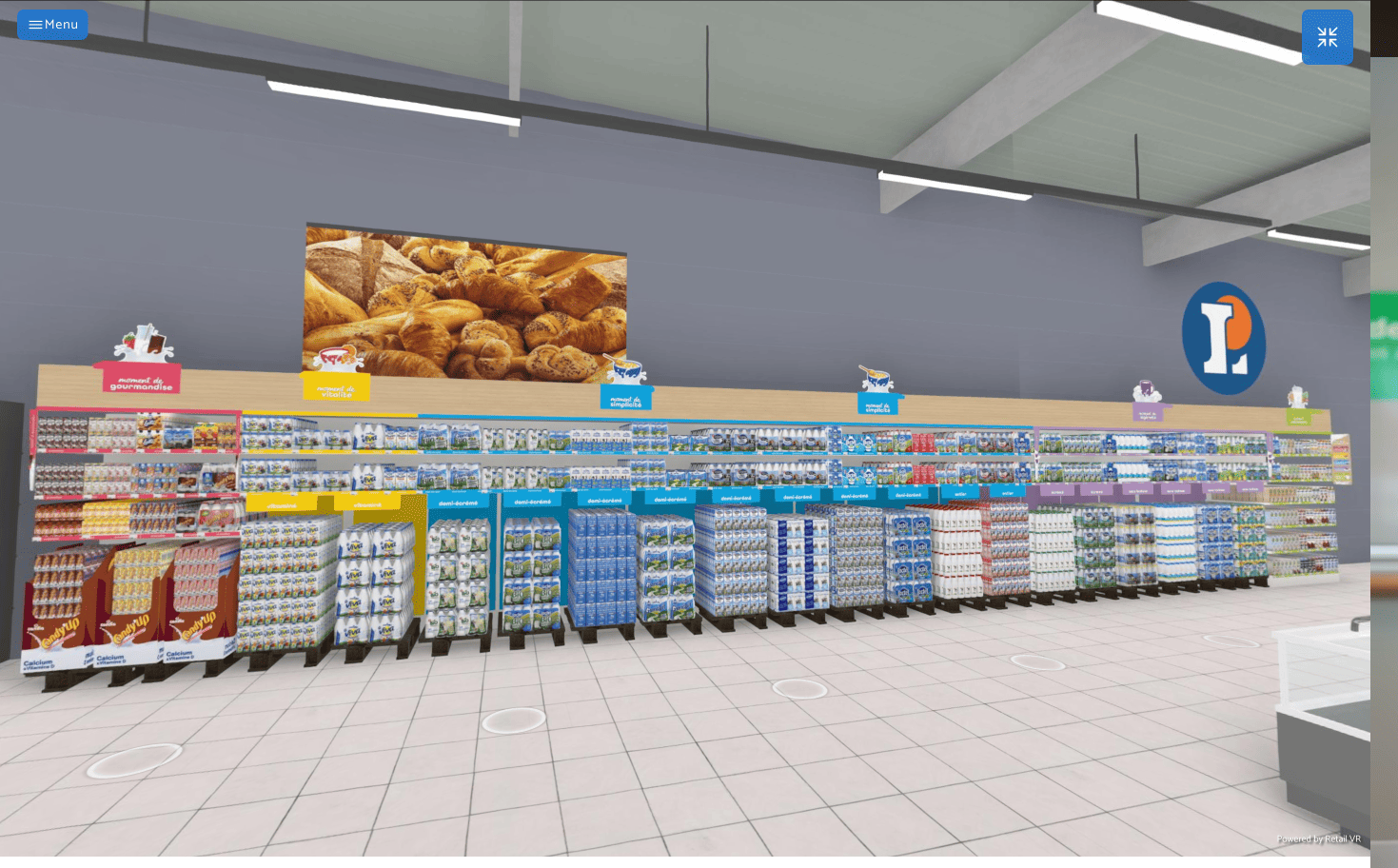
In negotiations with retailers, demonstrating a commitment to environmental sustainability has become a decisive factor in product placement. Candia made the bold decision to integrate VR directly into its trade marketing pitches. Thanks to 3D modeling, Candia is revolutionizing its dairy merchandising. The virtual showroom designed by Retail VR allows the brand to showcase new in-store displays while concretely demonstrating to buyers the reduction in its environmental impact (no physical mockups to transport).
How can you kickstart this transition within your teams?
Switching to eco-friendly point-of-sale displays using 3D technology doesn't require a complete overhaul of your business. The process involves three steps:
- Centralize your assets (DAM): Convert your design agencies’ 2D files into 3D objects compatible with merchandising software.
- Empower Your Trade Marketing Team: Provide your teams with smart planogram tools that make it easy to integrate these 3D point-of-sale displays into existing shelf layouts.
- Try it out virtually: Before placing an order with your box manufacturer or printer, test the shopping experience using a VR headset or an interactive web browser.
Conclusion
The trade marketing of tomorrow must be sustainable or it will not survive. Continuing to produce and dispose of physical prototypes makes no economic or environmental sense. Today , 3D prototyping and immersive shopper studies make it possible to achieve the holy grail of in-store execution: maximizing visual impact on the shelf while minimizing the impact on the planet.
Ready to cut your prototyping costs and reduce your trade marketing waste? Contact us for a demo of our 3D merchandising platform and discover how Retail VR can support your eco-design efforts!

.webp)
.webp)
.webp)

