


Key takeaways:
- The context: B2B buyers are demanding autonomy and interactive experiences. According to a Gartner study on the B2B buying journey, buyers who use interactive digital tools provided by a supplier (in collaboration with a sales representative) are 1.8 times more likely to close a high-quality deal.
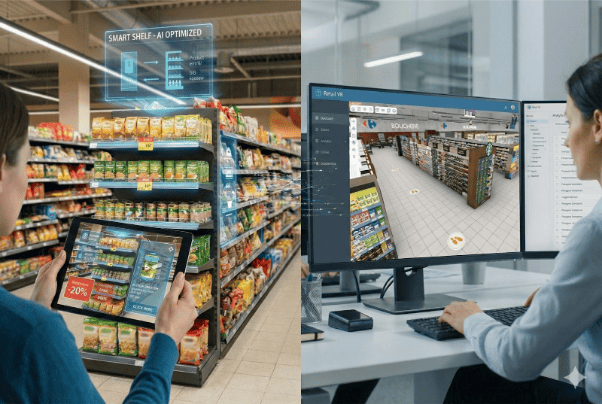
- The concept: Mixed Reality (MR) and spatial computing merge the real and virtual worlds. During a sales pitch, a sales representative can display an entire store shelf or a 3D point-of-sale (POS) display directly in the buyer’s office or in-store.
- Key benefits: A dramatic improvement in persuasive storytelling, reduced prototyping costs, and a faster sales cycle by streamlining the decision-making process.
- Use Case: MR is the ultimate tool for ensuring flawless trade marketing execution, allowing you to validate the footprint and visual impact of a display setup before making any physical investments.
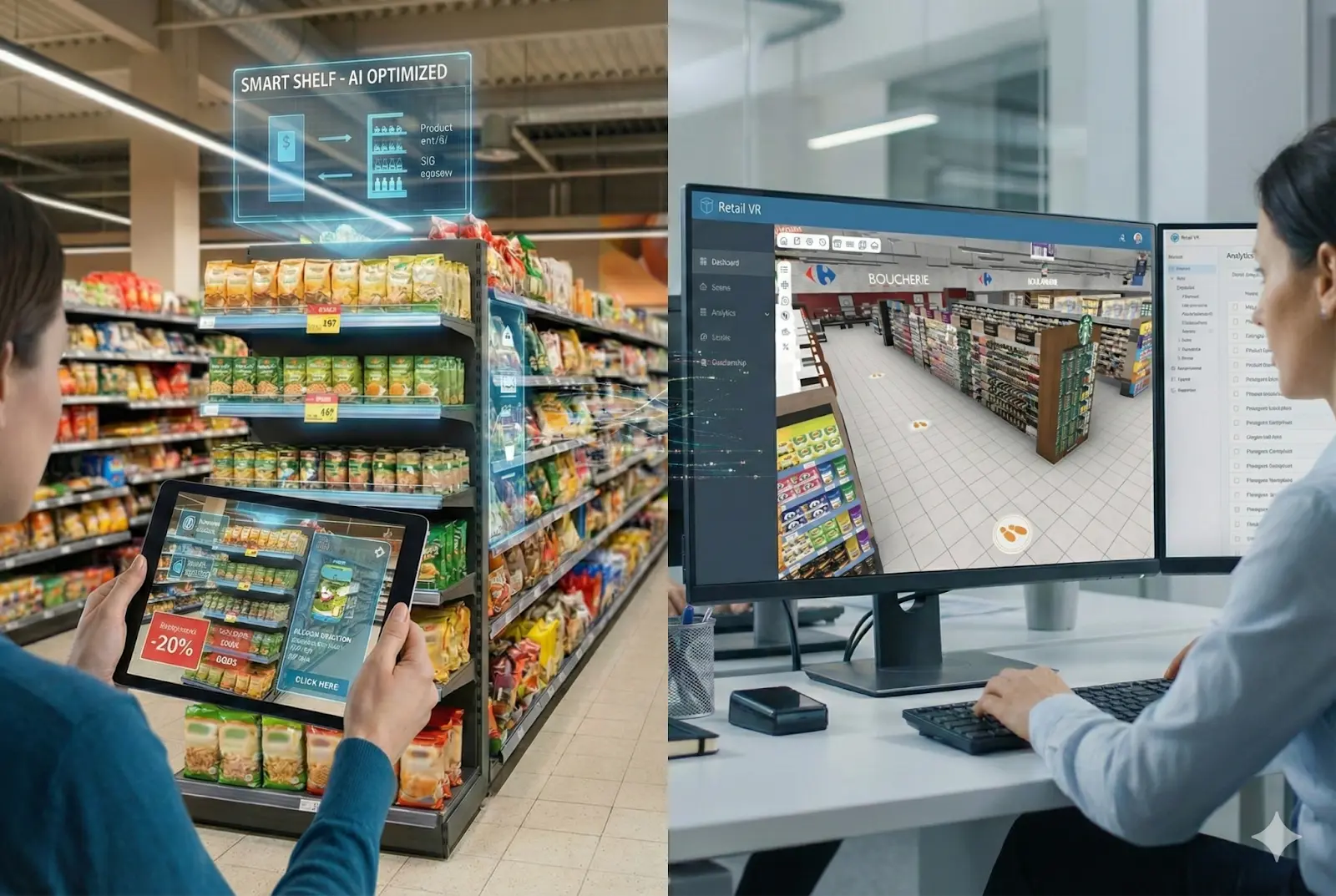
Convincing a retail buyer or department manager has always been a balancing act. When dealing with overworked contacts who are short on time and demand immediate proof of ROI, the traditional static PowerPoint presentation is now showing its limitations.
While Gartner predicted that 80% of B2B sales interactions would take place via digital channels by 2025, the real revolution lies in the nature of these interactions. To capture attention and accelerate decision-making, manufacturers (FMCG) are turning to a powerful tool: Mixed Reality (MR) and Spatial Computing.
How are these technologies redefining the B2B 3.0 pitch? Analysis and insights.
What is mixed reality in the context of merchandising?
Unlike pure Virtual Reality (VR), which immerses the user in a 100% closed and synthetic environment, Mixed Reality (MR) superimposes interactive, spatial virtual elements (digital twins) onto the user’s real physical environment.
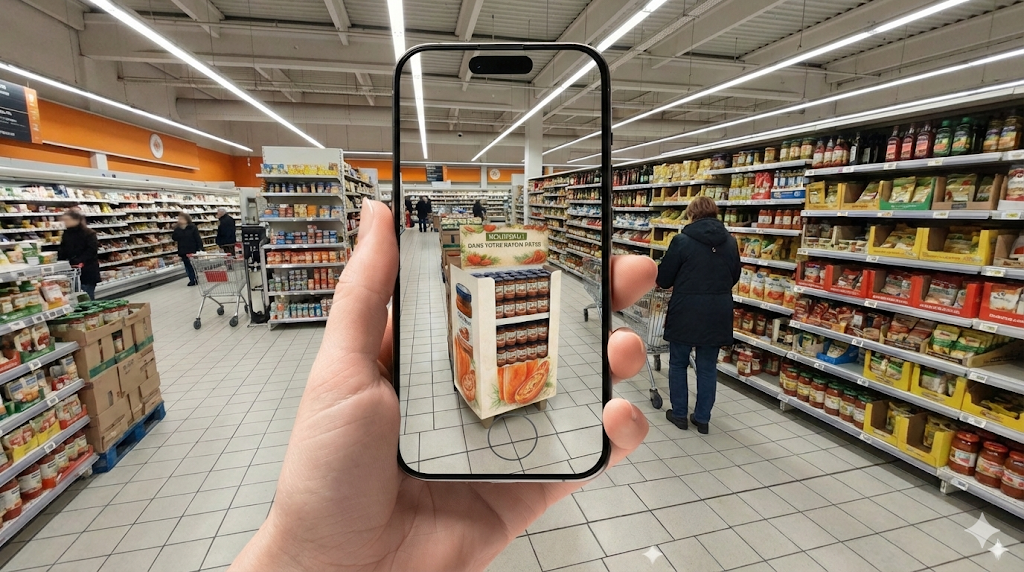
In practice, using a mixed reality headset (such as the Meta Quest 3 or Apple Vision Pro) or even a touchscreen tablet via Augmented Reality (AR), a field sales representative can project a display unit, a new product, or a complete merchandising plan right in the middle of the store or the purchasing center’s meeting room. The buyer sees the virtual object interacting with the lighting and the space in their physical world.
Why Use Mixed Reality in Your Business Negotiations? (3 Proven Benefits)
A recent academic study on the use of Extended Reality (XR) in B2B sales surveyed more than 40 salespeople and experts. The results show that mixed reality activates key psychological and operational drivers.
1. Persuasive storytelling that removes barriers to purchase
The study highlights that XR significantly enhances the communication of a product’s value. Retail buyers often have difficulty visualizing the actual impact of a category redesign on a floor plan. Mixed reality transforms an abstract promise into a tangible experience. By projecting a shelf layout optimized for visibility and the customer journey at a 1:1 scale, sales representatives can eliminate doubts about space constraints and the clarity of the product offering using our collaboration platform.
2. No physical prototypes: Reduced costs and carbon footprint
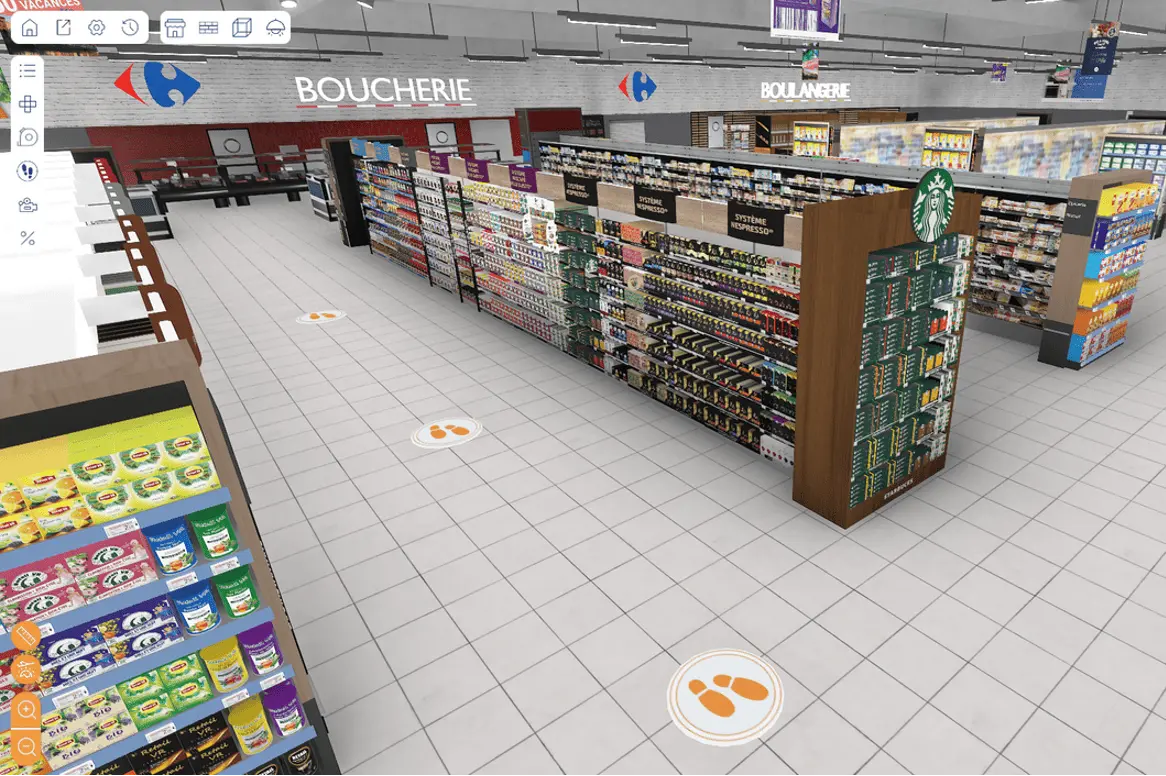
Historically, the approval process for new trade marketing displays (end-cap displays, promotional displays, in-store displays) required the production and shipping of physical prototypes that were heavy, costly, and environmentally harmful. The integration of Mixed Reality and virtual environments now makes it possible to transition to a zero-material-waste and eco-design approach (an initiative strongly promoted by organizations such as Popai).
Use case: Eliminating physical mockups during category reviews
The reality: Innovation reviews generate massive waste. For example, as Intermarché notes in its feedback on the Retail Staging solution, developing a physical in-store display project costs an average of between €5,000 and €15,000. When a retailer or brand handles about ten such projects a year, both the budget and the carbon footprint skyrocket.
The solution: Instead of producing and shipping cardboard or plastic prototypes, the design office models the furniture so it can generate the products virtually. During the sales meeting, the concept is projected at actual size using Mixed Reality or viewed in a virtual showroom.
CSR and Financial Impact: Major manufacturers are now incorporating these technologies to demonstrate their commitment to environmental responsibility to retailers. Candia is one such example; the company uses immersive merchandising to highlight its CSR strategy by demonstrating a direct reduction in its environmental impact. On average, eliminating physical mockups reduces prototyping costs by up to 70%, while also eliminating the carbon footprint associated with the logistics of these short-lived materials.
3. Accelerating the sales cycle
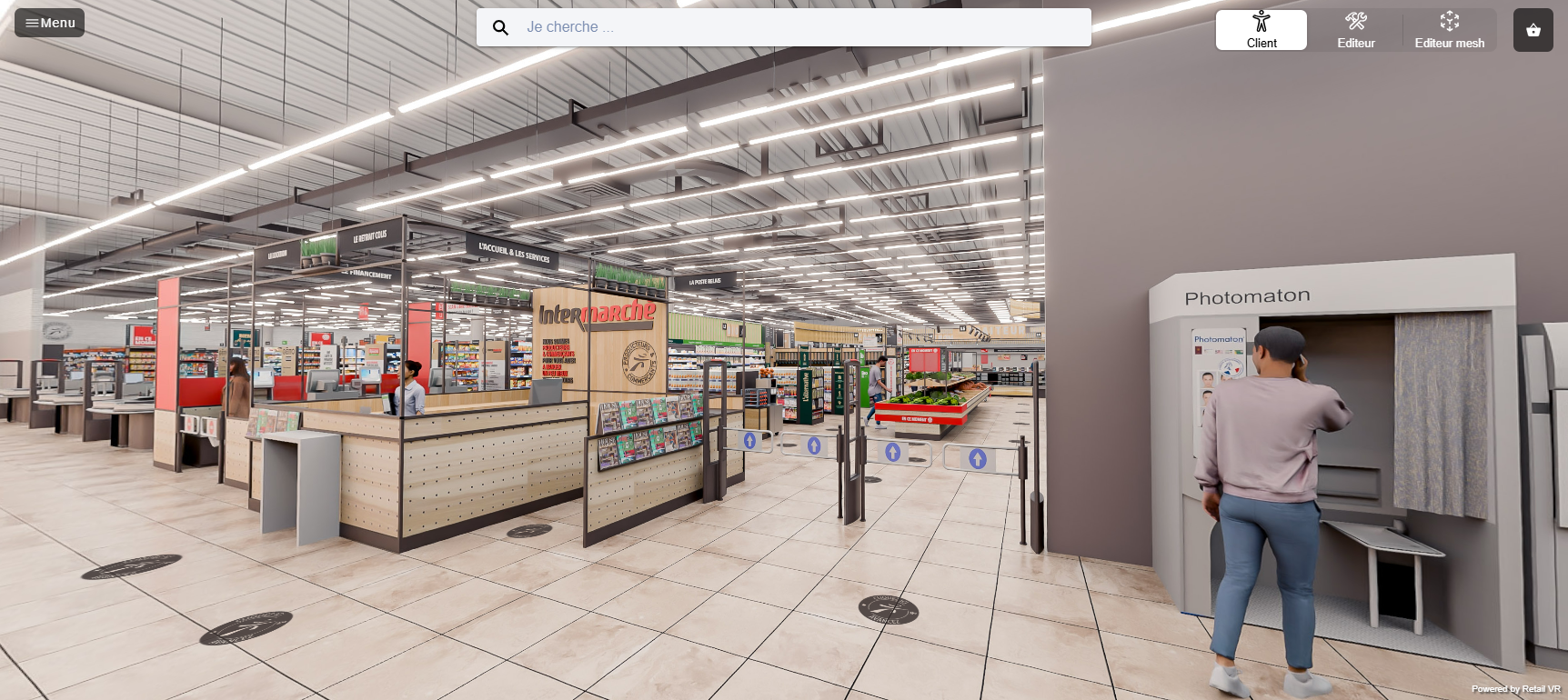
In a complex B2B process, the sales cycle often slows down during the "validation" or "consensus-building" phase within the distributor's organization. Gartner identifies the validation stage ("Will this solution do exactly what we need it to do?") as critical.
By providing immediate, context-rich visual evidence, Mixed Reality allows buyers to verify operational feasibility on the spot, thereby eliminating the need for numerous back-and-forth email exchanges.
How to incorporate Mixed Reality into your sales presentations in 3 steps?
To successfully transition to B2B Pitch 3.0, technology must support the presentation, not the other way around. Here’s how to do it:
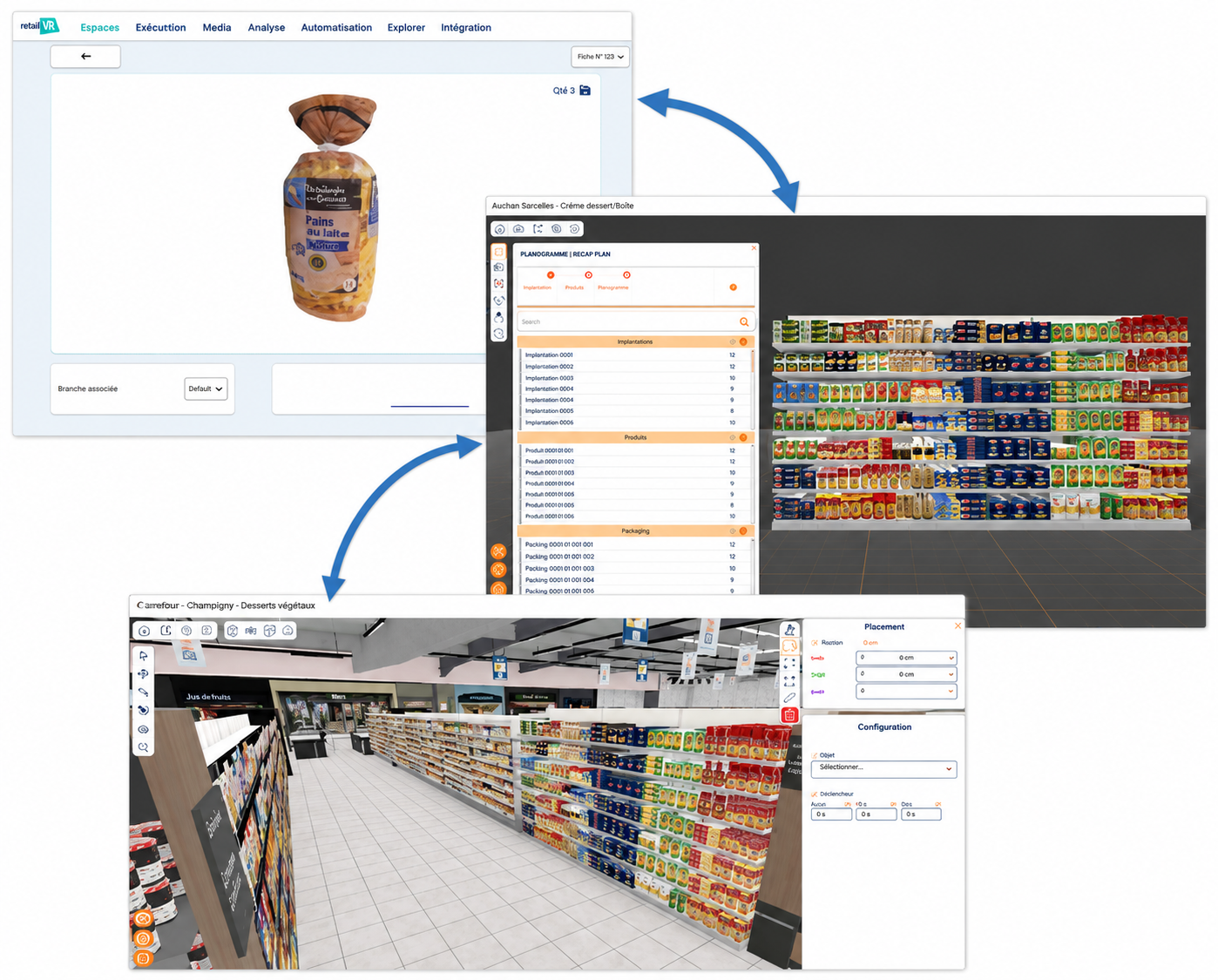
- Digitize Your Brand Assets (Digital Twins): The first step is to transform your key products, point-of-purchase displays, and AI-optimized planograms into lightweight, realistic virtual objects.
- Craft the experience: Don’t overwhelm the buyer. Use MR at a strategic point during the meeting. Start with the context (market data, shopper insights), then suggest “bringing the solution to life” in their space using the headset or tablet to wrap up the presentation.
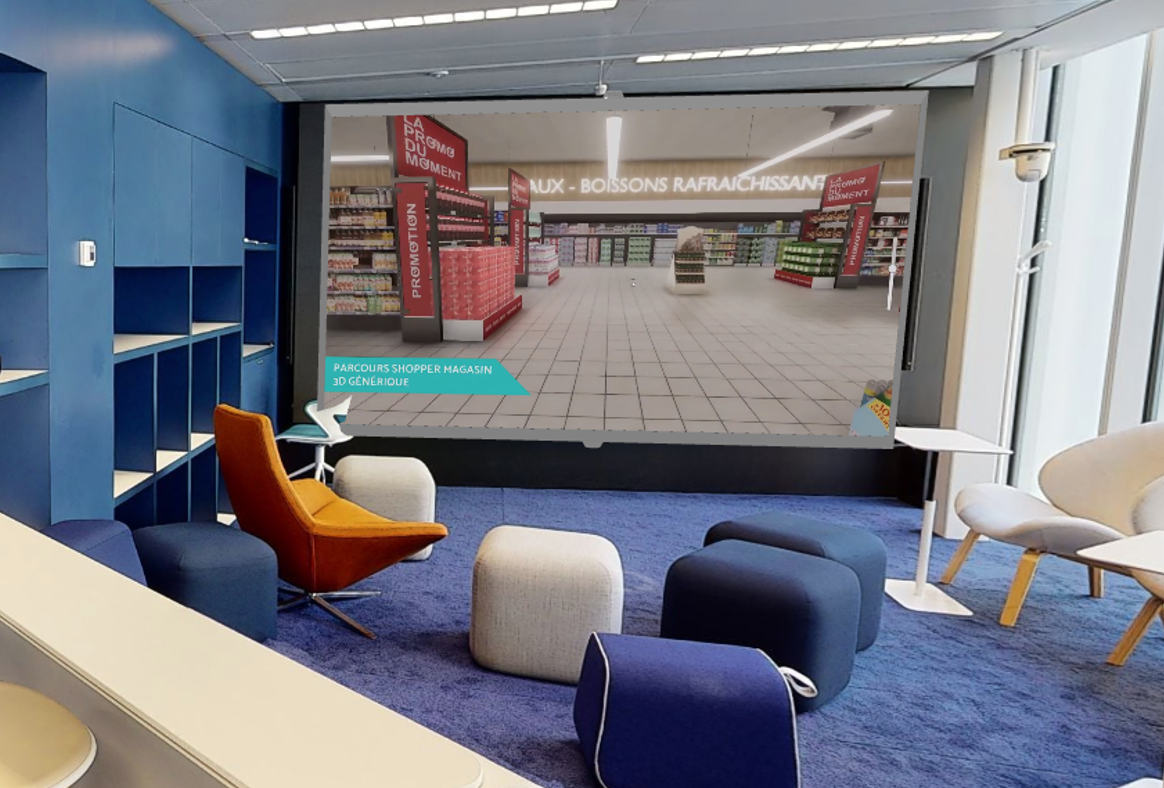
- Build long-term relationships through "Digital Sales Rooms": Once the in-person meeting is over, integrate immersive web viewers of your facilities into a Digital Sales Room. This allows the buyer to review the proposal in its spatial context directly from their web browser—without any special equipment—and share it with their executive committee.
Conclusion
Spatial Computing is no longer just a novelty for special events; it is a powerful B2B conversion tool. By replacing assumptions with concrete visualizations, Mixed Reality enables manufacturers to position themselves not merely as suppliers, but as innovative partners capable of ensuring successful execution at the point of sale.
Are you looking to update your sales pitches and cut your prototyping costs?
Discover Retail VR’s spatial computing and augmented/mixed reality solutions, and empower your sales teams to win over retailers with flawless execution.


.webp)
.webp)
.webp)

