


Introduction: The Illusion of a Vacant Seat
In today’s retail landscape, marked by the pursuit of profitability and inflation in recent years, SKU rationalization has become a strategic priority. The recent strategic plans of major retailers confirm this trend: they are streamlining their product ranges to optimize supply chain costs and clarify their offerings.
Yet, while there is a lot of talk about streamlining in the office, there is far less discussion of the physical chaos this creates on the shelves.
Removing a product isn't just about freeing up shelf space. It fundamentally alters the balance of the shelf layout, the clarity of the product lineup, and, ultimately, the overall performance of the category.
1. Fewer references, greater complexity: the 3 hidden impacts
Removing the infamous "20% of items that account for 5% of sales" seems logical on paper. But in the actual store environment, this decision sets off a chain reaction:
- Highly political decisions: the removal of a product has reignited tensions between retailers and brands. Should the focus be on the leading domestic brand, the innovative challenger, or the private label to make up for it?
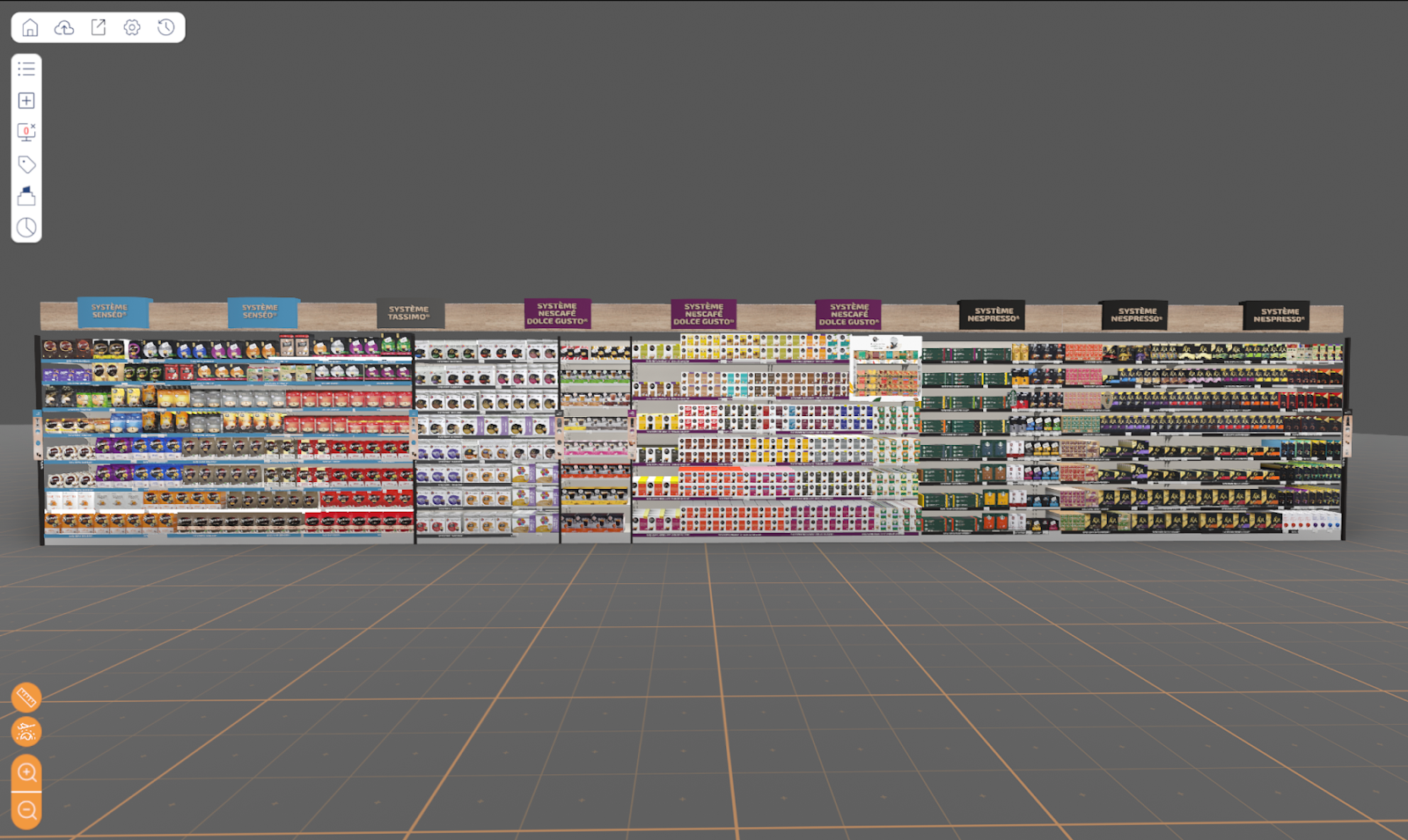
- An even fiercer battle for shelf space: the newly freed-up space becomes the new battleground. Who will claim the vacant shelf space? How can the space be reallocated without creating visual breaks or "gaps" on the shelves?
- An often-underestimated factor affecting shoppers: purchasing behavior isn’t just a matter of need—it’s also a matter of visual cues. Removing a product alters the entry point to the aisle, creates frustration if a replacement isn’t immediately obvious, and can drive customers to competitors. This calls into question the effectiveness of your entire merchandising plan.
2. Why deleting "in Excel" has become obsolete
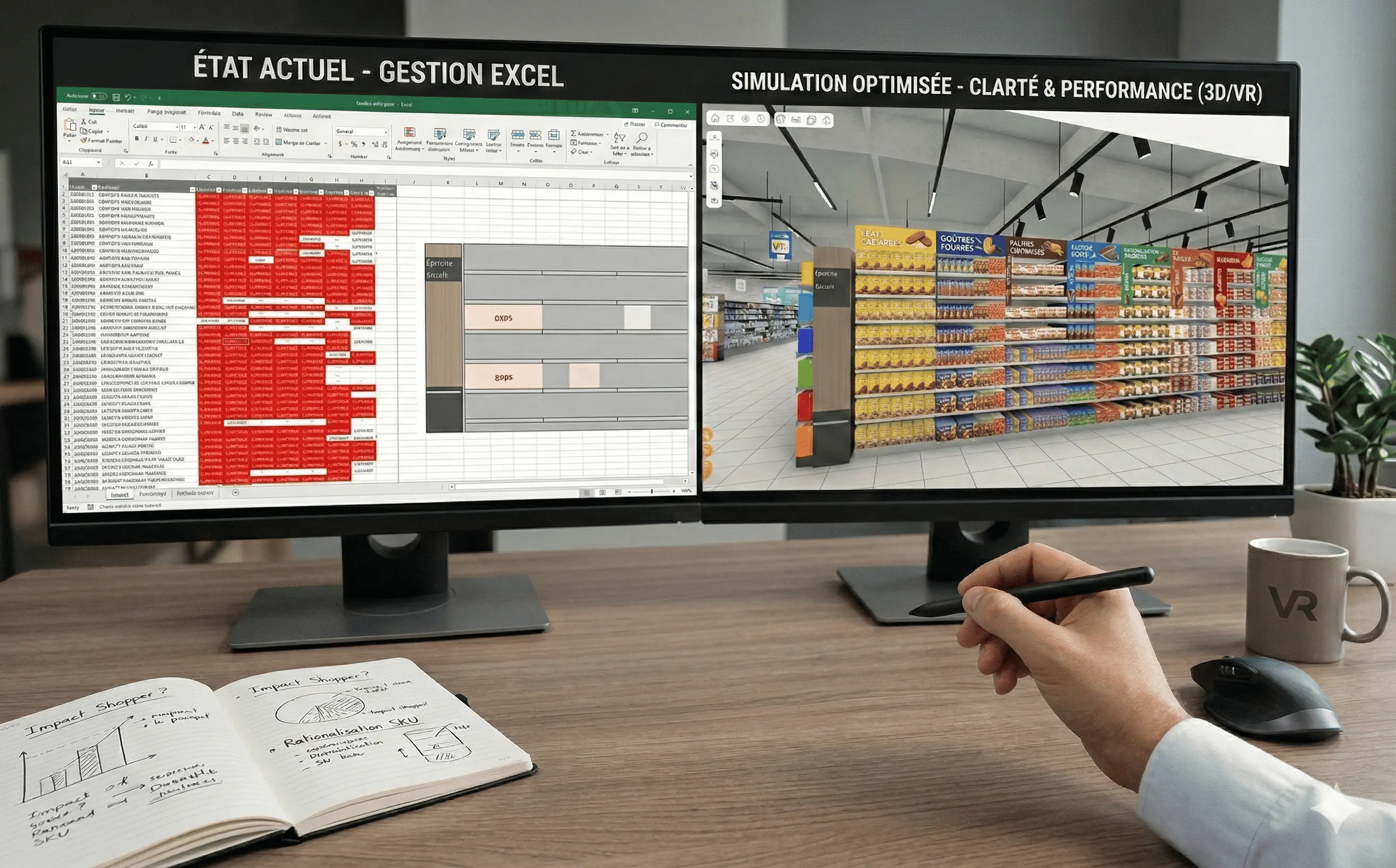
Historically, category management has relied on spreadsheets and transactional data (direct product profitability, turnover rates). While these KPIs are crucial, making decisions "in Excel" completely overlooks the visual and spatial aspects of merchandising.
A poor decision to remove an employee, based solely on rotation, can be very costly:
- Breaking away from color-blocking.
- Inconsistency in pricing.
- A decline in impulse purchases related to the immediate surroundings of the removed product.
Conversely, a smart, strategic reallocation can really give the category a boost. Faced with these challenges, the top-performing teams have changed their approach.
3. Simulate, design, and test: The Era of Immersive Merchandising (Retail VR)
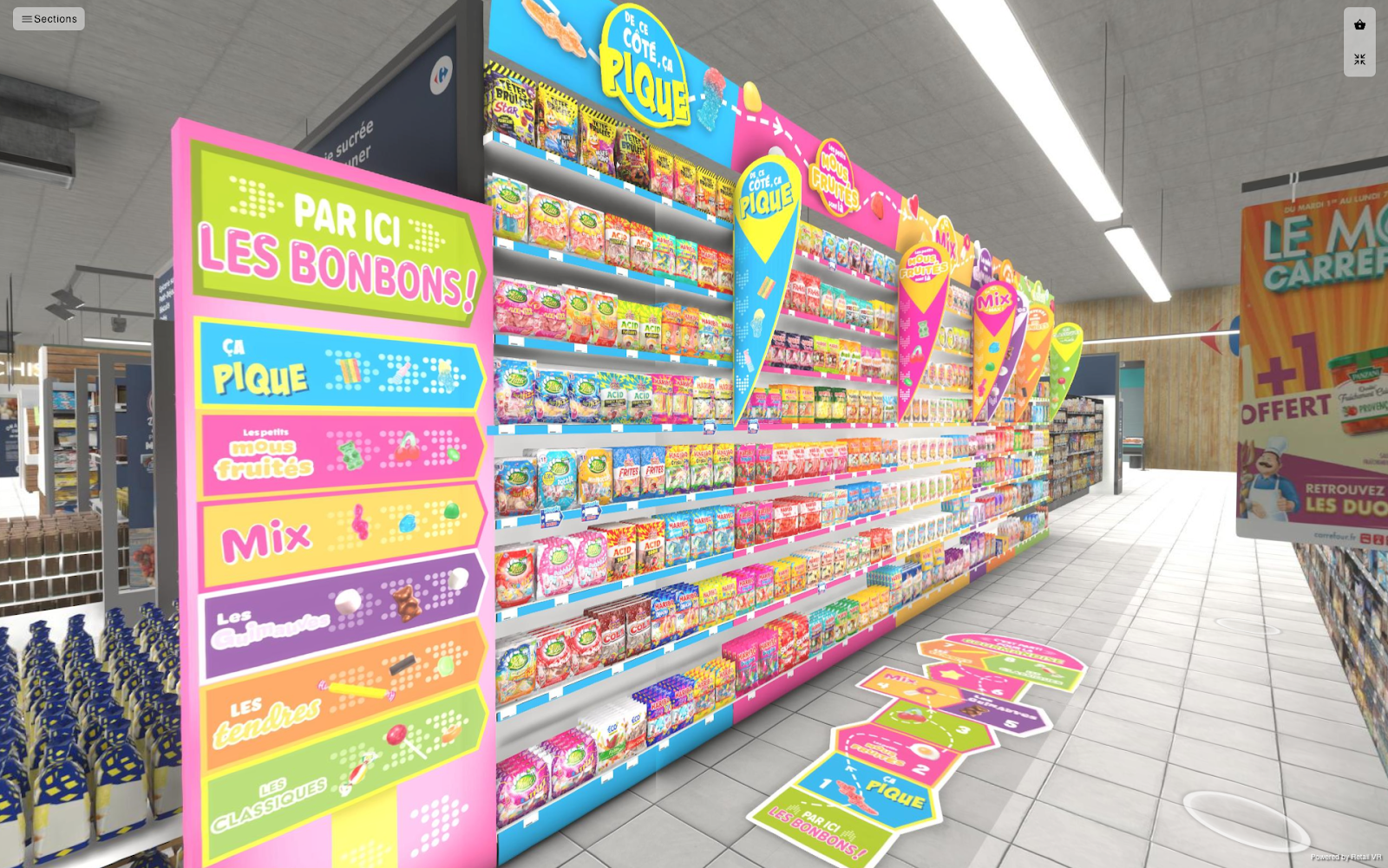
Today, the most forward-thinking merchandising teams and manufacturers no longer simply endure product line reductions—they manage them effectively through technology. They simulate, plan, and test before making decisions.
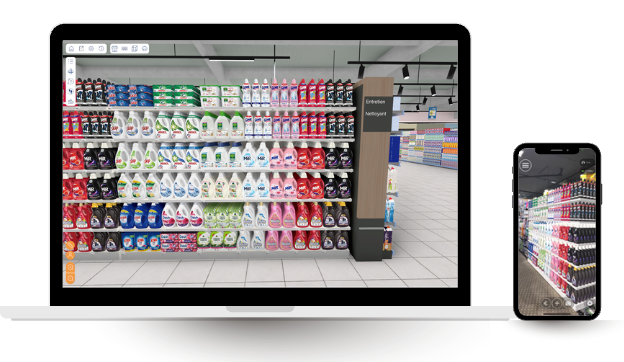
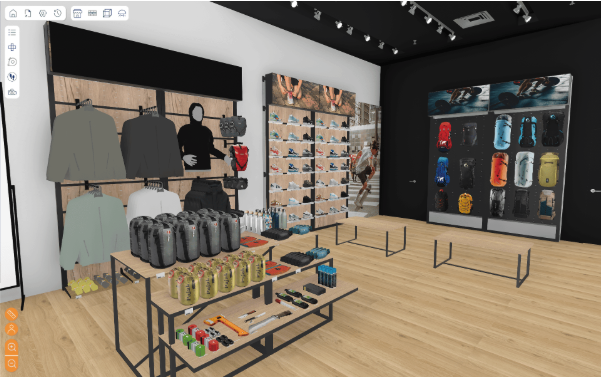
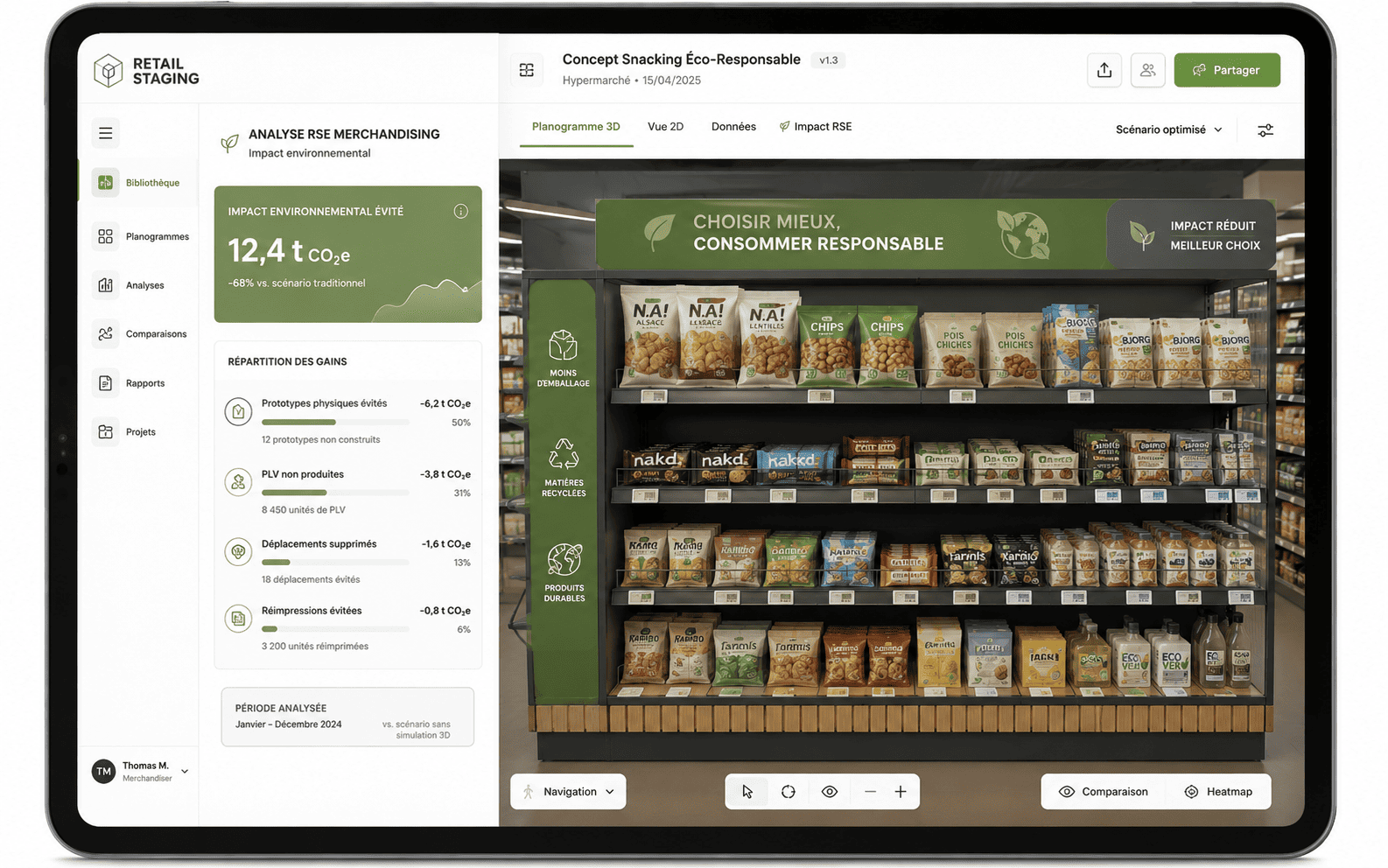
This is where Virtual Reality (VR) and 3D simulation are a game-changer. Instead of testing a new planogram blindly in a dozen stores (with the logistical costs that entails), the technology allows for a predictive approach directly from a collaborative platform :
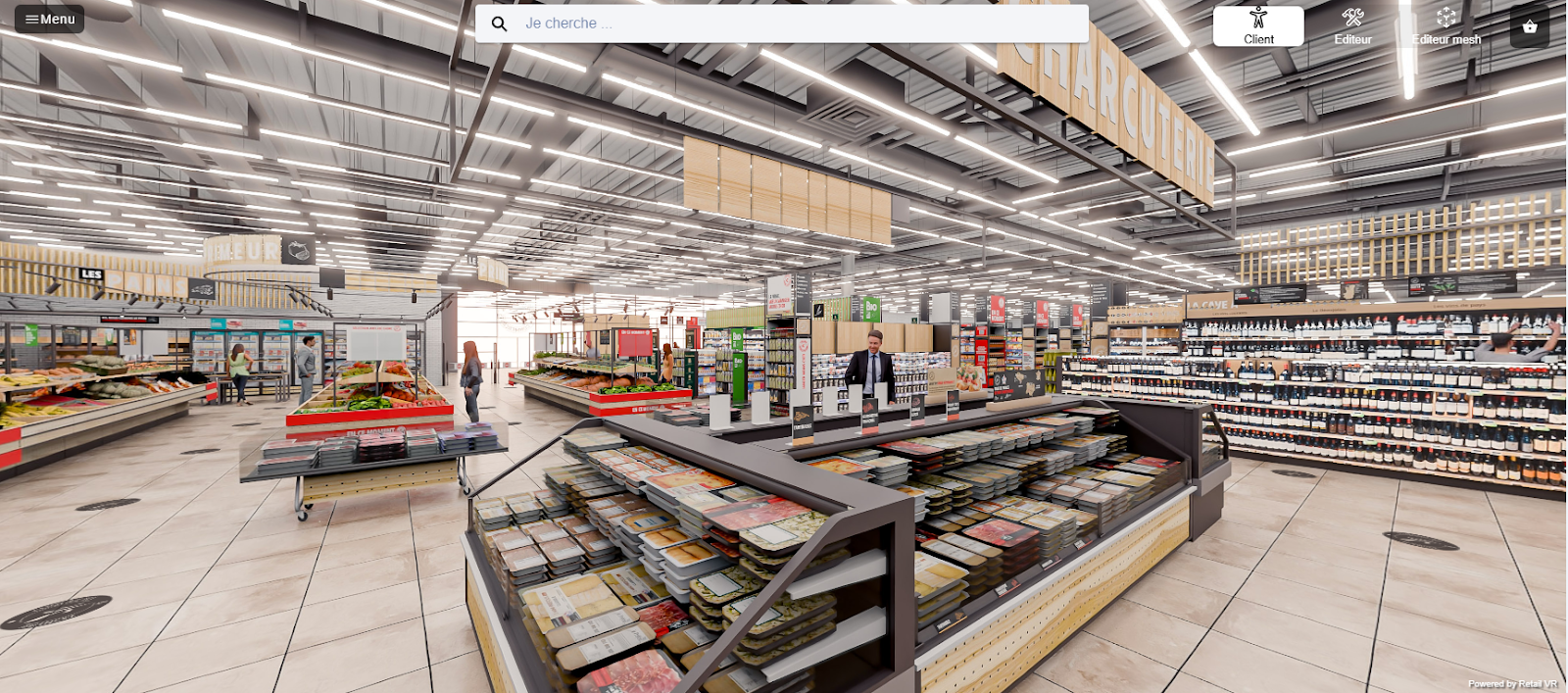
- Virtual Shopper Tests: Immerse consumer panels in a 3D-recreated store aisle. Observe their reactions to the removal of a product, analyze eye-tracking data, and verify whether the shift in purchasing behavior occurs as expected.
- Planogram A/B Testing: Instantly compare multiple scenarios for reallocating shelf space (more facings for the market leader vs. adding a new product) without moving a single physical box, since you can generate your products digitally in advance.
- Support for retail presentations: For brands, demonstrating their shelf merit or proposing a new category vision is far more compelling with an interactive 3D visualization than with a simple presentation of statistics.
Conclusion: Turn risk into opportunity
Reducing the product assortment is not an end in itself; it is a means of improving the department’s performance. But for this theory to translate into growth, the physical and visual impact must be carefully planned in advance. By incorporating 3D simulation tools and Retail VR, you can make confident decisions, foster harmonious relationships between manufacturers and retailers, and ensure a seamless shopping experience.

.webp)
.webp)
.webp)

