


Key takeaways:
- The Strategic Challenge: For the luxury and beauty/cosmetics industry, the final quarter (Q4 or the “Golden Quarter”) often accounts for between 30% and 40% of annual revenue.
- The Operational Challenge: Simultaneously rolling out complex event displays and pop-up stores on a global scale creates a logistical bottleneck. Architectural differences among stores often make 2D guidelines impractical to implement on the ground.
- The 3D Solution: The Digital Twin enables the modeling of flagship stores and local retail locations. This allows the global headquarters to test, adapt, and validate visual merchandising (VM) concepts in virtual environments that are true to reality.
- Targeted ROI: A drastic reduction in execution errors (Retail Execution), lower physical prototyping costs, and perfect alignment between global and local teams to ensure a "zero-defect" rollout starting November 1.
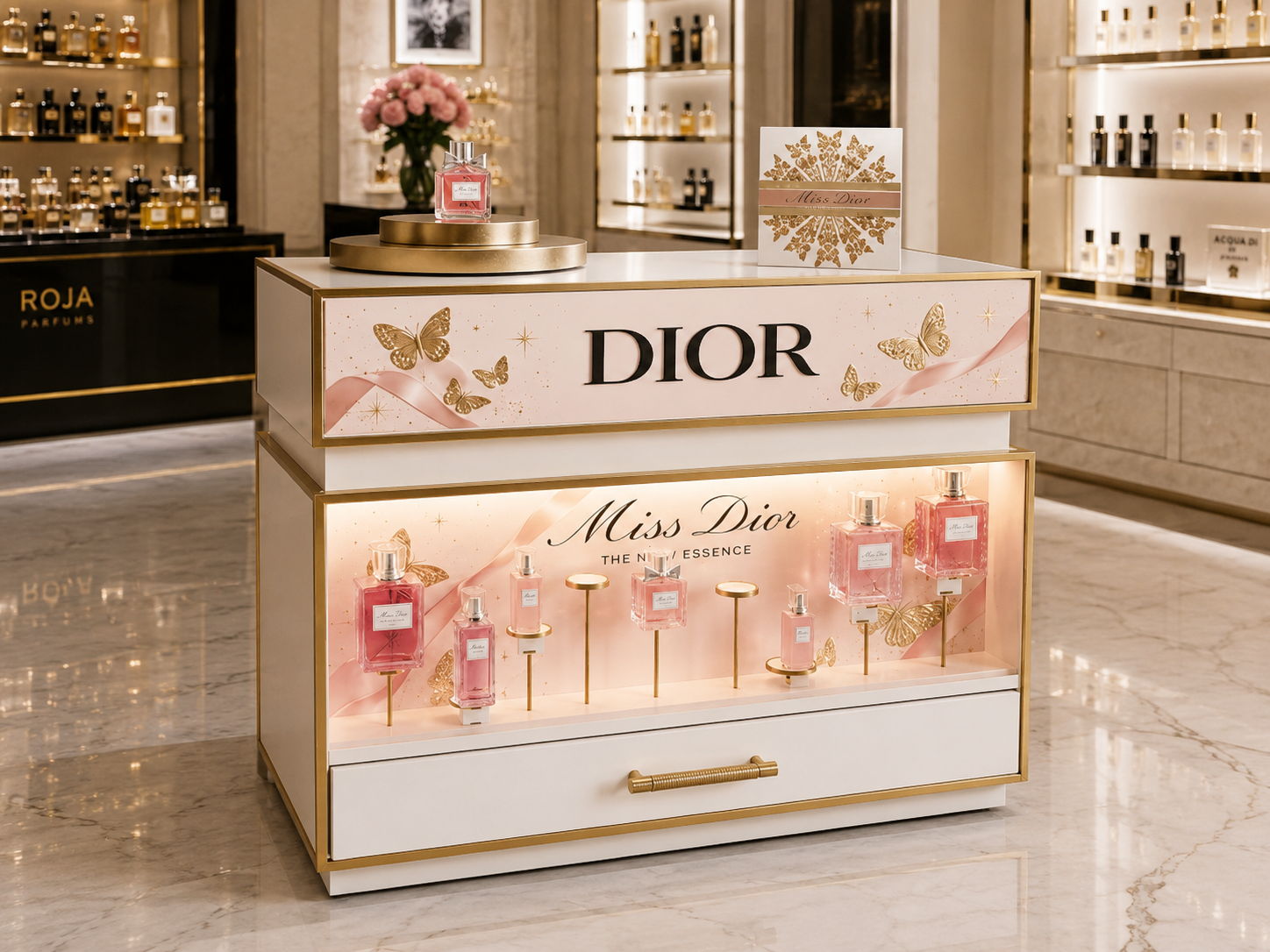
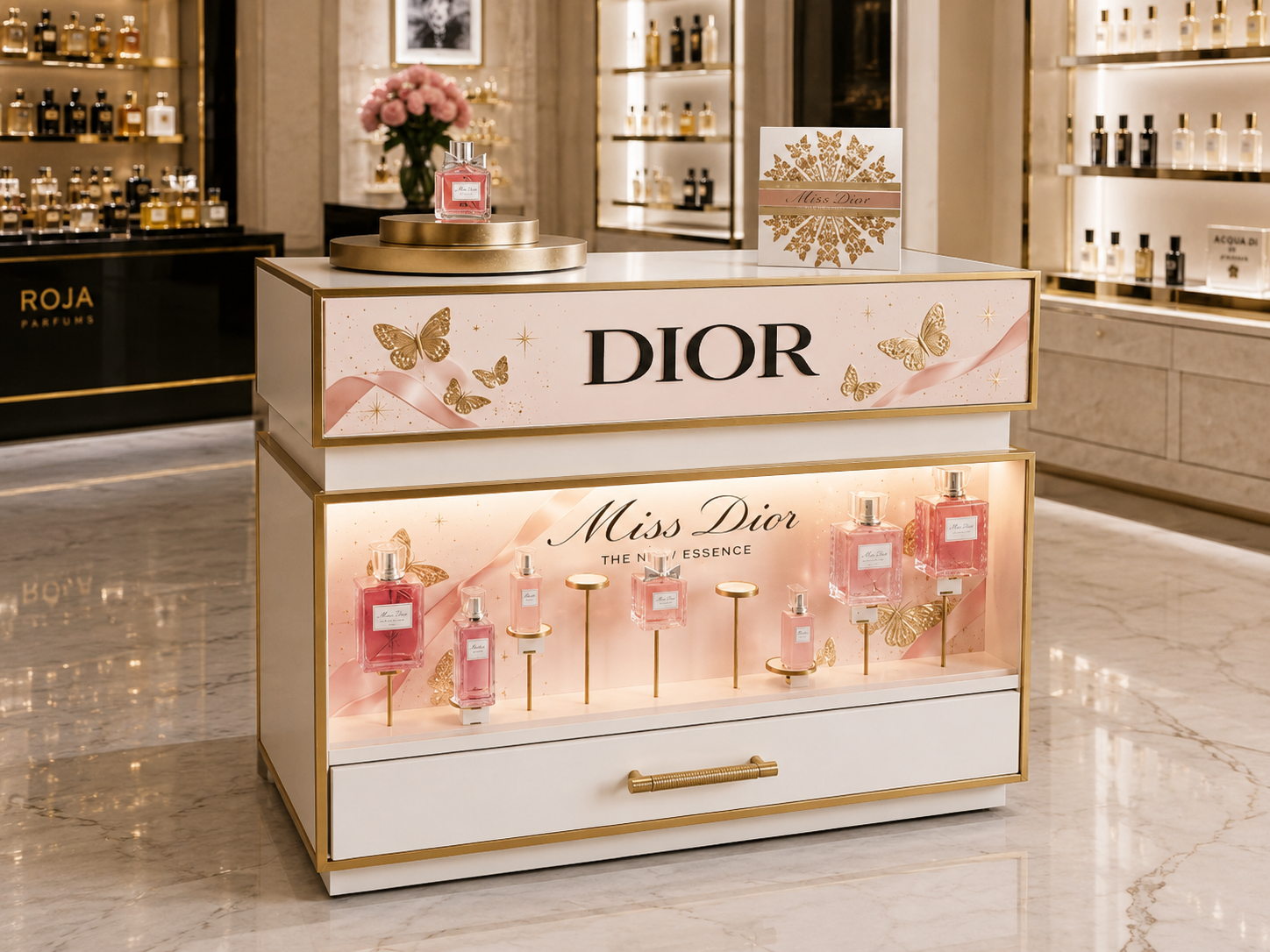
In the fine fragrance, cosmetics, and luxury goods sectors, the magic of the holiday season cannot be improvised. It is planned with surgical precision. For these brands, the fourth quarter (the “Golden Quarter”) is a crucial period when the battle for attention reaches its peak.
Starting in November, store windows are transformed into true works of theatrical art, and pop-up stores spring up in department stores around the world. The goal: to spark wonder and encourage impulse purchases.
Yet behind the glamour of the storefronts, the Visual Merchandising (VM) and Retail Design teams often face a real operational nightmare. How can they ensure that the creative vision approved at the Paris headquarters is executed with the same perfection in New York, Tokyo, or Dubai?
Discover how foresight—through 3D simulation technologies and digital twins —is redefining the standards of retail execution in the luxury sector.
The "Golden Quarter" Logistics Nightmare
Rolling out a global end-of-year window display concept involves coordinating the design and production of complex (often custom-made) displays, international shipping, and overnight installation by local teams.
The main sticking point lies in the transmission of information. Historically, headquarters has sent a “VM Book” (a set of specifications in PDF format) outlining the installation guidelines. However, a 2D plan very rarely holds up when put to the test in the field.
The Limitations of the Traditional "VM Book":
- The diversity of store layouts: The concept is designed for an ideal flagship store. But what happens when the local branch’s storefront has a ceiling that’s 30 cm lower, or when a load-bearing pillar obstructs the line of sight?
- The Cost of Sizing Errors: A promotional display ordered in the thousands that turns out to be too deep for the shelves of adepartment store represents a direct financial loss and a disaster for the brand's image.
- Lack of agility: If a design element blocks traffic (affecting the conversion rate), it’s often too late to make adjustments once the campaign has launched.
As Bain & Company’s analyses of the global luxury market regularly point out, the in-store customer experience remains the most critical touchpoint. A poorly designed or ill-conceived Christmas window display is a lost sales opportunity that goes to a competitor with flawless window displays.
The Digital Twin for "Zero-Defect" Production
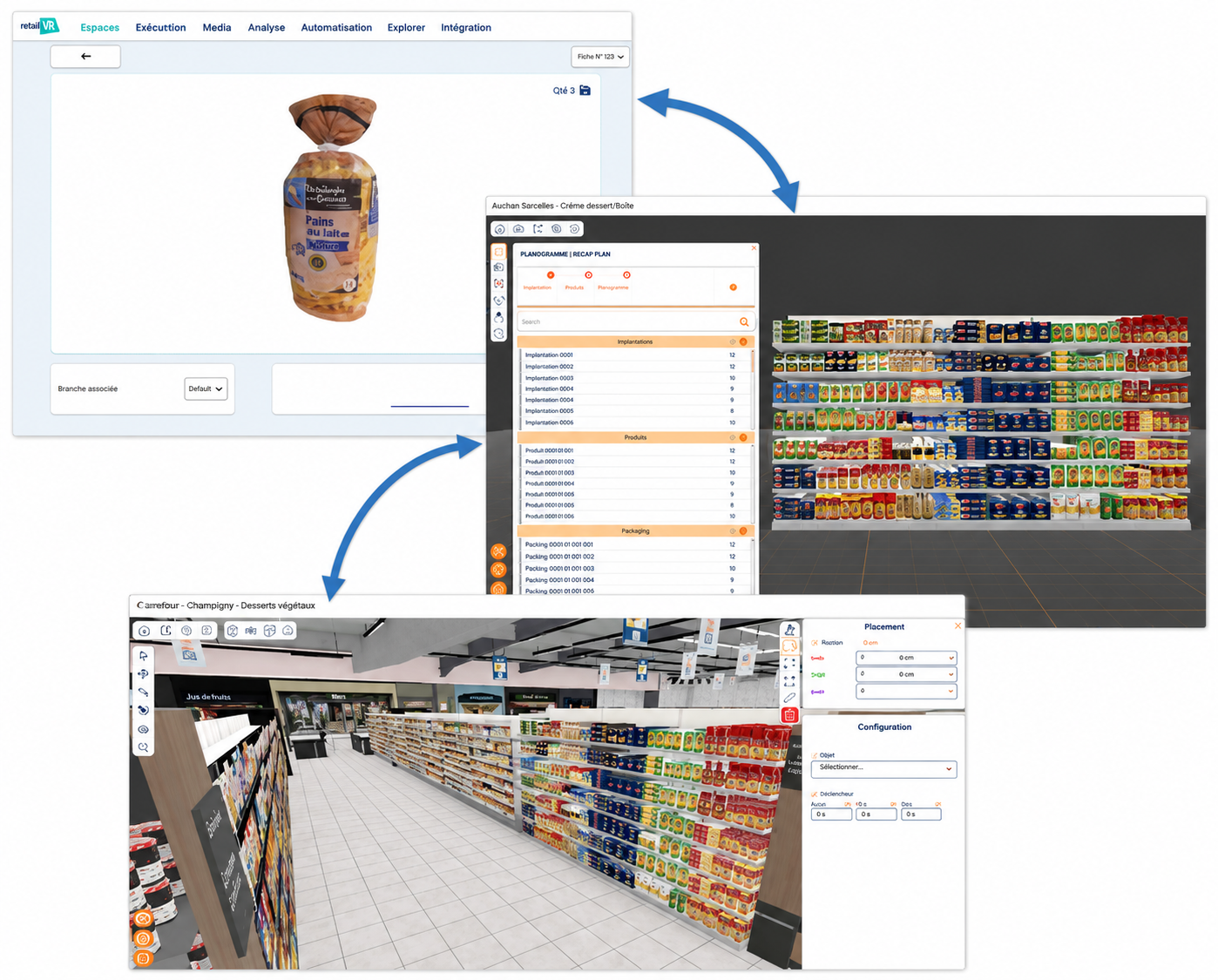
To solve this complex equation, major fashion houses are turning to spatial computing. By creating a digital twin of their main retail locations, headquarters and local subsidiaries collaborate within a virtual, interactive replica of the store.
1. Virtual prototyping of sets
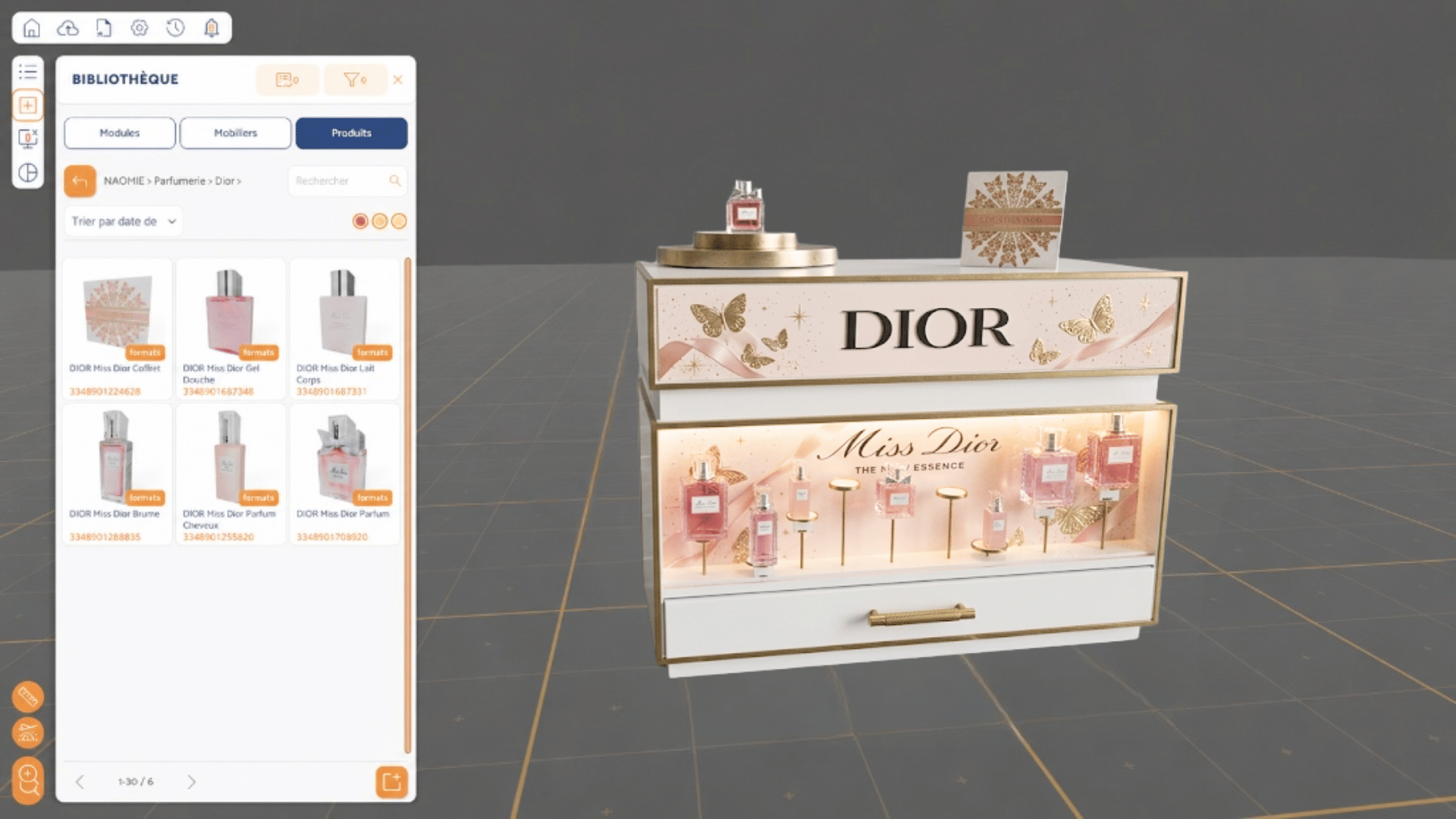
Instead of building expensive wooden or plastic mock-ups to validate the layout at headquarters, the Retail Design teams import 3D models of the Christmas displays directly into the software.
They can test the lighting, the way light reflects off perfume bottles, and the visual impact from outside the store, both day and night. This virtual prototyping is also part of an eco-design approach aimed at reducing the carbon footprint—an issue that has become essential for the luxury sector.
2. The local-scale collision test
Thanks to the Digital Twin, local visual merchandisers (in Japan or the United States, for example) can incorporate the "Global" concept into an exact replica of their own store.
3D modeling allows for millimeter-level precision: Does the stylized Christmas tree fit in display case number 2? Do the gift boxes block the company’s logo? Any spatial conflicts are detected and corrected months before the physical installation.
3. Immersive Training for Field Teams
To ensure flawless execution without having to travel, 3D technology offers a unique training tool. Rather than reading a 50-page PDF, local installation teams explore the display in virtual reality or on their tablets. They can view the expected final result from every angle, ensuring full compliance with the brand’s guidelines (Brand Guidelines).
Asynchronous Collaboration for Faster Time-to-Market
Beyond technical precision, the entire decision-making process has been streamlined. Ahead of the November launch, subsidiary directors no longer need to approve abstract plans.
The centralized 3D platform enables asynchronous collaboration:
- Headquarters uploads the 3D creative proposal to the cloud.
- The Asia-Pacific regional manager logs in, browses the virtual storefront of his flagship store in Shanghai, and adds contextual comments (e.g. , "Enlarge this display stand for the local market").
- Adjustments are made in real time, eliminating weeks of back-and-forth email exchanges.
Conclusion: Preserving the Magic, Mastering the Operational Side
In the cutthroat world of beauty and luxury, the creation of end-of-year window displays showcases a brand’s operational expertise. Creativity can only be fully expressed when backed by flawless execution.
By leveraging Digital Twins and Retail VR’s virtual environments, luxury brands are transforming a stressful logistics process into a collaborative, precise, and eco-friendly one. This ensures that on November 1, all around the world, the magic will unfold exactly as envisioned.
Is your year-end plan ready to face the realities of your global network?
Contact our experts to find out how creating Digital Twins can enhance and elevate your visual merchandising.


.webp)
.webp)
.webp)

