


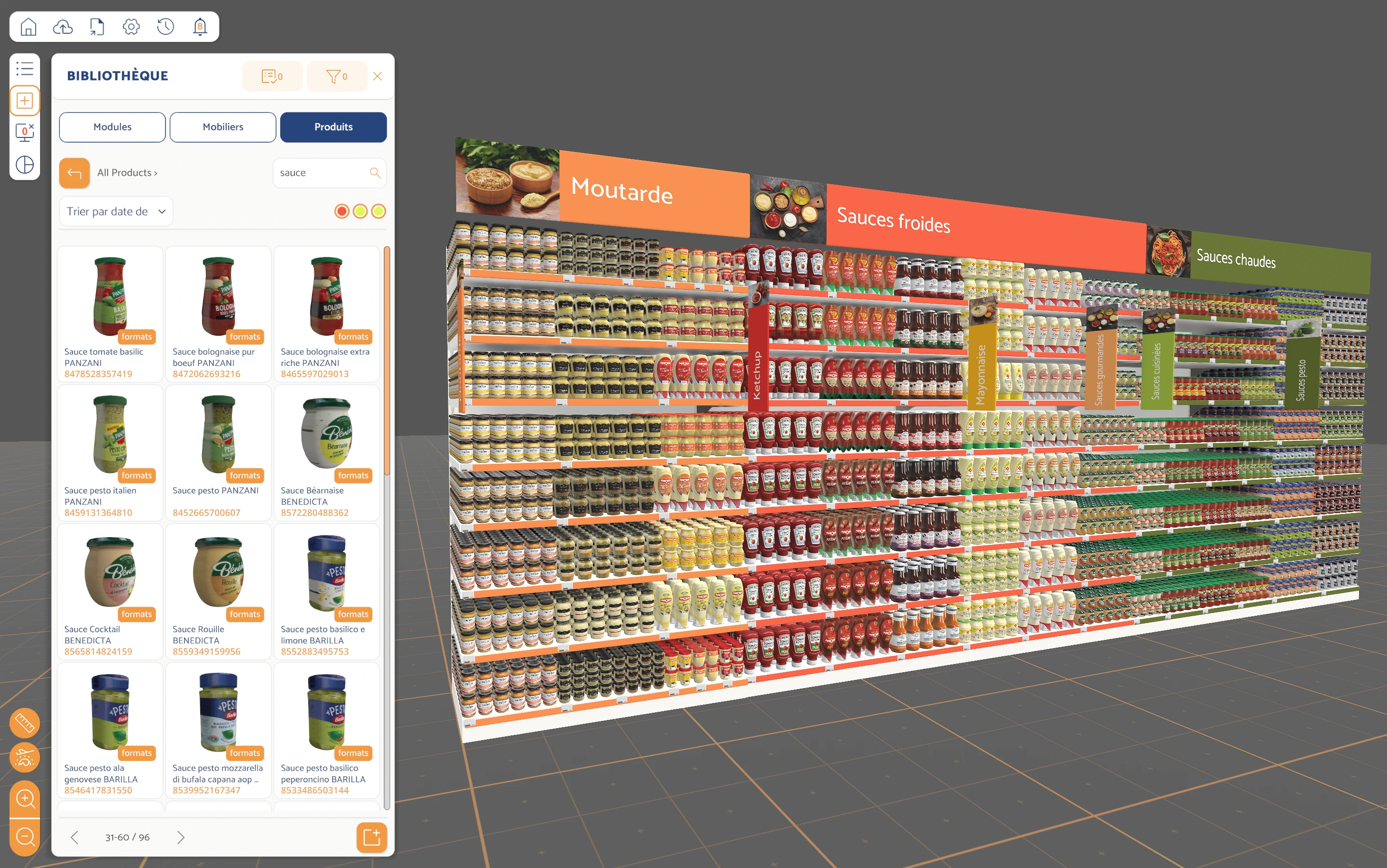
The retail market is evolving at breakneck speed. To remain competitive, brands and retailers must design, test, and roll out visual concepts in record time.
When it comes to equipping Category Management and Trade Marketing teams, two philosophies clash: historical analytical modeling and experiential innovation. Here is an objective comparison to help identify the merchandising software that best fits your brand strategy.
Spaceman: The Power of Analytical Optimization
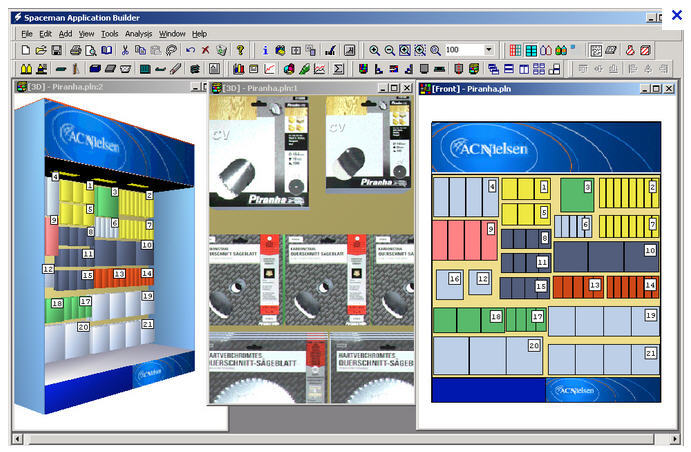
Spaceman is a well-known software suite designed primarily for technical space management. Its philosophy is based on a rigorous analysis of historical sales data.
- Strengths: A proven ability to analyze planograms based on financial data. Intelligent placement algorithms help optimize space allocations, generating revenue increases ranging from 10 to 20 percent, according to some studies.
- Limitations: Complex interface requiring extensive training. The traditional architecture requires significant hardware power, and sharing planograms with field teams often relies on manual processes or third-party tools.
Retail VR: A Platform to Support Your Strategy
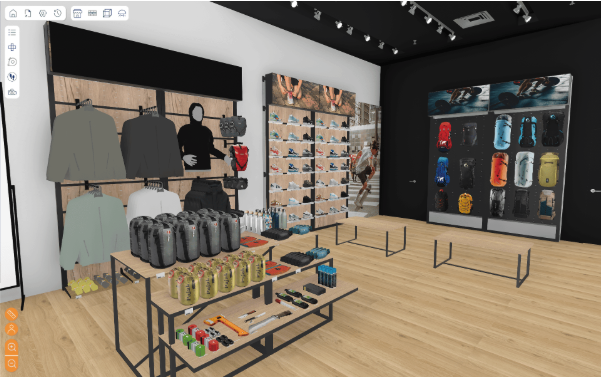
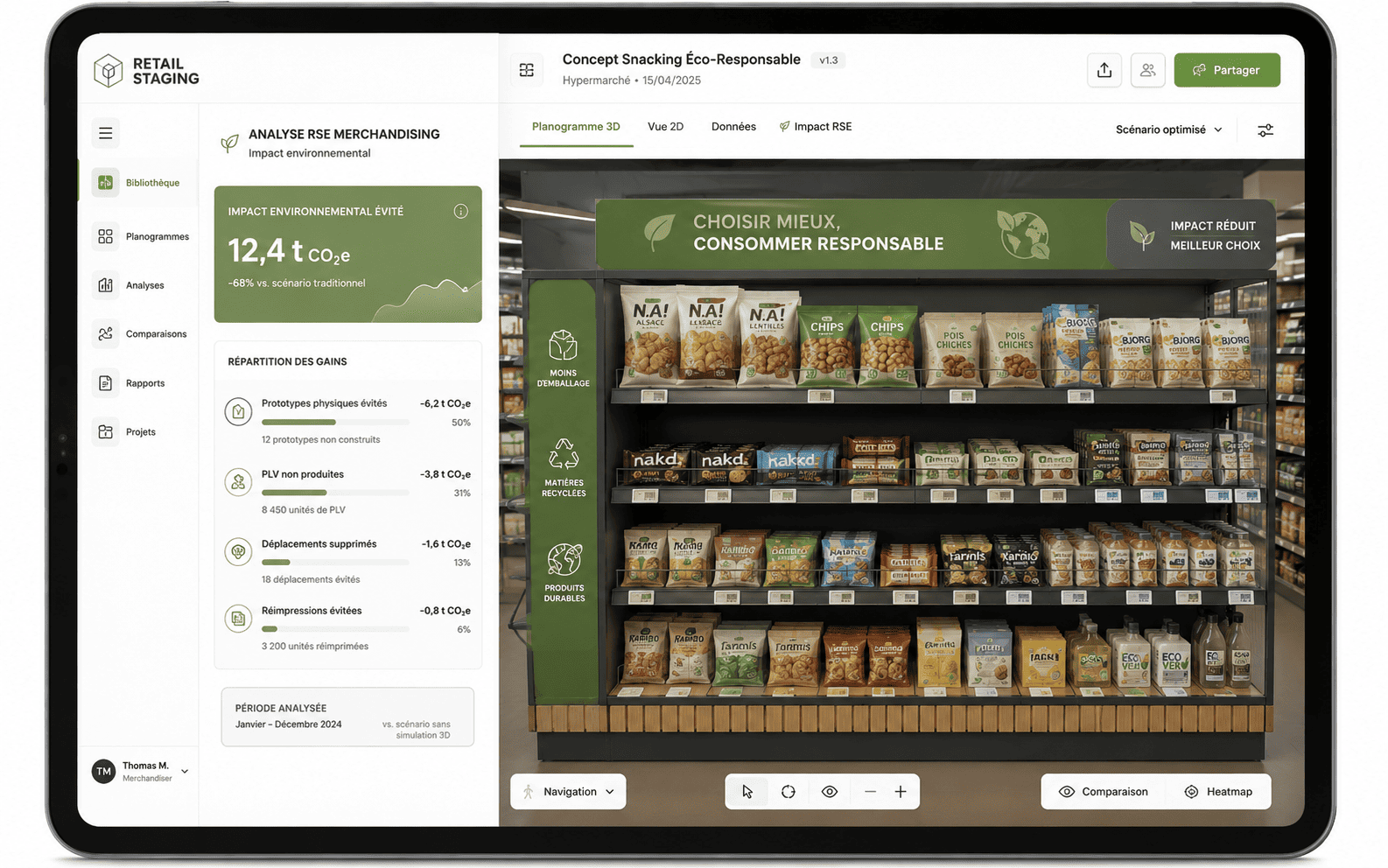
Unlike supply-chain-focused systems, Retail VR is a merchandising solution SaaS solution designed for visual agility. It enables you to transform your decision-making processes through a data-driven and collaborative architecture.
1. AI Innovation and Speed of Execution
Using patented technology, the platform automatically converts your 2D packaging designs into digital models from simple photos. This automation speeds up your decision-making by a factor of 10 and allows you to roll out your plans 5 times faster.
2. Shopper Studies: The Haribo Case Study
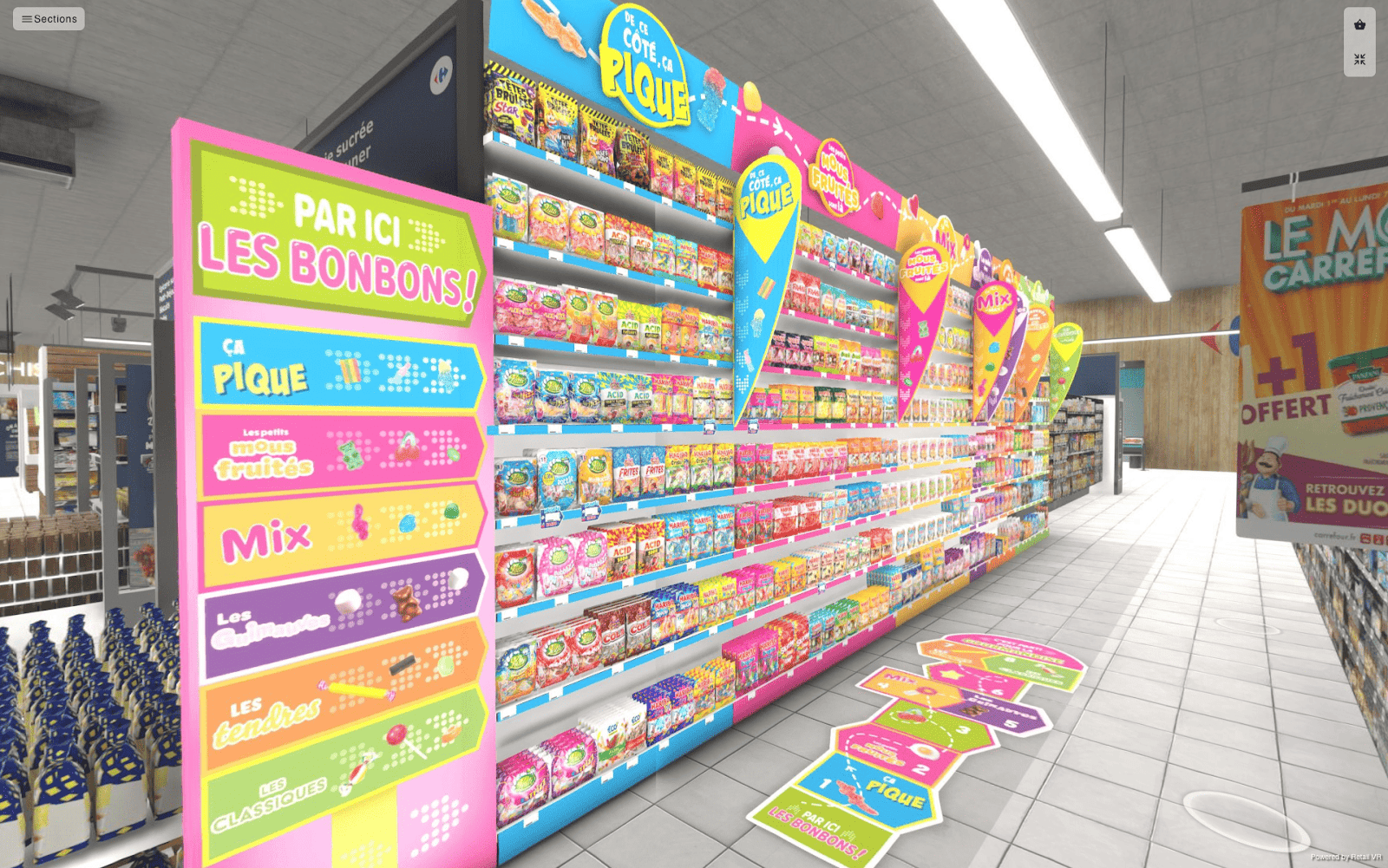
In partnership with Enov, Retail VR enables you to conduct large-scale qualitative and quantitative research. You can immerse a panel of consumers in a digital twin of your store to test your concepts before any physical production takes place, as demonstrated by the studies conducted for Haribo.
3. Field Implementation: The Digital Shopper Center
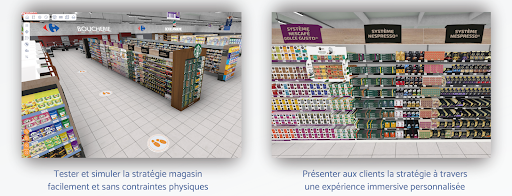
Recommendations are distributed instantly via the cloud. For companies such as Nestlé Café, implementing a “Digital Shopper Center” makes it possible to perfectly align headquarters’ strategy with execution at the point of sale.
- Agile Validation: Sales teams use augmented reality in stores to validate concepts with department managers.
- Result: This level of precision in execution leads to an average 13% increase in sales.
Comparison Chart: Retail VR vs. NielsenIQ Spaceman

Verdict: Analytical or experiential?
- Choose NielsenIQ Spaceman if your top priority is complex supply chain engineering and replenishment, with dedicated resources for technical analysis.
- Choose Retail VR if your goal is to reduce your time-to-market, improve collaboration among your teams, and win over your partners with photorealistic simulations.
Need to change your strategy?

.webp)
.webp)
.webp)

