


Key takeaways:
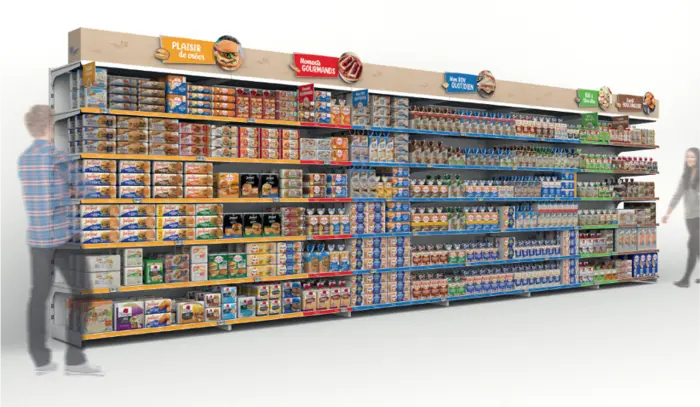
- The concept: Usage-based merchandising involves moving away from traditional segmentation by “product type” (e.g., plain, whole-grain, crustless) and instead organizing the shelf layout around the shopper’s consumption occasions (breakfast, cooking, side dish).
- The Case Study (Jacquet): By completely rethinking the sliced bread aisle around a "usage"-based category approach, the Jacquet brand generated volume growth that was 5% higher than the aisle’s organic growth. In some independent supermarkets, sales in the aisle surged by 38%.
- The Trade Marketing Challenge: Proposing a major category disruption often intimidates retailers. Securing shelf space requires solid, quantifiable evidence before any national rollout.
- The technological solution: To test a disruptive relaunch without risking a decline in turnover, Category Managers now rely onA/B testing in Virtual Reality. Immersive shopper studies allow them to validate the new segmentation based on usage within a Digital Twin via our collaborative platform.
In the world of FMCG (Fast-Moving Consumer Goods), revitalizing a mature category is the ultimate challenge for a Category Manager. Faced with often standardized store shelves and consumers spending less time in the aisles, the battle is no longer won solely on the product itself, but on the clarity of the offering.
Today, a fundamental trend is revolutionizing merchandising strategies: usage-based merchandising. Instead of organizing products by their intrinsic characteristics or by brand, store shelves are adapting to the shopper’s mental model.
One of the most striking and recent examples of this revolution comes from the pre-packaged bakery aisle. Here’s a closer look at Jacquet’s bold strategy and how brands can test these disruptive concepts.
Why switch from "product-based" merchandising to "usage-based" merchandising?
Traditionally, the layout of a grocery aisle follows an industrial logic. In the sandwich bread section, you’d find the “crustless” section, the “thick-sliced” section, and the “whole-grain” section. While this approach is rational from a buyer’s perspective, it creates friction (cognitive fatigue) for consumers, who think in terms of their immediate needs: “What should I make for the kids’ afternoon snack?” or “What kind of bread should I use for my croque-monsieurs tonight?”
The transition to actual use enables three drivers of category performance:
- Improving "Findability": By guiding customers through tags (ILV) that correspond to their life stages, we reduce their search time.
- Encouraging impulse purchases and product mix: Visual clarity reduces cognitive load, encouraging shoppers to explore featured product segments they might not have noticed on a monolithic shelf.
- Enhancing the Category (Premiumization): A department organized by product category resembles a specialty "boutique" more than a simple storage area.
The Jacquet Case: 38% Increase in Revenue Thanks to Radical Segmentation
The Jacquet brand (Jacquet Brossard Group) recently implemented a complete overhaul of its sliced bread product line (a project dubbed “ForMIEdable”), as reported by the retail trade press.
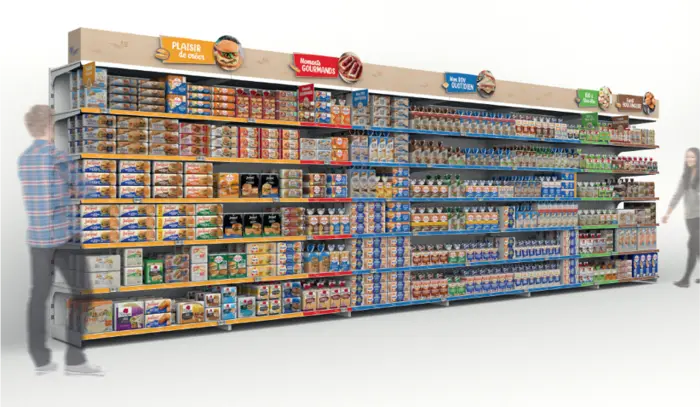
The Pillars of Relocation
Rather than competing solely for horizontal shelf space (PDL) by brand, Jacquet proposed redefining the customer journey by creating clusters of similar products grouped by growth areas:
- Baking Division (breads for sandwiches, burgers, and croque-monsieurs).
- Breakfast Section (thick-sliced brioche).
- Table Bread Section (daily accompaniment).
A massive, field-proven ROI
Valérie Monteiro, the brand’s category business development manager, highlights the exceptional results of this approach: an initial test conducted in late 2022 showed volume gains 5% higher than the department’s organic growth. Adoption on the ground has been so strong that implementation has accelerated: more than 800 stores have been redesigned in two years, with the goal of exceeding 1,000 by the end of the year. For retailers, the impact has been resounding. A department manager at an independent supermarket even reported a 38% increase in his department’s sales following the adoption of the initiative.
The CatMan Challenge: How to Test a Disruptive Concept Without Risking Your Shelf Space?
While Jacquet’s results are spectacular, it’s important to remember that in Category Management, proposing a disruptive planogram to a retailer is a risky endeavor. Breaking with a shelf’s historical layout poses a major risk of confusing customers (loss of familiarity = immediate loss of sales). The corporate buyer or store manager will always demand proof before letting you “completely overhaul” their shelf layout.
This is where traditional testing methods reach their limits:
Pilot in-store testing: It is very expensive, requires the production of actual in-store displays, and takes months to yield reliable data (which is subject to the vagaries of competitors’ promotions and the weather).
A/B Testing in Digital Twins: The Immersive Solution
For Category Captains looking to drive a revolution through user engagement, virtual merchandising and immersive A/B testing have become the industry standard.
Using virtual environments, FMCG manufacturers do the following:
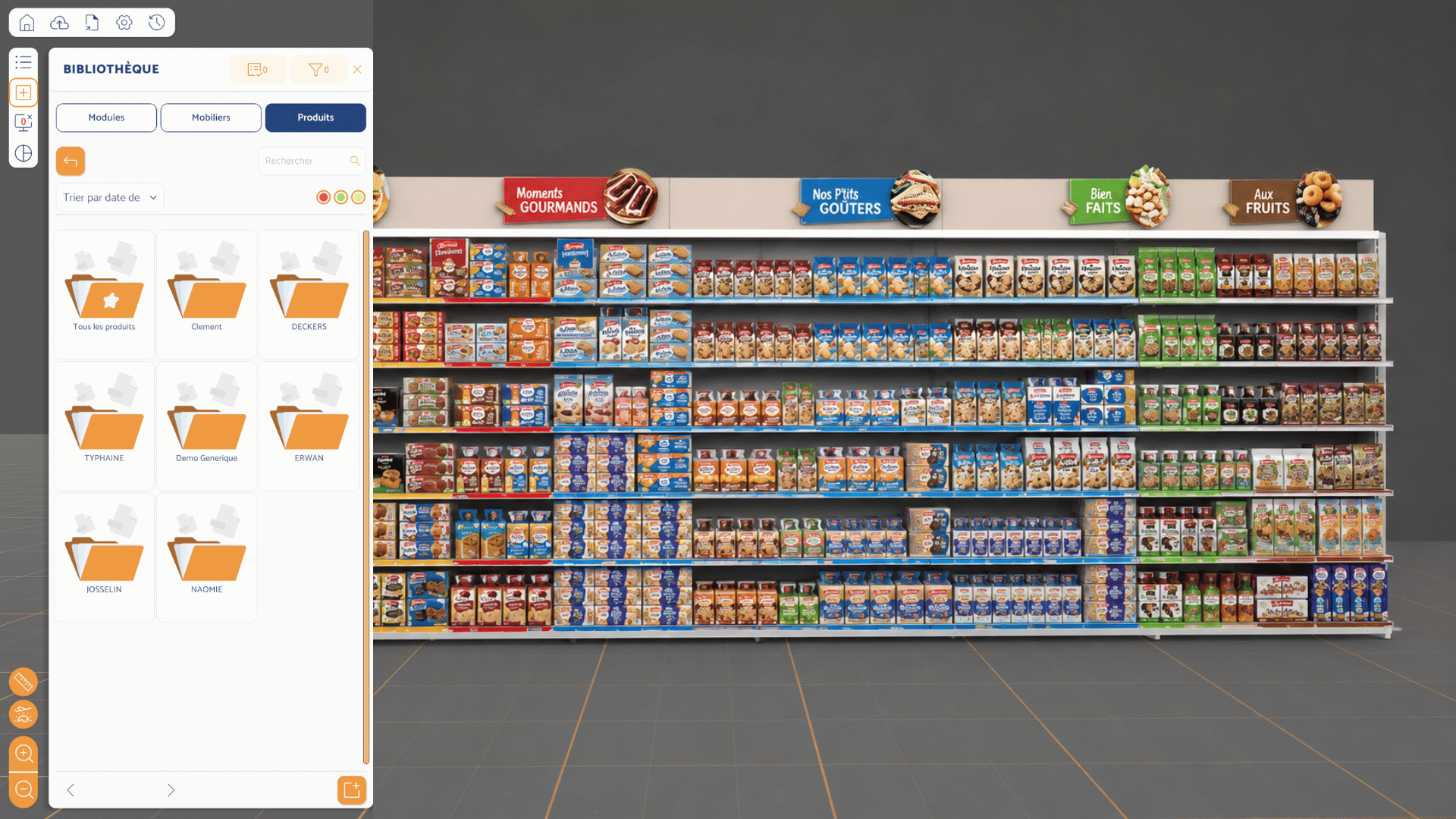
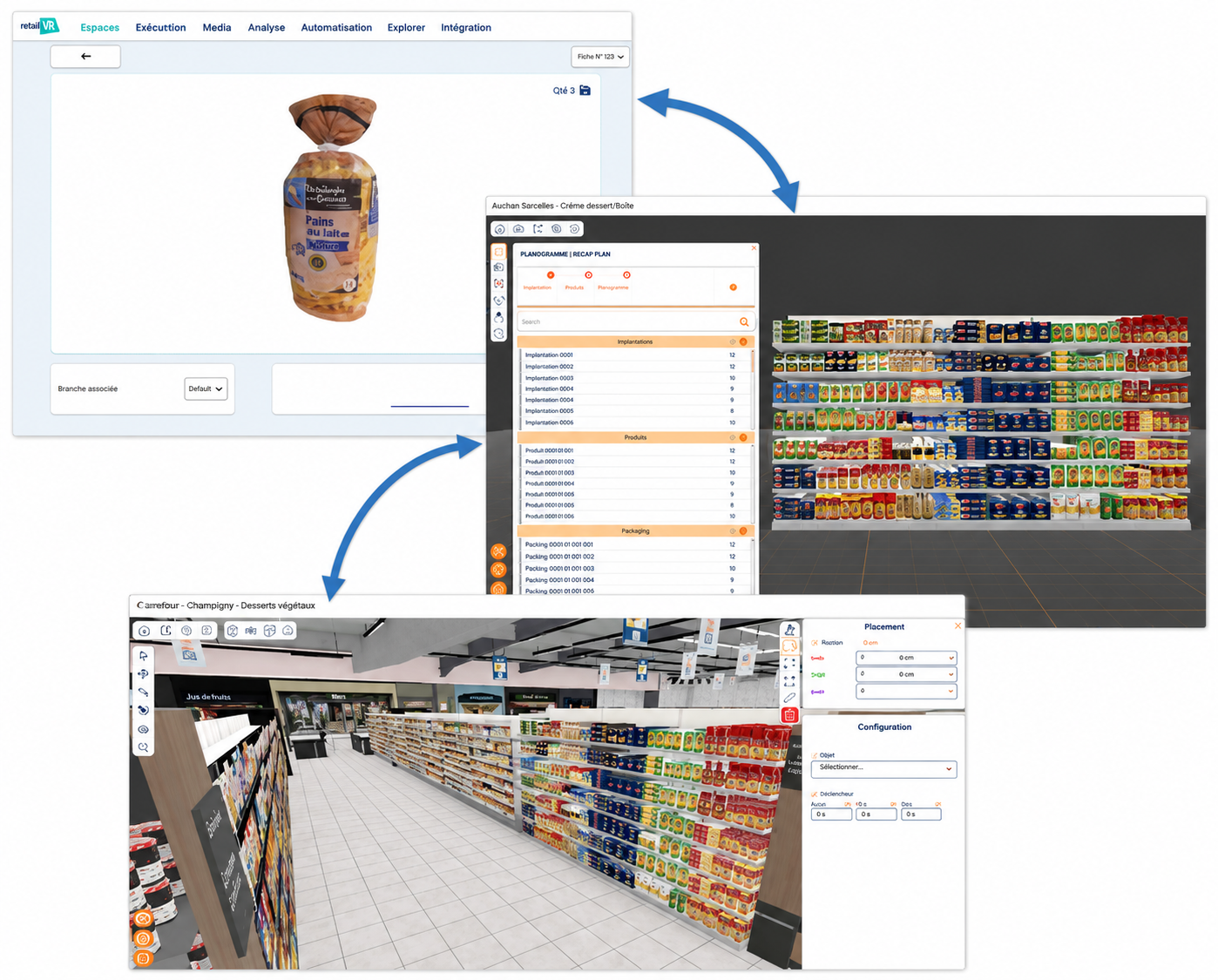
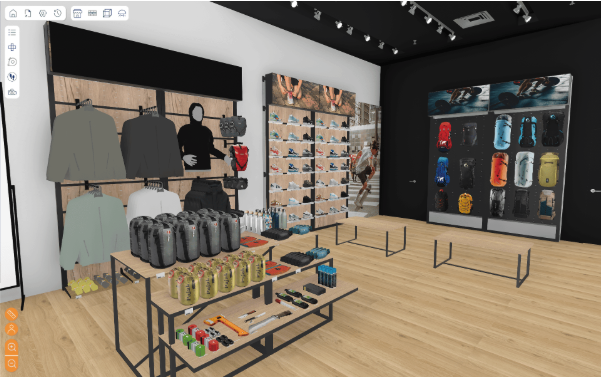
- Creating the Digital Twin: The current floor plan and the target floor plan (organized by use) are modeled in photorealistic 3D. You can also generate virtual product displays very quickly to populate these new layouts in an ultra-realistic way.
- Immersive Shopper Study: A representative panel of consumers explores the virtual store aisle via their web browser or a virtual reality headset.
- Harvesting the Data Behavioral Data: Theanalytics platform records actual user journeys (eye-tracking to see where users look, time spent searching for an item, conversion rate).
- Irrefutable Evidence (Sell-in): The trade marketer arrives at a meeting with a retailer armed with comparative data: “Our new segmentation by usage reduces purchase time by 15% and increases purchase intent in the targeted segments by 8%.”
Conclusion: Usage—a growth driver supported by visual data
Rearranging a store aisle according to consumption patterns—as demonstrated by Jacquet’s outstanding performance—is the key to revitalizing mature supermarket markets. However, the flawless execution of such a strategy requires a rigorous testing phase. By leveraging Retail VR’s simulation technologies, manufacturers can now innovate freely, prove the effectiveness of their category-based approach without financial risk, and convince retailers to roll out the store of tomorrow.

.webp)
.webp)
.webp)

