


Key takeaways:
- The Role of the Category Captain: In a mature market, the retailer entrusts category leadership (Category Captaincy) to the brand capable of revitalizing overall sales in the department through innovation and a fresh merchandising vision.
- The Case Study (Le Traiteur de la mer): To boost the smoked fish segment, industry leaders such as Petit Navire are rolling out massive investment plans through 2026 (TV, billboards, digital) that must be translated into impactful in-store merchandising (recruiting over 500,000 new customers in two years).
- The sticking point: A multi-million-euro advertising campaign will see its ROI plummet if the point-of-sale execution (display, in-store signage, planogram clarity) is not approved and adopted by department managers.
- The technological solution: To safeguard trade marketing investments, Category Captains use our virtual simulation platform and Digital Twins to validate the visual impact in advance and convince retailers with immersive evidence.
In the retail industry, space is the scarcest and most expensive resource. For a retailer, granting an end-cap display or adjusting shelf space allocation is never a shot in the dark. That’s why retailers rely on “Category Captains”: leading brands capable of providing a strategic vision to drive sales growth for the entire department—not just their own products.
However, taking on this leadership role requires massive investment on the part of the manufacturer. When a brand rolls out a 360° media plan to revitalize a segment, the final battle is fought in the last 50 centimeters: right in the heart of the shelf.
How can these massive investments in retail locations be secured? An in-depth look at a winning strategy and the crucial role of virtual foresight.
Revitalizing a Mature Market: The Challenges of Category Captaincy
Let’s take the very timely example of the “Seafood Deli” section and smoked fish (salmon, trout). This is a highly valued but fiercely competitive category, where consumer expectations are rapidly shifting toward greater corporate social responsibility (ASC and organic certifications, responsible sourcing, and local origin).

To revitalize this segment, a Category Captain must demonstrate the ability to attract new types of buyers. As shown by the recent strategy unveiled by Petit Navire for industry professionals, the drivers of this growth are concrete:
- An overwhelming brand awareness rate (87%).
- Double-digit growth in volume (+17% over two years).
- The massive influx of new consumers (over 500,000 recent buyers identified through Kantar panels).
But having the right products (Scottish salmon, organic products, Breton trout) isn't enough. To capitalize on this opportunity by 2026, the brand is announcing "massive investments in the category" across TV, print media, social media, and above all... in-store.
The Store: The Litmus Test for Your Marketing ROI
The highlight of any omnichannel campaign is retail execution. FMCG manufacturers know this: you can spend millions on TV commercials, but if your trade marketing materials (dedicated displays, end caps, shelf stoppers) aren’t set up or are lost in the crowd, your customer will opt for a competing brand or a private label once they’re in front of the shelf.
Why Do In-Store Rollouts Fail?
When a Category Captain proposes a store relocation or event-specific furniture, they face two major obstacles from the retailer:
- Space constraints: The department manager is concerned that the in-store display might block the aisle or obscure his profitable products.
- Doubts About the Conversion: The distributor wants assurance that this new signage justifies the space it takes up.
Historically, Category Management teams have tried to reassure stakeholders with PowerPoint presentations and Excel files based on panel data (Nielsen, Kantar). However, flat charts do not allow retailers to visualize the final shopper experience.
Securing Investments Through Immersive Technologies
This is where the role of Category Manager is entering a new era. To protect investments of several hundred thousand euros in point-of-sale displays and promotional fixtures, leading brands are no longer willing to operate on a reactive basis. They are incorporating spatial modeling and digital twins into their “sell-in” strategy.
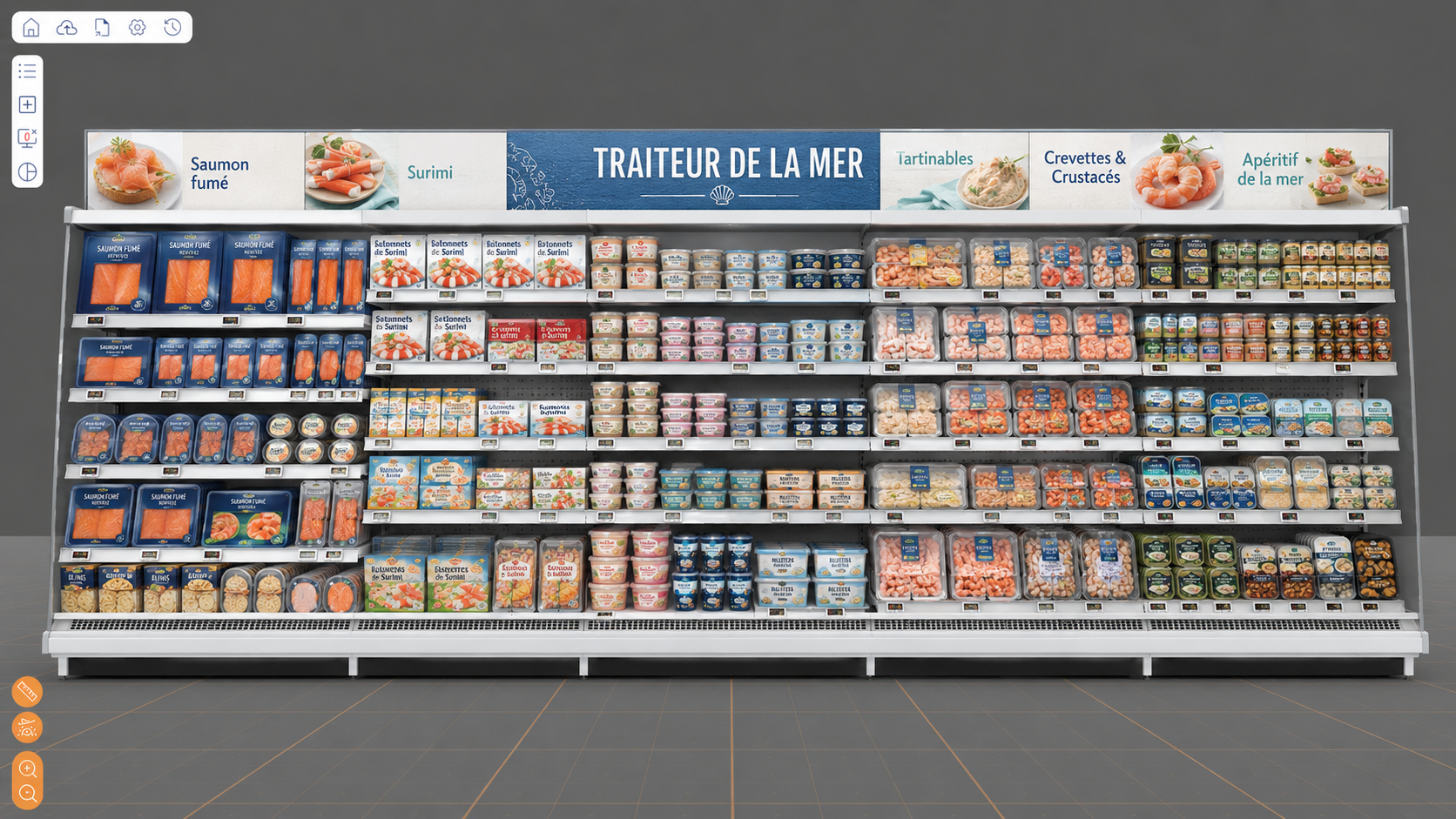
1. Virtual Prototyping of Trade Marketing Furniture
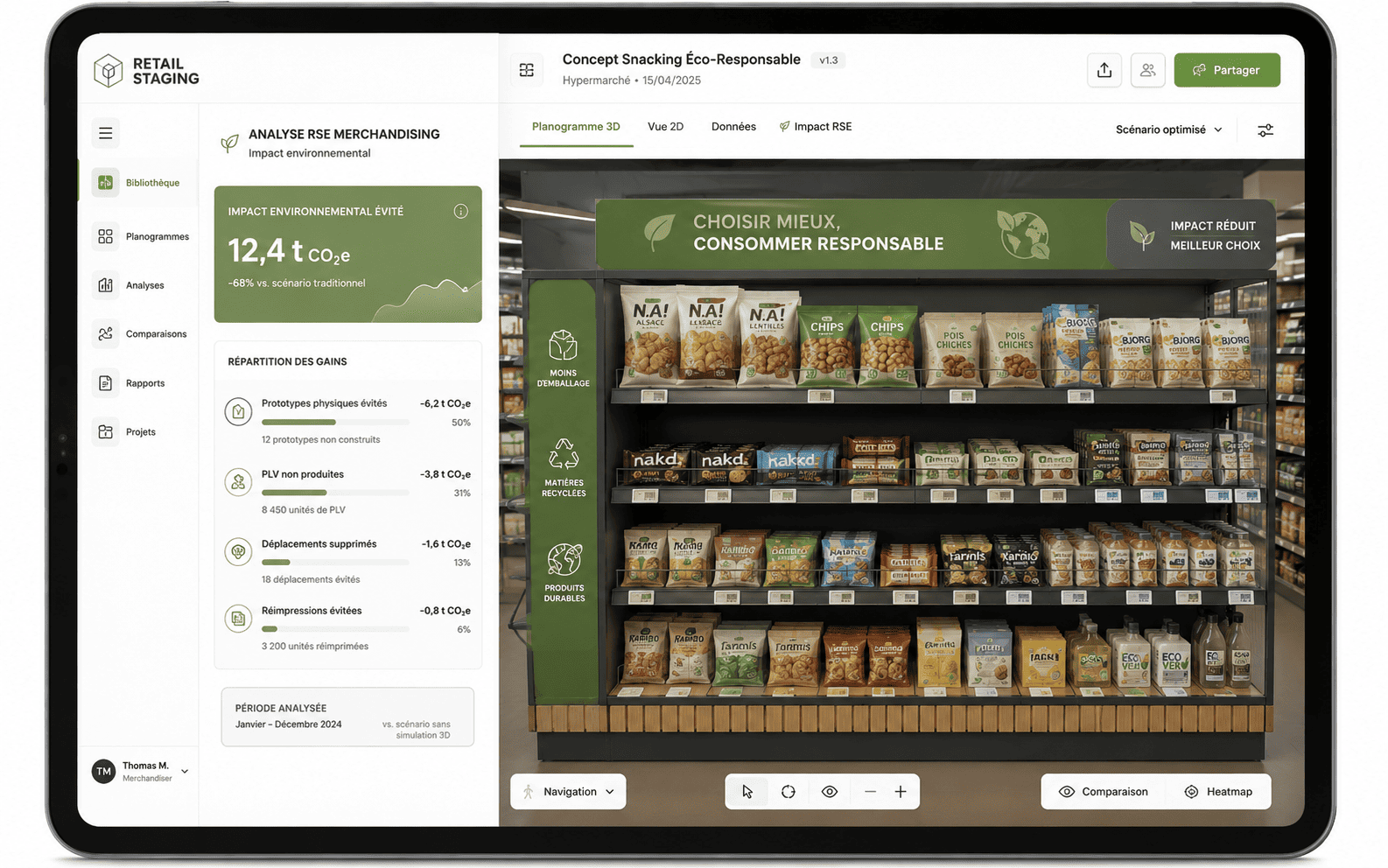
Before launching the production of hundreds of promotional displays (such as those designed to highlight its new salmon or trout lines), the brand will be able to create virtual models of its products and fixtures. This allows the brand to validate ergonomics, perceived sturdiness, and visual impact at a lower cost. Better yet, this eco-design approach aligns perfectly with the brand’s CSR commitments by eliminating polluting and costly physical prototypes.
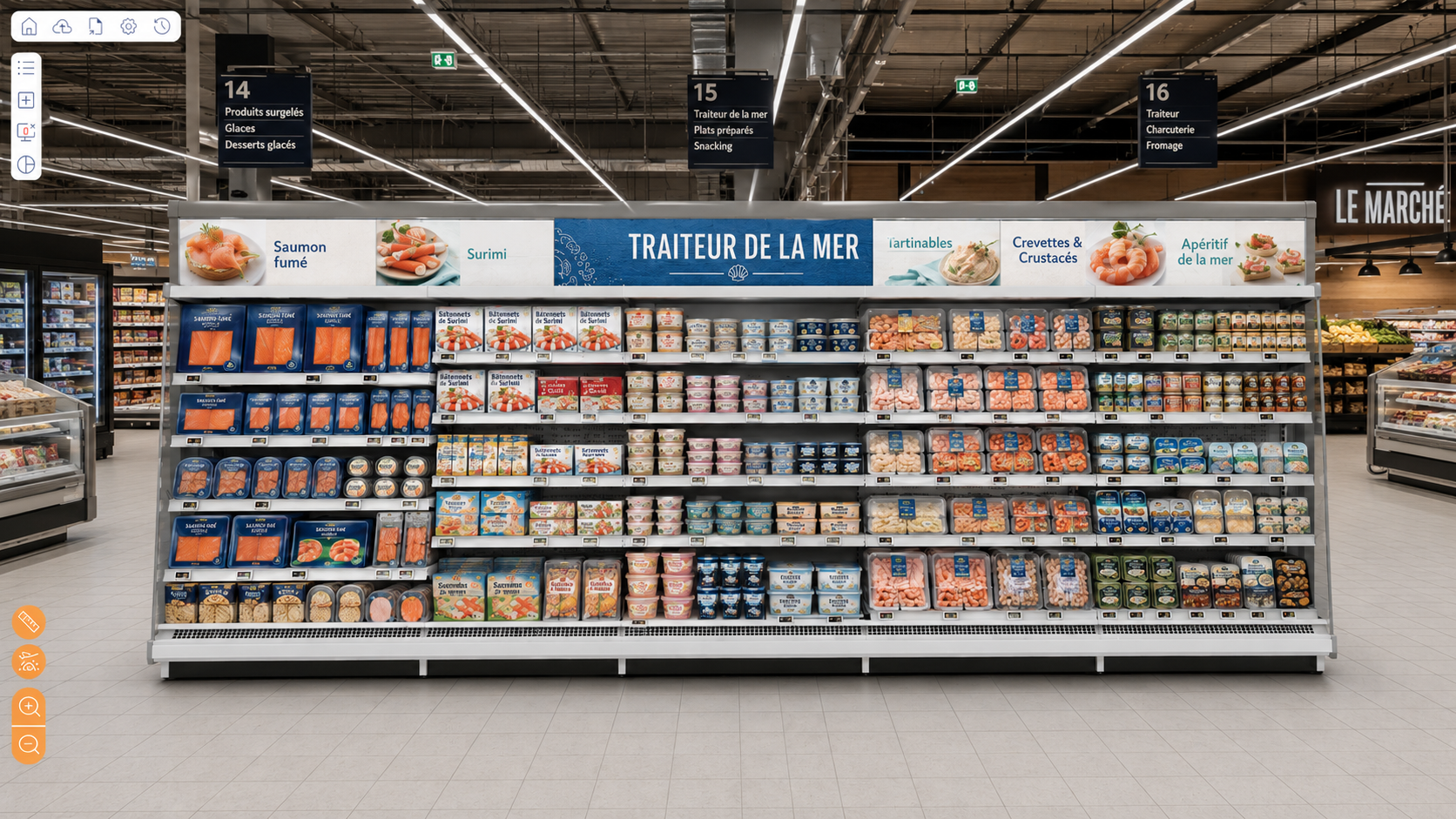
2. The Crash Test via the Shopper Immersive Study
To prove to the retailer that the new shelf layout will actually boost sales, the Category Captain uses Virtual Reality shopper studies. By immersing a panel of consumers in a faithfully recreated virtual aisle, the brand scientifically measures the impact of its future in-store displays. If the study shows that the new shelving increases the “findability” of high-value-added products (such as organic or responsibly farmed seafood) by 20%, the case becomes irrefutable when presented to the purchasing group.
3. The Mixed Reality Pitch
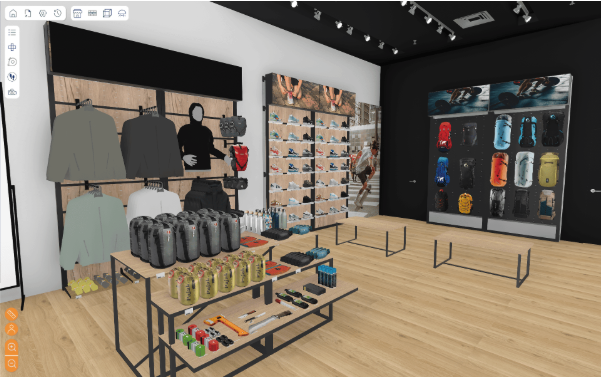
On the big day, gone are the days of static slide shows. The sales team deploys a smart 3D planogram directly on a tablet or via a mixed reality headset. The department manager can view the future layout in real size, down to the centimeter, right in the middle of their own store. The response is immediate.
Conclusion: The Power of Visual Evidence
Being the leader in a category isn't something you just declare—it's something you prove. As brands prepare their budgets and major marketing campaigns for 2026, in-store execution remains the most critical link in the value chain.
For manufacturers making massive investments, the use of virtual reality and digital twins is no longer just a technological option—it’s a vital insurance policy. It’s the only way to ensure that the promise made to consumers on their screens translates into a seamless experience and flawless execution on the sales floor.
Ready to take on your role as Category Captain with irrefutable arguments?
Discover how 3D / AR / VR / AI enable you to ensure the success of your product launches and win over major retailers in every negotiation.

.webp)
.webp)
.webp)

