


Key takeaways:
- Background: Today, urban neighborhood stores (stores smaller than 300 m²) are the main driver of growth in brick-and-mortar retail.
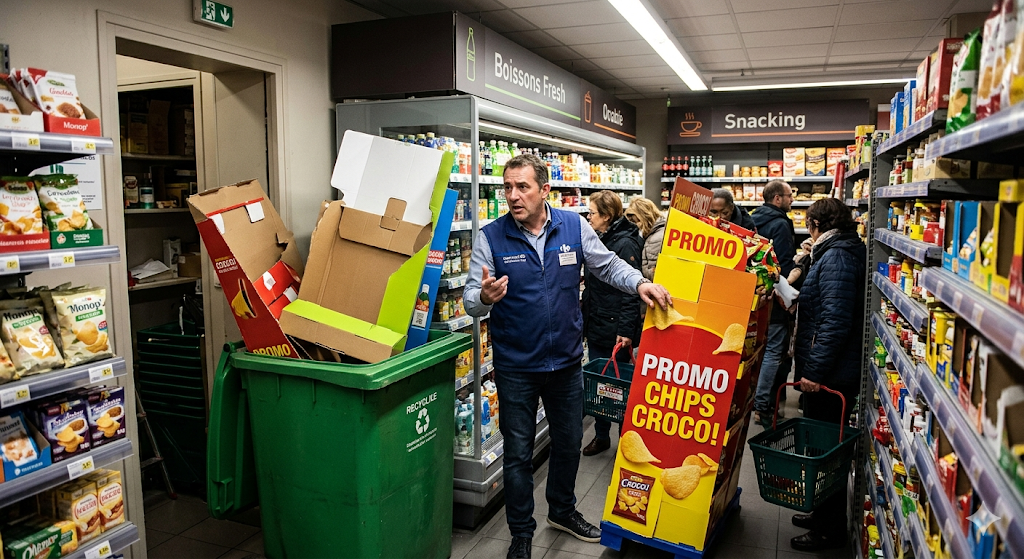
- The problem: Brands often design their trade marketing campaigns (point-of-sale displays, end-cap displays, cross-merchandising) with hypermarkets in mind. When these displays arrive at neighborhood stores, they take up too much space and often end up in the trash.
- The category challenge: Simply reducing the size of a display is not enough. The product assortment must be streamlined while maintaining visual impact in an environment where "visual noise" is extreme.
- The solution: By using 3D simulation and digital twins of virtual stores, Trade Marketing teams can test and validate “compact” versions of their national campaigns, thereby ensuring a successful rollout at franchise locations.
The retail landscape has changed. Gone are the days of the suburban hypermarket’s absolute dominance: urban retail is now the order of the day. Driven by changing lifestyles (working from home, smaller households, a desire for convenience), retailers are investing heavily in neighborhood and ultra-neighborhood formats. According to recent data from NielsenIQ on retail channel dynamics, “neighborhood stores” are now an essential growth driver, often outperforming traditional large-format stores.
However, for a Category Manager or Trade Marketing Manager at a major FMCG brand, this trend often presents an operational challenge. How can an ambitious national campaign be effectively executed in aisles that are only 1.20 meters wide?
Here’s how 3D simulation enables you to turn the challenges of micro-surfaces into growth opportunities through a high-performance merchandising solution .
The Trade Marketing Nightmare in "Proxi" Format
Launching a promotional campaign (Easter, Back-to-School, Candlemas) requires months of preparation. Generally, the planning department designs a “Master” layout (the hypermarket format), which is then adapted on a case-by-case basis for supermarkets—and is often hastily put together for neighborhood stores.
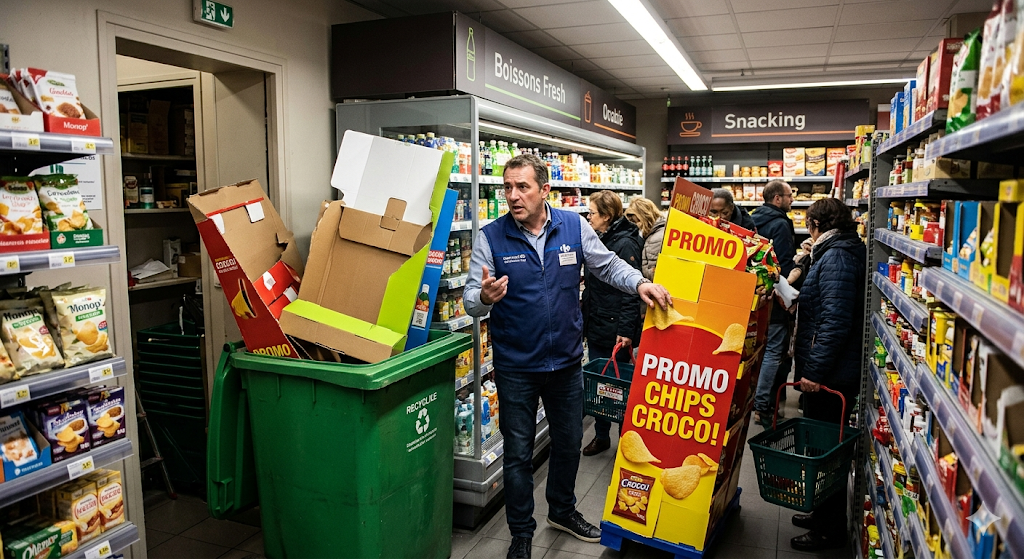
This lack of foresight, which is specific to small spaces, leads to three major points of friction:
- The “Point-of-Sale Display in the Closet” Syndrome: Convenience store managers (often independent franchisees who are very concerned about their sales floor space) categorically refuse to allow displays that block traffic or obscure the refrigerated shelves. If your point-of-sale display sticks out more than 5 centimeters, it ends up in the dumpster.
- An ultra-fast shopping experience: In hypermarkets, customers browse. In ultra-convenience stores, shopping is transactional, quick, and often focused on impulse buys or snacks. Overly complex visual displays or excessive signage create cognitive fatigue.
- The assortment dilemma: With only 300 m² of space, it’s impossible to stock the entire product line. The CatMan must make drastic decisions to streamline the SKUs without undermining the sense of abundance that’s essential for sales promotion.
The Failure of "Rule-of-Thumb" Approaches
Historically, to adapt a display for a small store, the standard approach was simply to ask the point-of-sale display manufacturer to "scale it down by 30%."
But merchandising isn't just a matter of isometric projection. A price tag or shelf sign that is legible in a wide, well-lit aisle becomes invisible once wedged between a support pillar and a frozen food bin in a neighborhood convenience store. Furthermore, reducing the size of a display unit means reducing product facing, which can cause the operation’s profitability to fall below the retailer’s tolerance threshold.
3D Simulation: Mastering Precision Down to the Millimeter
To avoid wasting materials (discarded in-store displays) and ensure the brand’s presence in downtown areas, leading manufacturers are now incorporating Virtual Reality (VR) into the design of their in-store displays.
1. Crash Testing in a Digital Twin
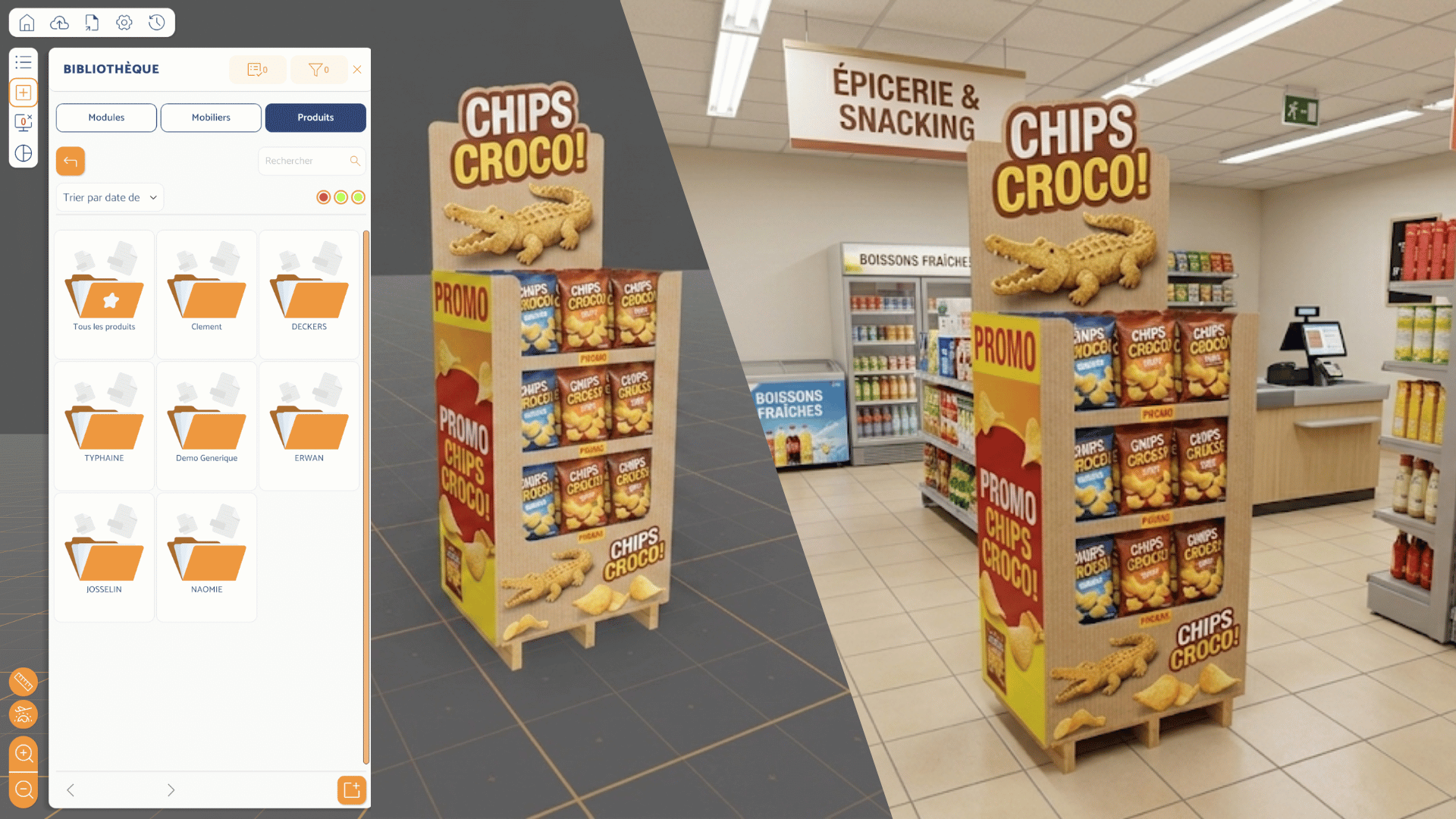
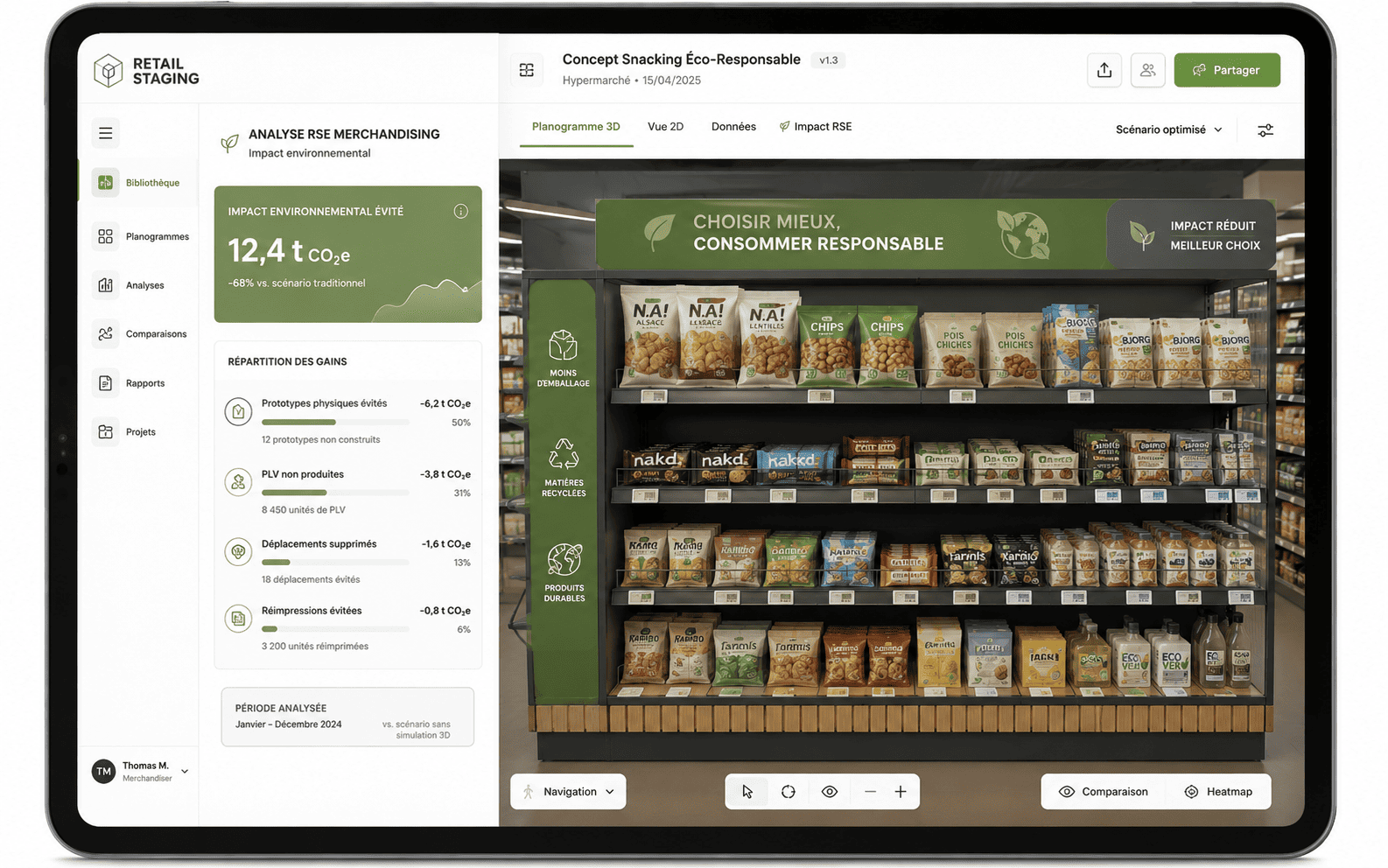
Rather than waiting for a physical prototype to be shipped, the Trade Marketing team imports the 3D model of its compact in-store display directly into the digital twin of a typical convenience store.
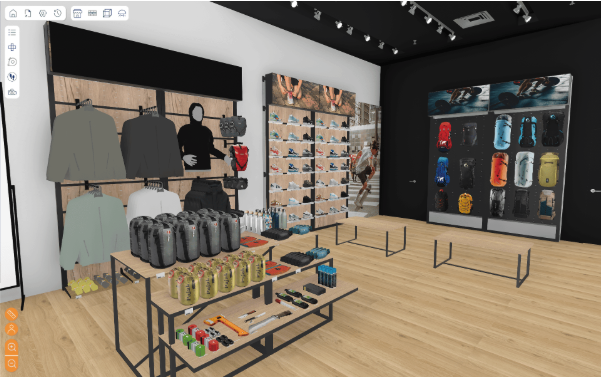
Thanks to our online platform, brands can easily create 3D models of their products and integrate them directly into these realistic virtual environments. Using spatial simulation, manufacturers can immediately verify the integration:
- Does the piece of furniture get in the way when opening the doors of the refrigerated display cases?
- Does the floor space comply with the convenience store's safety standards (for people with reduced mobility)?
- Is the hot zone (eye/hand level) maintained?
2. Implement cross-merchandising in a limited space
In small retail spaces, there is such a shortage of space that cross-merchandising (pairing complementary products such as chips and drinks) is vital for boosting the average basket size. Virtual reality A/B testing allows retailers to present different store layout configurations to a panel of shoppers. The study useseye-tracking to precisely measure which combination attracts the most attention in a cramped environment.
All of these simulations make it possible to develop a merchandising plan with absolute precision, perfectly tailored to the constraints of the local market.
3. Win over franchisees with visual evidence
The neighborhood retail market is largely dominated by franchises. You don’t have to convince a national buyer, but rather hundreds of local entrepreneurs. When your area manager arrives with his tablet and sets up the future 3D (or Augmented Reality) promotional display right in the heart of the convenience store, the balance of power shifts. He’s no longer selling a bulky box; he’s demonstrating how perfectly his solution fits the specific layout of his client’s store.
Conclusion: Think "Small," but with a "Big" Vision
The boom in ultra-local urban retail presents a tremendous opportunity to attract new customers and tap into a high-spending clientele. But the operational consequences are immediate: a poorly scaled concept will not survive in this environment.
By incorporating 3D merchandising technologies from the design phase onward, you give your operations the flexibility needed to adapt to any retail space. This ensures “zero-defect” in-store execution, a drastic reduction in point-of-purchase (POP) waste, and a lasting relationship of trust with local store managers.
Is your next national campaign ready for local engagement?
Request a demo to see how to create 3D models of your in-store displays and test your concepts in highly detailed virtual urban environments.

.webp)
.webp)
.webp)

